
Stock Markets April 15, 2026 12:29 AM

Bank of Korea nominee signals readiness to tighten policy if Middle East shock fuels persistent inflation

Shin Hyun-song warns of rising inflation and intervening in FX market if volatility accelerates amid Korea's slowing growth

By Ajmal Hussain
Bank of Korea nominee signals readiness to tighten policy if Middle East shock fuels persistent inflation

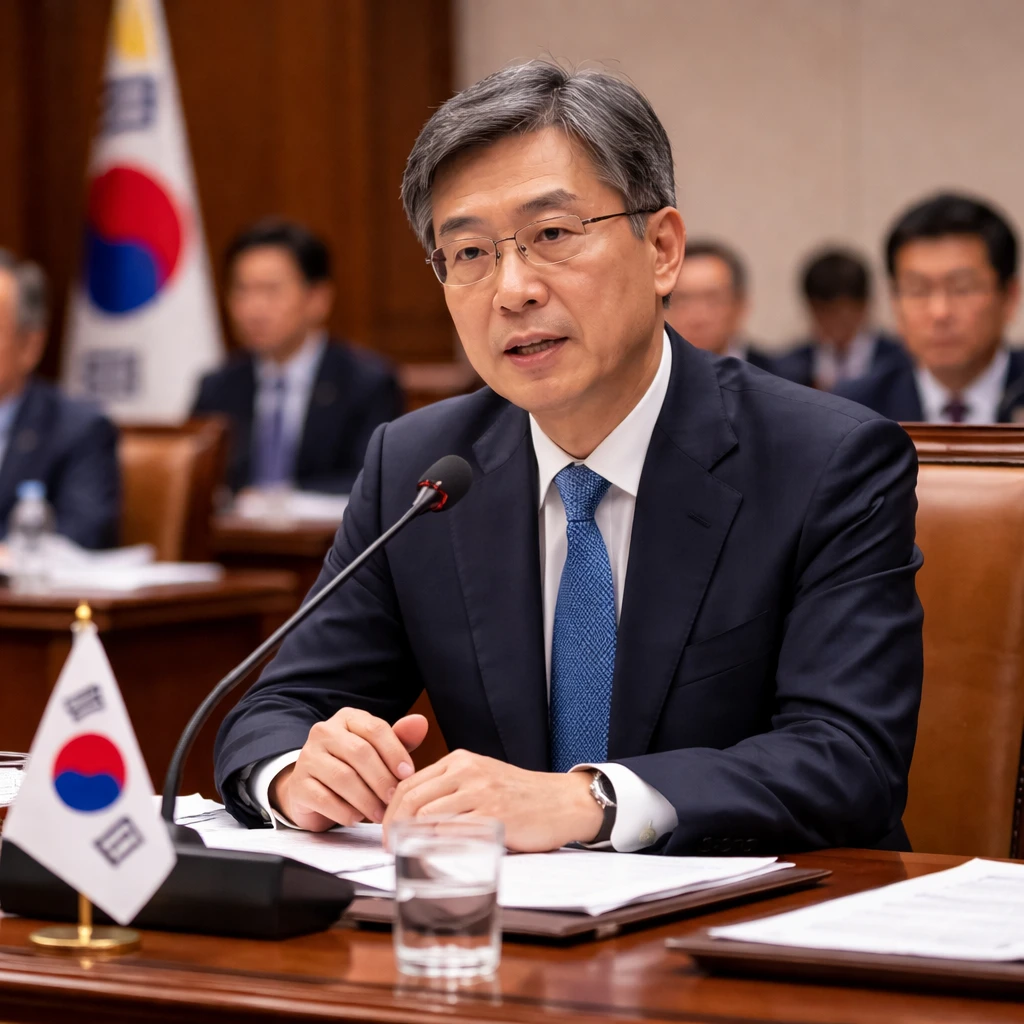
Bank of Korea governor nominee Shin Hyun-song told lawmakers that the central bank may need to tighten monetary policy should supply-side shocks from the Iran war cause sustained inflationary pressure. Speaking at a parliamentary confirmation hearing in Seoul, Shin cautioned that prolonged conflict could push up inflation expectations and core inflation, and he signalled a readiness to act on the currency if the won weakens sharply.

Key Points

  • Nominee Shin Hyun-song warned that prolonged supply-side shocks from the Iran war could push up inflation expectations, core inflation, and overall inflation; this would bring monetary policy into play - impacts: monetary policy, consumer prices, financial markets.
  • The Bank of Korea's policy rate stood at 2.50% following the April 10 decision, the last under outgoing Governor Rhee Chang-yong, whose term ends April 20 - impacts: interest-rate sensitive sectors and borrowing costs.
  • Shin reversed a prior neutral view on the won, pledging to intervene if exchange-rate volatility becomes excessive, signaling potential action in FX markets - impacts: currency markets, exporters, importers, financial institutions.

Bank of Korea governor nominee Shin Hyun-song told parliamentarians on Wednesday that the central bank could move to tighten policy if supply-side shocks tied to the Iran war produce extended inflationary pressure. He framed the situation as a test for monetary policy, linking the duration of the conflict to shifts in inflation dynamics.

Speaking during his confirmation hearing in Seoul, Shin said the impact of a prolonged Middle East conflict could push inflation higher. He cautioned that unresolved disruption would not only lift headline prices but could seep into inflation expectations and core inflation, amplifying broader price pressures. "If it persists for a long time, it gets reflected in inflation expectations and core inflation, and leads to overall inflation, then I believe monetary policy will certainly have a role to play," he said.

The comments arrive against a backdrop of slower economic growth and rising prices in South Korea, which the nominee again tied to fallout from the Middle East conflict. Shin noted that conditions created by those external shocks could require a monetary response if they become entrenched.

On policy settings, the Bank of Korea left its benchmark interest rate at 2.50% on April 10. That decision was the final policy action under the outgoing governor, Rhee Chang-yong, whose term concludes on April 20. Shin's testimony therefore comes at a moment of leadership transition for the central bank and addresses how incoming policy might respond to evolving inflationary risks.

Shin also commented on exchange-rate developments, warning against a "sharp weakening" of the Korean won. He pledged that the central bank would step in if volatility in the currency market became excessive, marking a shift from his earlier neutral position on the won. That stance signals a willingness to use intervention as a tool to limit disorderly moves in the exchange rate.

Taken together, the nominee's remarks emphasize two potential policy levers the central bank could deploy if external shocks persist: tighter interest-rate policy to counter broadening inflation, and FX intervention to contain disorderly currency declines. Shin framed both as contingent on the persistence and severity of the shocks rather than as immediate commitments to action.


Context limitations: The nominee's statements reflect conditional responses to the course of the Middle East conflict and resulting domestic price and currency pressures. They do not specify timing or concrete thresholds for action.

Risks

  • Prolonged Middle East conflict could sustain supply-side inflationary pressures, increasing the risk of higher consumer prices and tighter monetary policy - sectors at risk: consumer goods, services, and interest-rate sensitive industries.
  • A sharp weakening of the won could create excessive FX volatility that may prompt central bank intervention, affecting foreign exchange and financial markets - sectors at risk: exporters, import-dependent industries, banking and securities.
  • Uncertainty over the duration and severity of the external shock creates ambiguity around the timing and magnitude of policy responses, leaving markets and businesses exposed to rapid shifts in rates and FX conditions - sectors at risk: corporate borrowers and investors.

More from Stock Markets

Taiwan market edges up as Taiwan Weighted closes at new record Apr 15, 2026 Artemis II crew relied on focused photo training and proven kit to capture lunar images Apr 15, 2026 Japanese manufacturers cut orders and scale back output as naphtha shortages surface despite government assurances Apr 15, 2026 BTIG Highlights U.S. Food Stocks It Sees Driving Profit and Cash-Flow Gains Apr 15, 2026 Immutep Shares Surge After FDA Grants Orphan Drug Designation for Soft Tissue Sarcoma Therapy Apr 15, 2026