
World April 15, 2026 01:20 AM

Xi Tells Lavrov China Will Stand With Russia as Beijing Broadens Global Engagement

Beijing stresses steady ties with Moscow even as leaders from Europe and Asia visit to deepen relations; summit with Putin expected later this year

By Maya Rios
Xi Tells Lavrov China Will Stand With Russia as Beijing Broadens Global Engagement

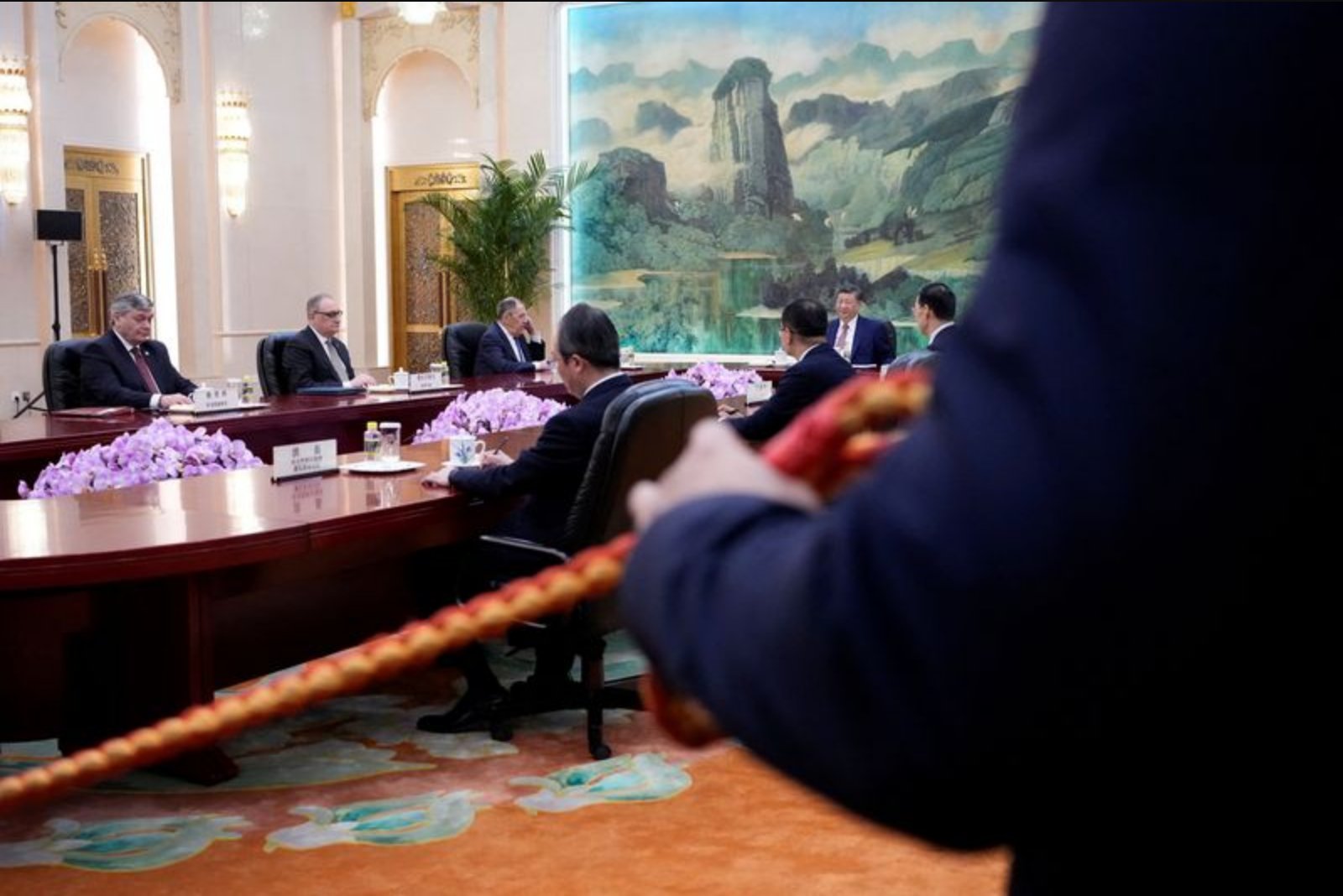
President Xi Jinping told Russian Foreign Minister Sergei Lavrov that China and Russia must trust and back one another, deepen cooperation and protect each other’s interests. Xi described the stability and certainty of bilateral ties as particularly valuable, and asked Lavrov to extend his sincere regards to President Vladimir Putin. The meeting took place amid a series of visits to Beijing by Western leaders and a separate meeting with Vietnam’s top leader as both countries contend with U.S. tariff pressure. Xi and Putin are expected to hold a summit sometime this year to reaffirm their partnership as they mark anniversaries in bilateral relations.

Key Points

  • Xi told Russian Foreign Minister Sergei Lavrov that China and Russia must trust, support and deepen cooperation with one another; he asked Lavrov to convey his sincere regards to President Putin.
  • Beijing emphasized the "stability" and "certainty" of China-Russia ties at a time when Western leaders, including the prime ministers of Spain, Britain and Canada, have visited Beijing seeking closer relations, and Vietnam’s top leader To Lam met Xi amid U.S. tariff pressure.
  • Xi and Putin are expected to hold a summit sometime this year to reaffirm Sino-Russian partnership as they observe anniversaries in their bilateral ties, including the 2001 Treaty of Friendship.

BEIJING - President Xi Jinping told Russian Foreign Minister Sergei Lavrov on Wednesday that China and Russia should rely on mutual trust, support each other, expand cooperation and defend their respective interests, according to the official Xinhua news agency.

The exchange took place at the Great Hall of the People, where Xi said the "stability" and "certainty" of China-Russia relations were of special importance. Xi asked Lavrov to convey his sincere regards to President Vladimir Putin, underlining Beijing’s intent to present a steady relationship with Moscow even as it engages with a broader set of partners.

Xi’s comments come against the backdrop of a year in which a small number of Western leaders - including the prime ministers of Spain, Britain and Canada - have visited Beijing seeking to elevate ties. In parallel, Vietnam’s top leader, To Lam, met with Xi in Beijing on Wednesday. The meeting with To Lam was portrayed as part of efforts by both countries to shore up relations while they face trade tariff pressure from the United States.

Chinese and Russian leaders are expected to meet again at a summit sometime this year to reaffirm their partnership and cooperation. That meeting will occur as the two neighbours note anniversaries in their bilateral relationship, including the 2001 Sino-Russia Treaty of Friendship.


In comments to Lavrov, Xi framed closer strategic cooperation as a response to what he described as a "once-in-a-century change," saying that China and Russia should through stronger partnership resolutely defend their legitimate interests, uphold the unity of the Global South, and show the responsibility expected of major powers and permanent members of the United Nations Security Council.

Beijing has in recent years advocated for what it describes as an equal and orderly multipolar world in which all countries have a voice and major powers take on greater responsibilities - a position China presents as an alternative to U.S. hegemony.


The meeting with Lavrov and the sequence of visits by other leaders underline China’s simultaneous pursuit of a firm relationship with Russia and expanded engagement with other states. Chinese officials presented the ties with Moscow as a source of strategic steadiness while continuing diplomatic outreach to Europe and Asia.

Observers inside Beijing noted the overlapping diplomatic activity as reflective of a broader Chinese foreign policy posture that emphasizes both bilateral partnerships and efforts to shape broader global arrangements.

Details on the agenda for the expected Xi-Putin summit were not provided at the meeting reported on Wednesday, and no firm date was announced.

Risks

  • Timing of the expected summit between Xi and Putin remains unspecified, creating uncertainty about when assurances of partnership will be formalized - this could affect diplomatic signaling and markets sensitive to geopolitical developments.
  • Trade tariff pressure from the United States on China and Vietnam was referenced explicitly, posing potential downside risks for sectors exposed to tariffs and cross-border trade flows, including exporters and manufacturers.
  • China’s promotion of a multipolar world as an alternative to U.S. dominance may contribute to geopolitical friction, introducing uncertainty for international trade and diplomatic relations that can influence global market sentiment.

More from World

Rohingya survivor describes suffocating conditions as around 250 remain missing after Andaman Sea shipwreck Apr 15, 2026 Hundreds of Drones and Ballistic Missiles Strike Ukraine Overnight, Hitting Ports and Multiple Cities Apr 15, 2026 Georgia’s Higher Education Overhaul Fuels Protests as Government Redistributes Universities Apr 15, 2026 Data Leak Reveals Russia-Linked Hackers Infiltrated Dozens of Ukrainian Prosecutors' Email Accounts Apr 15, 2026 U.S. Naval Blockade Halts Iran’s Maritime Trade as Diplomacy Signals Tentative Renewal Apr 15, 2026