
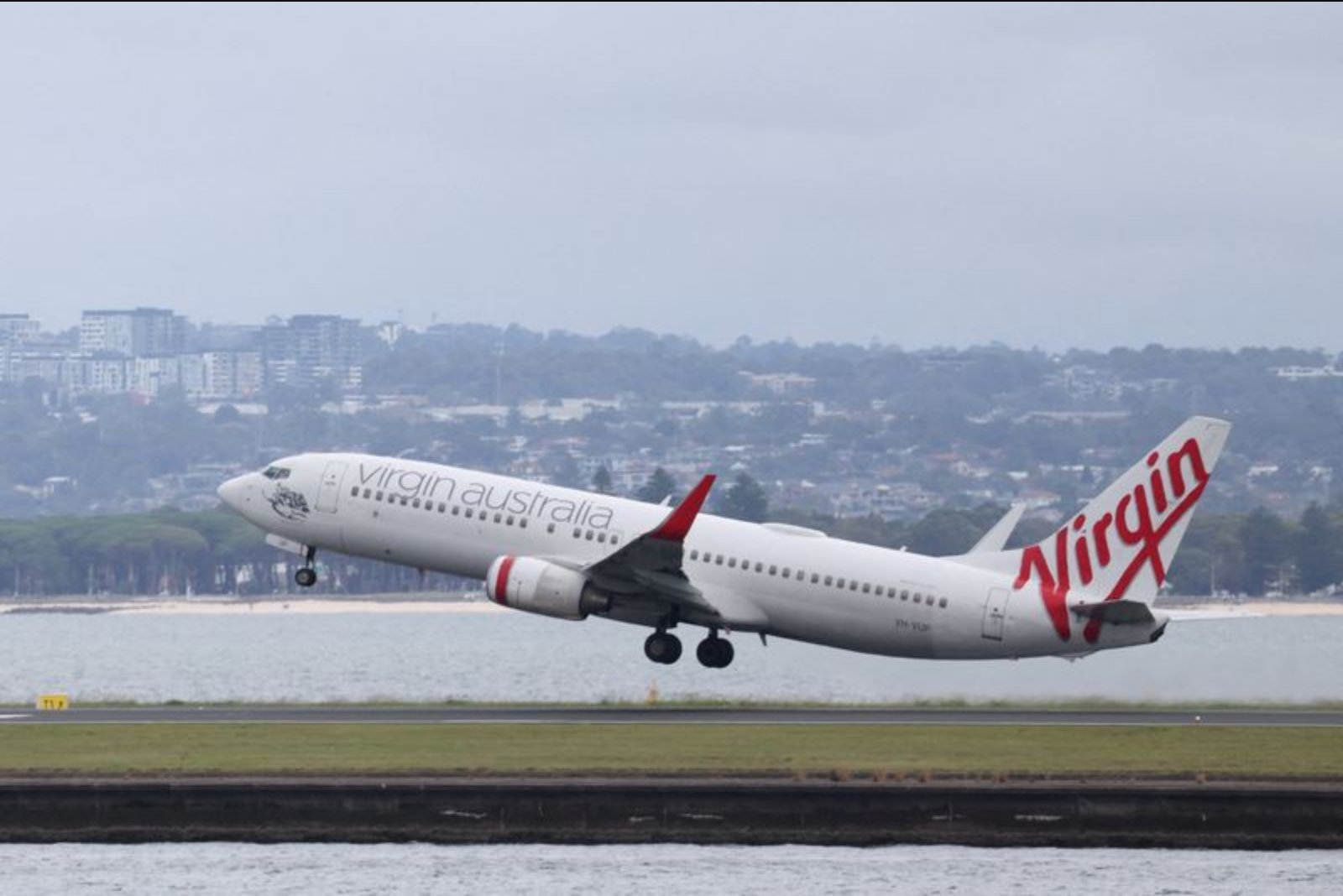
April 15 - Virgin Australia on Wednesday said recent volatility in jet fuel prices linked to the conflict in the Middle East will add to its fuel bill in the second half of fiscal 2026 and prompted changes to fares and capacity assumptions.
The carrier now expects fuel expenses - a principal cost for airlines - to increase by about A$30 million to A$40 million (US$21.38 million to US$28.51 million) in the second half of fiscal 2026.
Shares reacted strongly to the update, rising as much as 12.3% to A$2.64, their highest level since March 19. At 0105 GMT the stock was last up 5.5%, while the S&P/ASX 200 index was up 0.2%.
Virgin Australia said jet fuel prices have been extremely volatile and have more than doubled since the end of February 2026, a movement that is already affecting fuel costs for the June 2026 quarter.
Financial outlook and operational changes
Despite the higher fuel cost expectation for the second half, the airline reiterated that its full-year 2026 financial outlook remains unchanged. Management said underlying earnings before interest and taxes, and underlying EBIT margin, are expected to be higher in the second half compared with the same period a year earlier.
Virgin Australia also raised its guidance for revenue per available seat kilometre, or RASK, a key measure of pricing power. RASK for the second half is now forecast to grow by 5%, up from a prior range of 3% to 4%. The company estimates RASK growth in the fourth quarter at 6%.
On capacity, total domestic flying is now expected to increase by 1% in the second half and to be reduced by 1% in the fourth quarter.
Hedging, exposure and partner arrangements
Virgin Australia outlined its hedging position for fuel and refining margins. For the remainder of the second half of fiscal 2026 the group has hedged 92% of Brent crude oil and 71% of refining margins. For the full year, the company said that only the unhedged portion of Brent crude oil and refining margins will be exposed to the volatility stemming from the Iran conflict.
Looking further ahead, the group has hedged 93% of Brent crude oil and 15% of refining margins for the first half of fiscal 2027. The company noted that the lower level of refining margin hedging in the first half of fiscal 2027 could leave that period more exposed to fuel-related swings.
Virgin Australia added that it expects minimal disruption from the cancellation of its services to Doha through mid-June because those flights are covered by a wet lease arrangement with its operational partner Qatar Airways.
Analyst commentary and market reaction
Citi said the net movement in revenue from the adjustments is minimal and that revisions to profit are largely to the lower end of the airline's fuel guidance. Citi also highlighted that with fuel hedging reduced to 15% in the first half of fiscal 2027, the degree to which higher fuel costs could impact fiscal 2027 earnings remains a key concern.
Exchange rate used in the company disclosure was $1 = 1.4031 Australian dollars.
Summary of key points and context
- Fuel costs for H2 fiscal 2026 are expected to rise by A$30 million to A$40 million, driven by jet fuel price volatility tied to the Middle East conflict.
- RASK guidance for H2 has been increased to 5%, with fourth-quarter RASK estimated at 6%.
- Hedging positions: 92% hedged for Brent crude and 71% for refining margins for the remainder of H2 fiscal 2026; 93% Brent and 15% refining margins hedged for H1 fiscal 2027.
The company's statement and the market response underline how swings in commodity prices can influence airline costs and how airlines use capacity management, pricing and hedging to try to mitigate those moves.