
DUBAI/WASHINGTON, April 15 - The United States military has carried out a maritime blockade that it says has stopped commercial trade moving by sea into and out of Iran, even as leaders offered cautious optimism that diplomatic talks with Tehran could restart in the near term.
President Donald Trump told ABC News correspondent Jonathan Karl that U.S. and Iranian negotiators could reconvene in Pakistan within the next two days. The president, quoted in a post by Karl on X, also suggested he did not expect it to be necessary to extend a two-week ceasefire scheduled to end on April 21. "It could end either way, but I think a deal is preferable because then they can rebuild," Trump said, adding that "they really do have a different regime now. No matter what, we took out the radicals."
Vice President JD Vance, who led the recent weekend discussions that concluded without a breakthrough, said he felt upbeat about progress. Officials from Pakistan, Iran and Gulf countries also reported that negotiating teams from the United States and Iran could return to Pakistan later this week. However, one senior Iranian source cautioned that no formal date had been agreed.
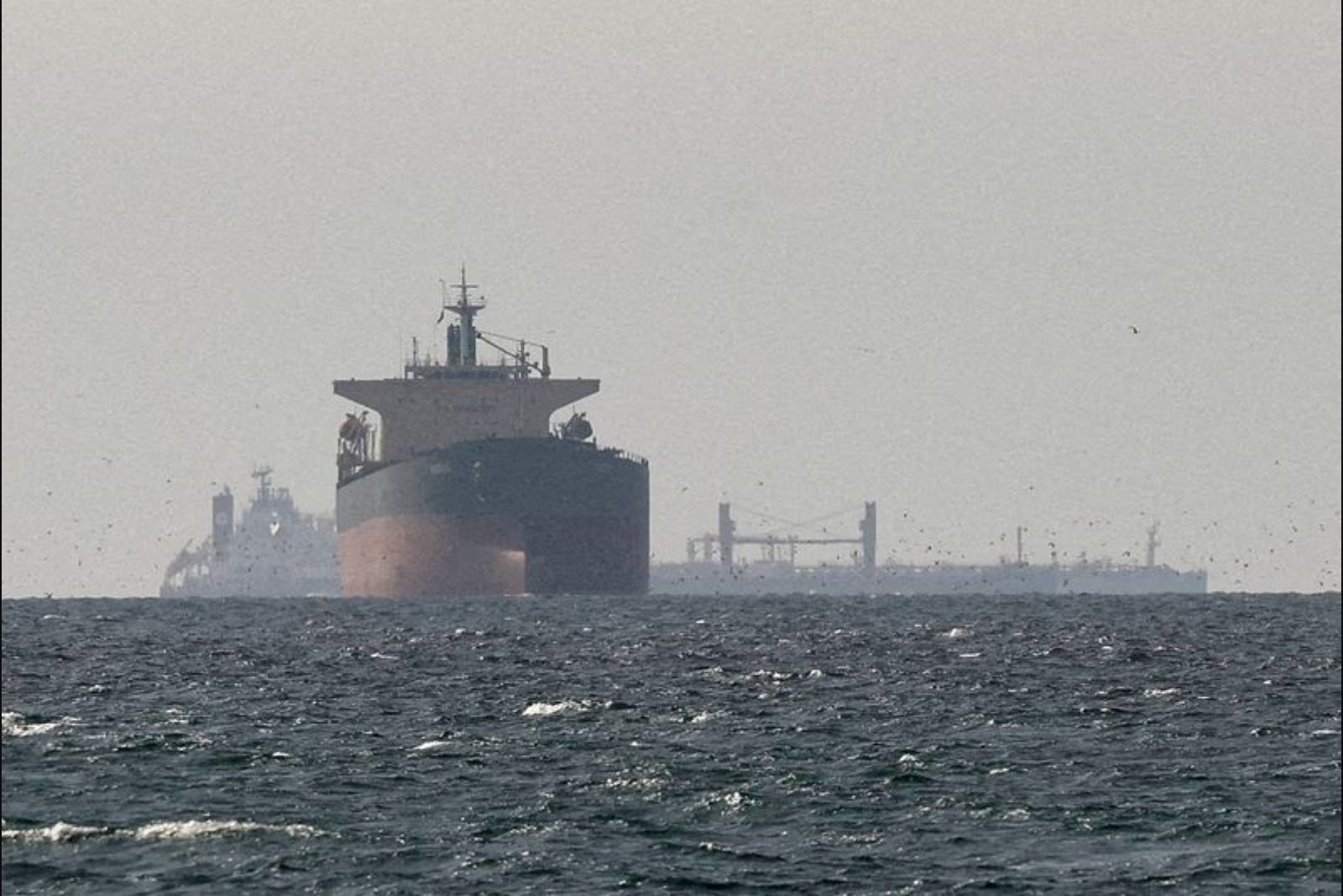
Despite diplomatic signals, the naval pressure has intensified. More ships have been rerouted under the U.S. maritime blockade of Iranian ports. Among them, a U.S.-sanctioned, Chinese-owned oil tanker named Rich Starry was reported to be heading back toward the Strait of Hormuz on Wednesday after leaving the Persian Gulf.
Admiral Brad Cooper, head of U.S. Central Command, said in a post on X that in less than 36 hours since the blockade began, U.S. forces had "completely halted economic trade going into and out of Iran by sea," characterizing maritime commerce as supporting roughly 90 percent of Iran's economy. Earlier, the U.S. military said it had intercepted eight Iran-linked oil tankers since the blockade began on Monday, according to the Wall Street Journal.
Return to Islamabad and diplomatic posture
Speaking to the New York Post, President Trump attributed the likelihood of negotiators returning to Pakistan in part to the role of Pakistan's army chief, Field Marshal Asim Munir, whom he credited with moderating the talks. Vice President Vance, speaking at an event in Georgia, said that while Mr. Trump sought a "grand bargain" with Iran, deep mutual mistrust remained and would not be resolved quickly. "You are not going to solve that problem overnight," Vance said.
Those indicators of renewed engagement eased financial market pressures tied to the conflict. The expectation of resumed talks helped push benchmark oil prices down for a second day and coincided with gains in Asian equities and a stabilization of the U.S. dollar after several sessions of declines.
Impact on shipping and regional energy flows
The war has effectively prompted Iran to close off the Strait of Hormuz at times, a key artery for crude and gas shipments. That restriction has cut flows from the Gulf to global buyers, especially in Asia and Europe, producing direct effects on energy logistics and freight movements through the region.
Casualty figures cited in communications around the conflict indicate roughly 5,000 fatalities, including about 3,000 in Iran and 2,000 in Lebanon.
Negotiation hurdles and nuclear proposals
A primary obstacle in the weekend talks has been the scope and duration of any suspension of Iran's nuclear activities. According to people familiar with the proposals, the U.S. offered a 20-year suspension of all nuclear activity, while Tehran countered with a proposal for a moratorium of three to five years.
Rafael Grossi, director general of the International Atomic Energy Agency, speaking in Seoul, said the length of any moratorium on Iranian uranium enrichment would be a political decision and suggested that Tehran might consider a compromise as a confidence-building measure. The U.S. has also sought removal of enriched nuclear material from Iran; Tehran has demanded that international sanctions be lifted.
One source involved in the Pakistan negotiations said that back-channel discussions since the weekend had made progress in narrowing the gap between the two sides, potentially setting the stage for a concrete proposal at a new round of talks. Yet the diplomatic trajectory is fragile and subject to developments on the ground.
Complications from continuing hostilities in Lebanon
A significant complication for peace efforts is ongoing Israeli strikes in Lebanon that target Hezbollah, a militant group supported by Iran. Israel and the United States have stated that that campaign falls outside the scope of the ceasefire, while Iran contends it should be included.
In response to the continued fighting, the United Kingdom, Canada, Japan and seven other countries issued a statement condemning the killings of UN peacekeepers in Lebanon and calling for "an urgent end to hostilities." The statement followed the deaths of three Indonesian peacekeepers the prior month. Those countries welcomed the ceasefire agreed among the United States, Israel and Iran.
Outlook
There are signs of a possible diplomatic opening, but they exist alongside an assertive U.S. naval effort that has constrained maritime traffic and the flow of oil. The combination of tightened sea routes, interrupted shipments through the Strait of Hormuz and continuing ground and aerial operations in Lebanon underscores an uncertain environment for energy and shipping networks in the near term. Whether upcoming talks can produce a durable agreement that eases those logistical and market pressures remains an open question.