
World April 14, 2026 11:27 PM

Beijing Rejects U.S. Accusations of Military Pressure on Taiwan as 'Distortion'

Chinese Taiwan Affairs Office accuses Washington of misrepresenting cross-strait activity after opposition leader's Beijing visit

By Derek Hwang
Beijing Rejects U.S. Accusations of Military Pressure on Taiwan as 'Distortion'

A Beijing spokesperson dismissed U.S. assertions that China is applying military pressure on Taiwan as a distortion of the facts and accused Washington of harbouring 'malicious intentions.' The remarks followed U.S. calls for China to cease military and other pressure on Taiwan after a high-profile visit by Taiwan's opposition leader to Beijing. Taiwan's government says it should lead cross-strait engagement, while China refuses to engage with Taiwan's president.

Key Points

  • China's Taiwan Affairs Office spokesman called U.S. claims of Chinese military pressure on Taiwan a distortion and accused the U.S. of malicious intent - this highlights tensions in diplomatic rhetoric between Beijing and Washington.
  • China has increased military activity around Taiwan, including multiple rounds of exercises and live-fire drills in late December - relevant to defense and regional security considerations.
  • Diplomatic engagement remains uneven: China refuses talks with Taiwan's President Lai Ching-te while receiving opposition leader Cheng Li-wun, and Taiwan's government asserts it should lead cross-strait engagement - factors affecting political and diplomatic sectors.

BEIJING, April 15 - A spokesperson for China's Taiwan Affairs Office on Wednesday described U.S. statements that China has been exerting military pressure on Taiwan as a misrepresentation and an expression of hostile intent.

Chen Binhua told reporters that some U.S. voices were "jumping up and down, continuously rehashing the so-called 'mainland threat' or 'military pressure.'" He said those portrayals amounted to "a complete distortion of the facts and harbours malicious intentions," adding that Taiwan is an internal matter for China and that Beijing would not tolerate outside interference.

The remarks come amid an uptick in Chinese military activity around Taiwan, which Beijing regards as its territory. China has held several rounds of military exercises near the democratically governed island, most recently conducting live-fire drills in late December, according to the accounts cited in the reporting.

Chen urged the United States to exercise great caution in handling Taiwan-related issues and to act carefully and prudently.

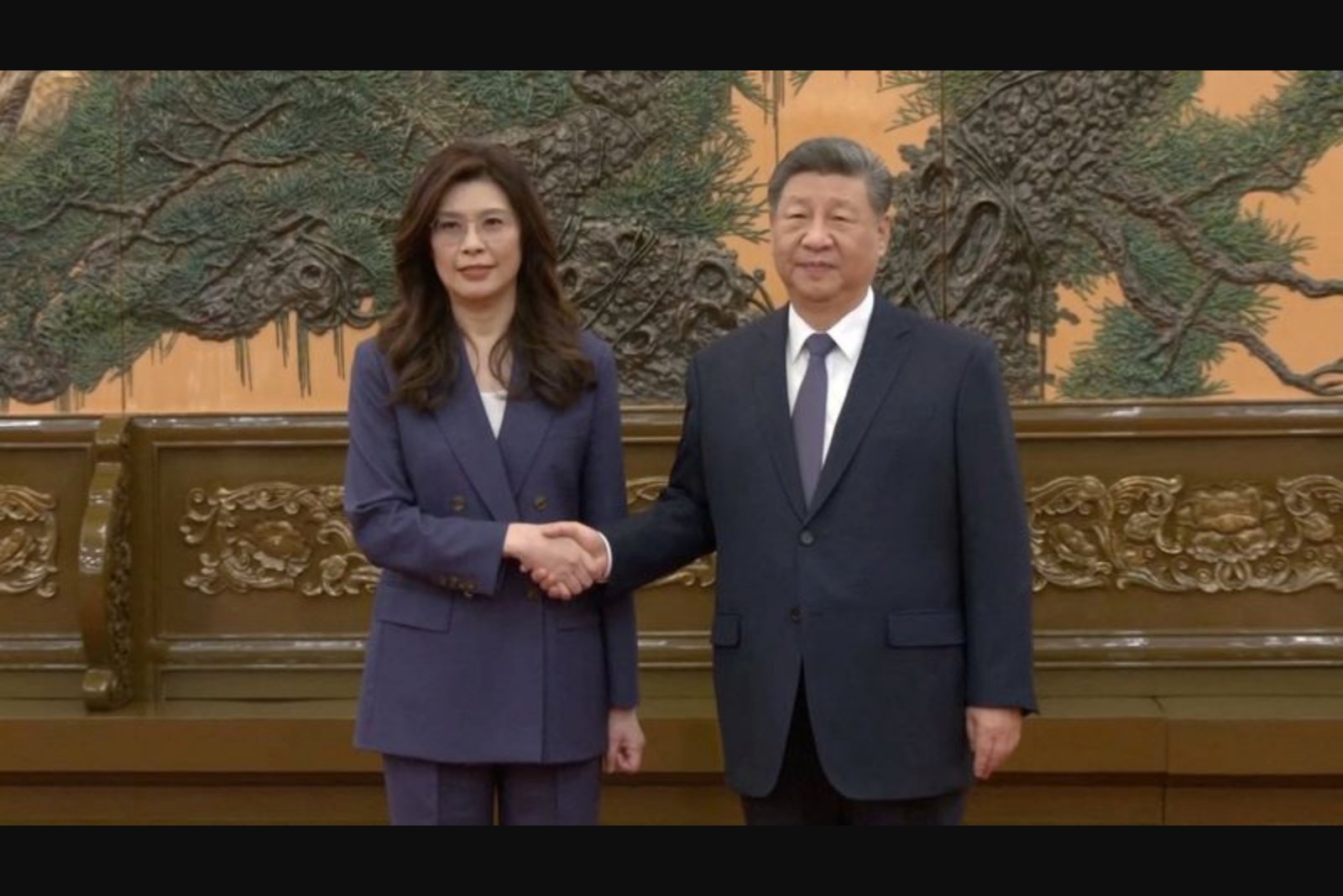
His comments followed a call from the U.S. State Department last week urging China to both engage in talks with Taiwan and to stop military and other forms of pressure on the island. That appeal came after Taiwan opposition leader Cheng Li-wun visited Beijing and met President Xi Jinping.

China has declined to hold talks with Taiwan's current president, Lai Ching-te, whom Beijing labels a "separatist." Lai rejects Beijing's claim of sovereignty over Taiwan and has stated that only the people of Taiwan can determine their future.

Cheng Li-wun, chairwoman of Taiwan's largest opposition party, the Kuomintang, said her aim in visiting Beijing was to promote peace. During her trip, China announced measures it said would bring benefits to Taiwan, such as easing controls on food exports. However, Chinese forces continued their routine military activities around the island during the visit.

Taiwan's government has said it should be the primary actor leading engagement with China, rather than private, party-to-party contacts. Cheng told a Taiwan radio station on Wednesday that she hoped China and the United States could reconcile and cooperate. Her visit occurred a month before a planned trip to the United States by U.S. President Donald Trump.

"We can definitely go down the path of peace," Cheng said. She also announced plans to visit the United States later this year and said she wished to convey that message to Washington.

Risks

  • Continued Chinese military activity around Taiwan could sustain regional security tensions - this poses risks for defense-related sectors and policymakers monitoring security developments.
  • Divergent diplomatic channels, with China refusing to engage with Taiwan's president while meeting opposition figures, create uncertainty over official cross-strait dialogue - this uncertainty affects political risk assessments and diplomatic relations.
  • Escalating rhetoric between the United States and China over Taiwan, described by Beijing as malicious, may complicate bilateral communications and crisis management - a risk for international diplomacy and related strategic planning.

More from World

Xi Tells Lavrov China Will Stand With Russia as Beijing Broadens Global Engagement Apr 15, 2026 Data Leak Reveals Russia-Linked Hackers Infiltrated Dozens of Ukrainian Prosecutors' Email Accounts Apr 15, 2026 U.S. Naval Blockade Halts Iran’s Maritime Trade as Diplomacy Signals Tentative Renewal Apr 15, 2026 Prince Harry Reflects on Early Fatherhood During Melbourne Visit Apr 14, 2026 U.S. Targets Prominent Mexican Human Rights Activist with Sanctions, Alleges Cartel Ties Apr 14, 2026