
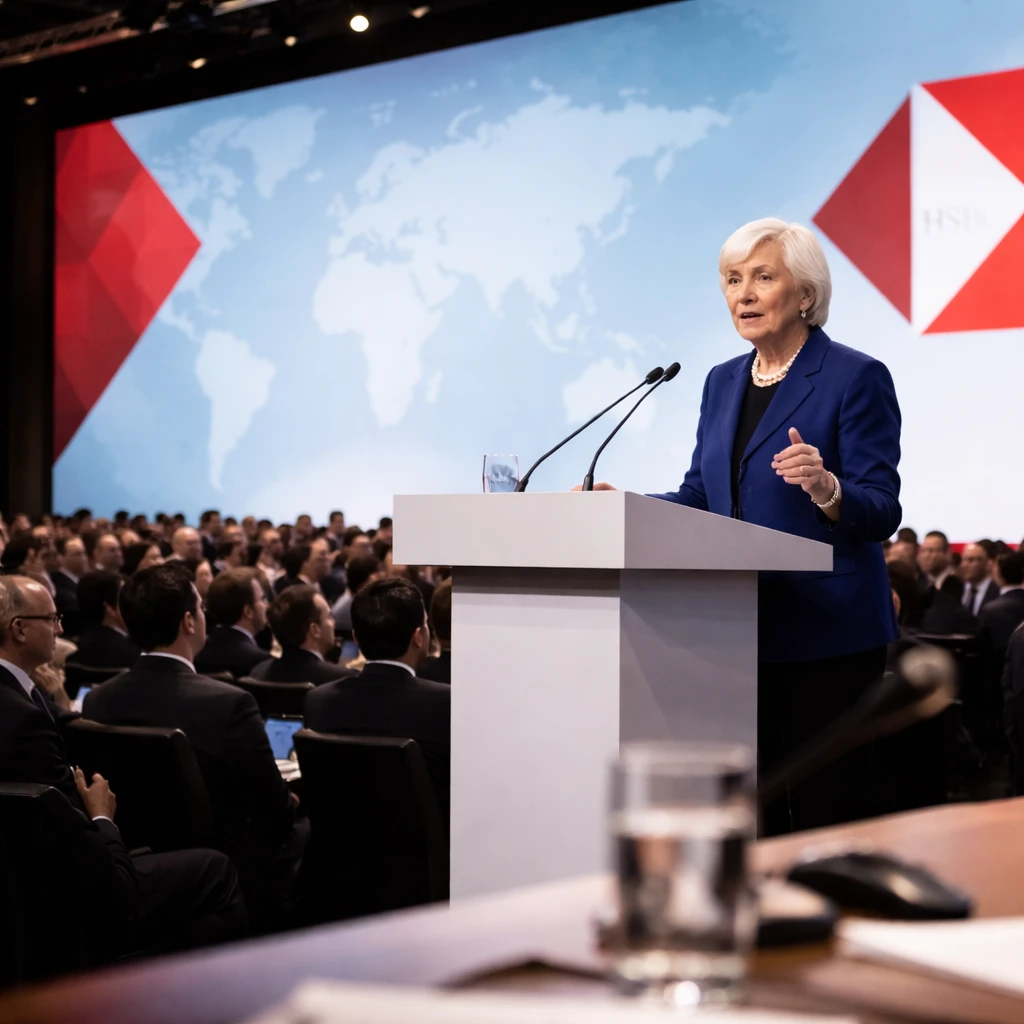
Former Federal Reserve chair and U.S. Treasury secretary Janet Yellen said a single cut to interest rates by the U.S. central bank could still occur this year, even as inflationary pressures have been amplified by the conflict in the Middle East.
Speaking at the HSBC Global Investment Summit in Hong Kong on Wednesday, Yellen said, "If I m going into the next FOMC meeting where the forecasts are produced ... my guess would be that maybe there would be a cut later in the year."
Yellen noted that short-term inflation expectations have risen, while adding that policymakers would remain receptive to new inflationary shocks. She emphasized the complicating role of the conflict in the Middle East, saying it has exerted upward pressure on prices and has sharply increased economic uncertainty.
"We re likely to see more (inflation)... this is a really broad supply shock," Yellen said, summing up her view of how the conflict is feeding into price dynamics.
The Federal Reserve left its policy rate unchanged in March, keeping the range at 3.50% to 3.75%. At that meeting, officials expressed caution about inflationary effects tied to the U.S.-Israel war on Iran. Despite the Fed s pause, a majority of policymakers have forecast at least one possible rate cut over the coming year.
The regional war had entered its sixth week by mid-April, and the resulting disruptions in energy markets showed few signs of easing. Oil prices rose on the conflict, and U.S. consumer price index data for March reflected a notable increase in inflation driven by higher energy costs.
Yellen's remarks tie together the central bank s current policy posture, where rates remain elevated, and the evolving risks from geopolitical developments that can push inflation higher. She acknowledged the Fed s need to weigh those risks while keeping an open mind about the timing of any eventual easing.
Summary: Janet Yellen said one Fed rate cut could be possible later this year despite rising short-term inflation expectations and supply shocks from the Middle East conflict, which has increased energy prices and overall economic uncertainty. The Fed held rates at 3.50%-3.75% in March, and many policymakers still see at least one potential cut.