
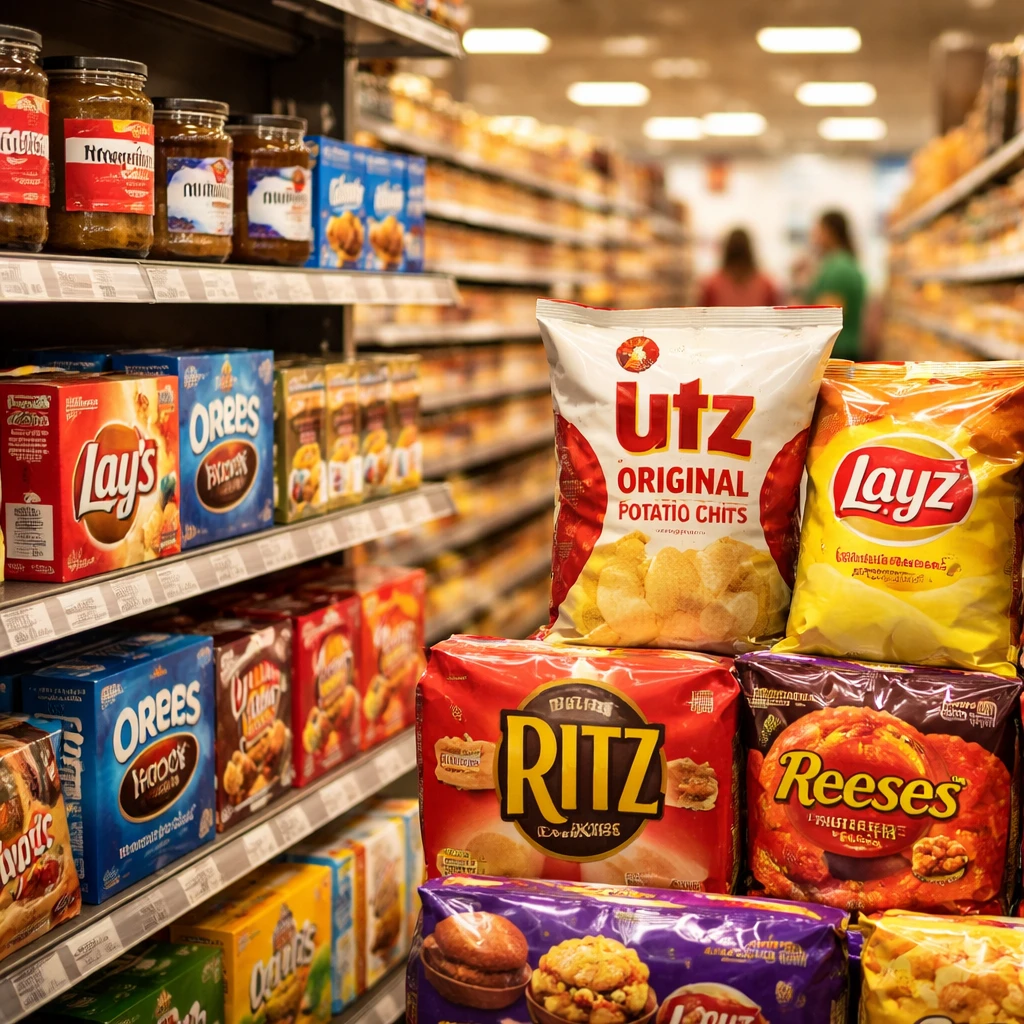
BTIG has singled out three U.S. food companies that it believes are well placed to deliver profit growth and improved cash generation over the next several years. The firm's research highlights distinct drivers for each name - commodity cost dynamics for a global snack maker, pricing and category resilience for a packaged-food and coffee company, and distribution and margin recovery for a salty-snack specialist.
Mondelez (NASDAQ:MDLZ)
BTIG rates Mondelez as its top pick in the group, citing what it describes as best-in-class end-market positioning. The firm points to emerging market growth advantages as a structural benefit. On earnings, BTIG sees potential upside to consensus 2027 earnings per share estimates, underpinned by the prospect of cocoa cost deflation. In BTIG's view, the combination of margin expansion and working capital tailwinds could produce a meaningful step-up in free cash flow in 2027. That cash-flow improvement, the firm notes, could enable above-average share repurchases or acquisition activity.
Smucker (NYSE:SJM)
For Smucker, BTIG's analysis centers on coffee pricing and profit dynamics. The research team contends that consensus expectations understate the profit expansion potential within the U.S. retail coffee segment. BTIG argues the company faces reduced demand risk because of its exposure across coffee, protein-oriented snacks, and pet food amid evolving U.S. consumption patterns. The firm highlights specific product-line momentum - Uncrustables is showing traction with convenience-store distribution opportunities, while the Sweet Baked Snacks line has moved through to profitability. Overall, BTIG views Smucker's valuation as overly discounted when taking into account the prospect for profit and free cash flow ramp.
Utz Brands (NYSE:UTZ)
BTIG points to Utz Brands' geographic distribution opportunity and natural product positioning as levers to grow above the overall category without aggressively taking share in established core markets. The firm describes a flat category outlook as achievable, aided in part by improved velocities. Margin improvement, BTIG says, should result from network optimization, productivity gains and favorable mix; with previously elevated capital expenditure requirements now reduced, free cash flow generation is expected to improve materially. The research note also states that leverage is no longer an overhang and that growth appears dislocated relative to valuation across earnings, EBITDA and free cash flow metrics.
These three names reflect varied strategic paths to profit and cash-flow improvement - commodity-cost tailwinds and emerging markets, pricing and portfolio resilience, and distribution plus operational leverage - according to BTIG's analysis.