
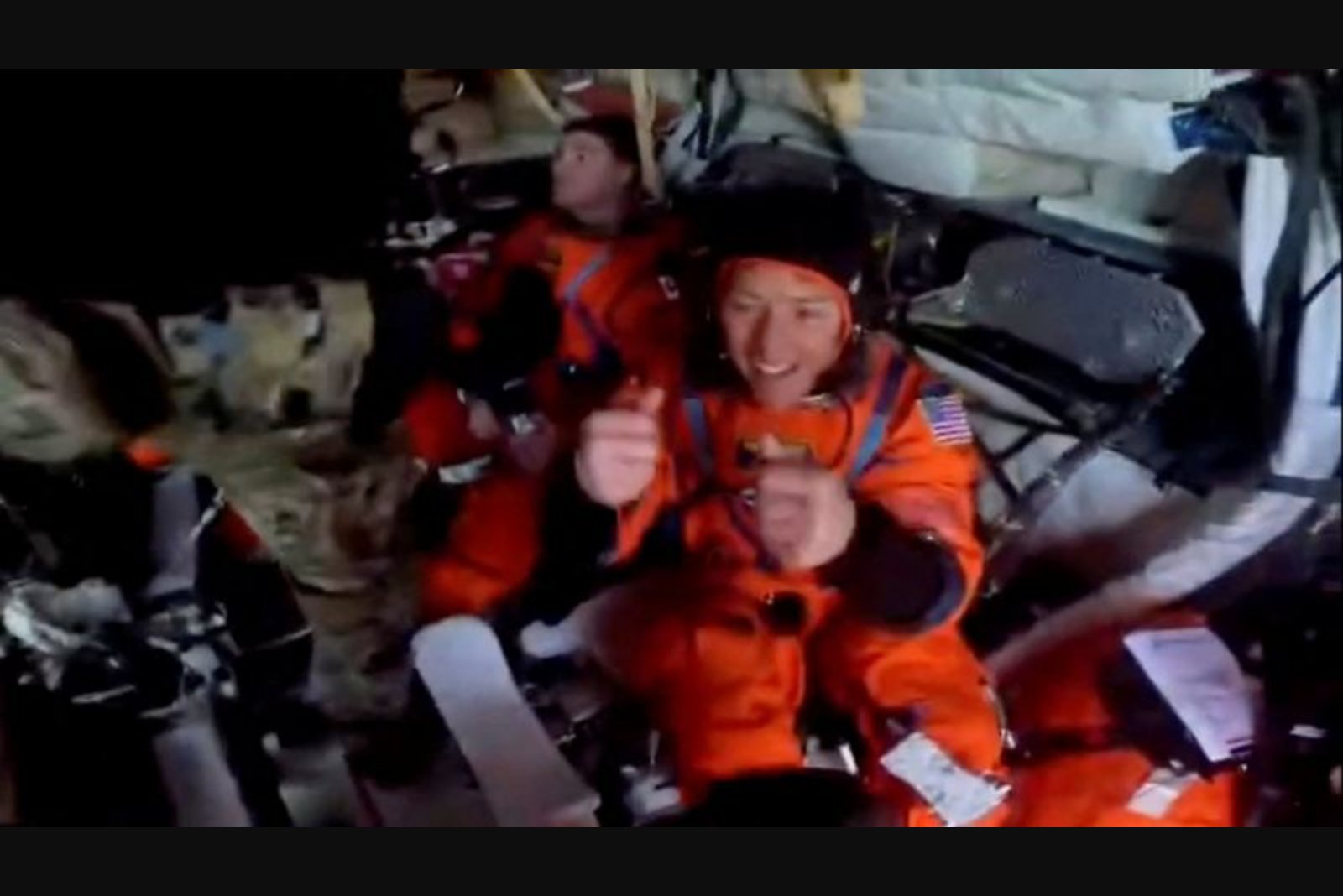
The astronauts on the Artemis II mission received focused, hands-on photography training from two professional instructors in the weeks before the April 1 launch, and those trainers say they were as moved as the wider public by the mission's images of the moon and Earth.
The trainers, Paul Reichert and Katrina Willoughby, delivered approximately 20 hours of concentrated instruction to the crew to prepare them to photograph the lunar far side and the globe below. Both instructors are graduates of the Rochester Institute of Technology's photographic sciences program.
Willoughby emphasized the difference between casual and scientific image-making, saying that "Most people can use a camera and get a photo that is good enough, but good enough isn’t what we’re after scientifically." The training aimed to move the astronauts beyond merely usable snapshots and toward images that met higher technical and scientific standards.
Mission pilot Victor Glover described training that included on-the-ground drills replicating in-flight conditions. During those sessions, astronauts practiced taking pictures from the interior of an Orion capsule mock-up while a large inflatable moon globe was suspended in darkness to mimic the visual and lighting challenges they would face in space.
Equipment selection played a key role in the mission's imaging success. The crew's primary workhorse was the Nikon D5, a digital single-lens reflex camera first released in 2016 that has seen extended use aboard the International Space Station. Reichert noted the model's proven resilience, saying, "We had a lot of flight experience with it. We knew it could handle radiation, at least several years of radiation dosage on the ISS, and it didn’t have any problems with it." The D5's strong low-light performance was also cited as essential for producing sharp photographs in the darkness of space.
Alongside the D5, the crew used a Nikon Z9 mirrorless model and an assortment of lenses that included a 14-24mm zoom, an 80-400mm zoom, and a standard 35mm. The array gave the astronauts flexibility to capture wide-field panoramas of the lunar surface, close-ups of cratered terrain, and framed shots of Earth at varying apparent sizes as the spacecraft moved around the moon.
Not all of the cameras were specialized professional gear. An Apple iPhone 17 Pro Max was added to the flight kit late in the process. Willoughby noted that while the handheld, point-and-shoot nature of a smartphone can be useful in certain situations, the large digital file sizes produced by modern phones introduced a transmission constraint. As she put it, "One thing we do have to think about on board is, 'What does it take to get files down?' And unfortunately, we don’t have bandwidth. And that’s something a lot of people down here [on Earth] are really used to instantly having."
In addition to still photography, GoPro livestreaming provided near-real-time video access for Earth audiences, enabling a modern contrast with earlier lunar missions that relied on film. Unlike the Apollo era, when images had to be developed from physical film stock and could not be reviewed instantly, the Artemis II crew could immediately inspect the digital photographs they took.
The photographs produced during the April 6 lunar flyby included several standout images. One showed the moon's far side completely eclipsing the sun, with a delicate halo surrounding the darkened disc and faint stars still visible nearby. Other shots offered detailed views of the moon's heavily cratered far side, while additional sequences recorded Earth appearing to set and rise against the lunar horizon as the spacecraft completed its transit.
Willoughby described a charged atmosphere at mission control in Houston when the images arrived for review and distribution. "And the excitement in the back rooms and the front rooms as the images were being seen and being put out was pretty good. We were all very excited," she said.
The combination of targeted training, field-tested equipment, and digital review tools produced a collection of images that resonated with both specialists and the general public. The mission's photography program balanced reliance on established space-proven cameras with the convenience and flexibility of modern consumer devices, while also confronting practical constraints on how large image files can be transferred from orbit to Earth.