
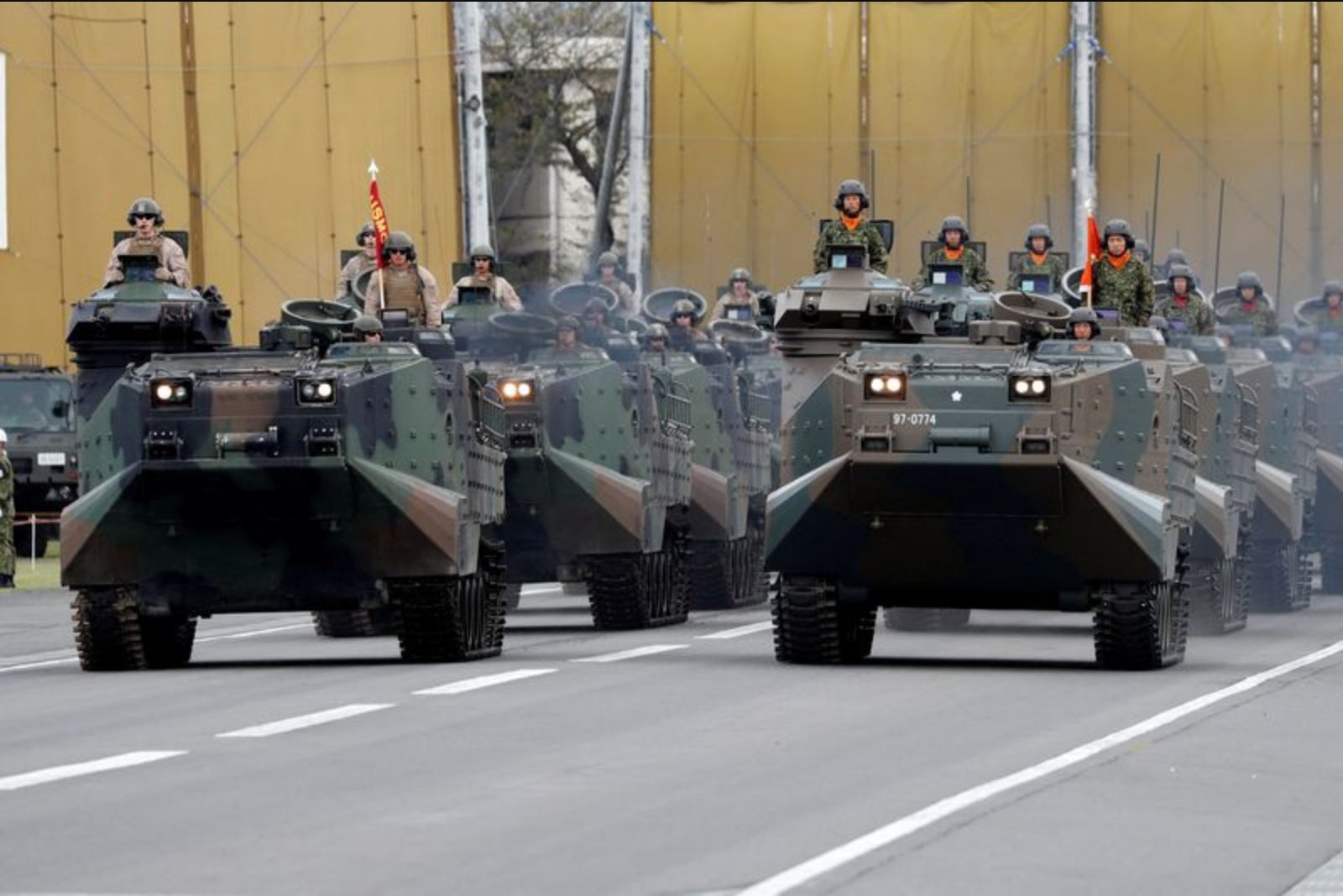
Tokyo - Japan is on the cusp of a major policy shift that would loosen decades of constraints on arms exports, prompting inquiries from prospective buyers ranging from Warsaw to Manila as allied governments assess alternatives to U.S. suppliers. The ruling party of Prime Minister Sanae Takaichi approved revisions to export controls this week, and the administration plans to finalize the new rules as early as this month, according to three Japanese government officials.
The change marks a significant break with Japan’s post-World War Two posture of near-isolation from global arms markets, even as Tokyo sustains a substantial defence budget capable of supporting advanced manufacturing. Japan is spending about $60 billion on its defence this year, a level of investment that underpins a domestic industrial base able to produce complex systems such as submarines and fighter aircraft.
Foreign interest and likely early deals
Government and diplomatic sources in Tokyo say interest has already emerged from several nations modernizing their militaries. Among the potential customers are Poland and the Philippines, each pursuing upgrades in response to regional security concerns. Japanese defence contractors and foreign diplomats in Tokyo report discussions that cover both finished platforms and components, as well as co-development and joint production possibilities.
One of the first export actions expected under the revised framework is the sale of used frigates to the Philippines, which is engaged in maritime disputes with China in the South China Sea. Two Japanese officials indicated that those transfers would likely be among the initial approvals, to be followed potentially by missile defence systems, though formal decisions remain pending.
Poland and Japan are also exploring cooperation to address shortfalls in certain capabilities, including anti-drone measures and electronic warfare systems. "There are some bottlenecks that we can overcome having Japan on board," said Mariusz Boguszewski, deputy chief of mission at Poland’s embassy in Japan, while declining to provide details about specific purchases or projects.
Industry reaction and capacity expansion
Japanese defence-related firms are already adjusting to the prospect of increased overseas demand. Executives at Toshiba and Mitsubishi Electric report hiring and capacity expansion plans aimed at capturing export business. Toshiba’s defence unit plans to recruit about 500 people over the next three years, and the company is building new testing and manufacturing facilities while establishing a dedicated department to manage defence exports.
Masahiko Arai, senior vice president of Mitsubishi Electric’s defence unit, said the firm is expanding staff in overseas locations including London and Singapore to support export activity. "Offers are coming from everywhere," he said, describing a broadening interest in Japanese systems and components. A recruitment listing reviewed by industry observers shows Mitsubishi Electric seeking an overseas sales role focused on fighter aircraft and other military exports.
Arai expects his unit’s combined domestic and international sales to rise by roughly 50% to 600 billion yen by 2031. Toshiba and other firms note the reputational dynamics that previously discouraged participation in international arms sales are shifting, a factor that may make suppliers more willing to pursue foreign contracts.
Market opportunity and limits
Demand appears strongest for finished systems in Asia, while Europe, Australia and the United States may offer opportunities for parts supply and co-development partnerships. Some European diplomats in Tokyo said that Japan’s relaxation of controls presents a chance to reduce reliance on U.S. weapons production, which has been stressed by concurrent conflicts in Ukraine and the Middle East.
At the same time, tensions remain between political signaling and the operational choices of individual companies. Several major Japanese brands with defence-adjacent operations have been cautious about entering export deals that might upset their broader consumer markets.
For example, an attempted 2023 sale of engines and related parts by a Japanese supplier to a Latvian firm for use in a military utility vehicle was declined by the manufacturer’s subsidiary on the grounds of its business scope and policy. The Latvian mission in Tokyo had sought to facilitate the transaction but the supplier declined, illustrating the limits domestic corporate policy can impose on export ambitions even as national rules change.
Policy drivers and external dynamics
Japan’s relaxation of arms export rules builds on earlier, incremental shifts initiated more than a decade ago. Former Prime Minister Shinzo Abe loosened a near-blanket ban to encourage joint development with allies, but many restrictions, including those on lethal equipment, persisted and limited foreign sales. With a stronger parliamentary position following a recent election and without a longtime coalition partner that opposed deeper reforms, Prime Minister Takaichi is pressing ahead with broader changes intended to stimulate defence industrial capacity for a significant military expansion.
Officials and diplomats point to strains on U.S. supply chains and concerns about the predictability of American security commitments as factors driving partner states to diversify their sources of weapons. Several European diplomats in Tokyo noted that U.S. foreign military sales have been criticised for late deliveries, rising costs and tight controls on technology, creating an opening for other suppliers.
Washington has previously encouraged allies to contribute more to collective defence by strengthening their own industrial bases; Japan’s rule change aligns with that objective while also seeking to knit regional defence supply chains less dependent on the United States. A ruling party official involved in security policy drafting said that building Asia-based defence supply chains that do not rely solely on U.S. sources is one explicit aim of the revisions.
Opportunities beyond sales
The rule changes are also sparking industry collaborations. Kyiv’s chamber of commerce in Tokyo plans to establish a new grouping of Ukrainian and Japanese drone companies to accelerate joint development of technologies, a move timed to coincide with the export policy revisions, according to the chamber’s head, Kateryna Yavorska.
Poland’s private defence sector has already taken tentative steps with Japanese partners; one example is a preliminary drone agreement signed last year between Poland’s WB Group and Japanese aircraft maker ShinMaywa. Such arrangements reflect an interest not only in purchasing finished systems but in co-developing capabilities and building supply-chain linkages.
Strategic scale and comparative position
Analysis of global defence supply shows the U.S. remains the dominant source for many buyers. Between 2021 and 2025 the United States accounted for 95% of Japan’s defence imports, 85% of Australian and British purchases and 77% of Saudi Arabian buys. Yet Tokyo’s industrial base is sizable relative to many other suppliers: despite previous curbs, Japan’s arms industry is comparable in scale to those of South Korea, Germany, Italy and Israel, and is roughly double the size of India’s by one measure of contractor revenues in 2024. The U.S. industry, by contrast, is far larger still.
Industry advisers and observers portray Japan’s change as an exit from a prolonged period of restraint. "Japan has been kind of in the timeout box because of World War Two, frankly. But they were inevitably going to swing closer towards the centre of global politics," said Andrew Koch, founder of a Tokyo-based defence advisory firm.
Constraints and sensitivities
The government intends to retain strict prohibitions on sending arms into active conflict zones, and those controls are expected to be reflected in the new rules. At the same time, China has signalled concern about changes to Japan’s export stance; a Chinese foreign ministry spokeswoman told reporters in April that Beijing was attentive to shifts in Tokyo’s policy and urged prudence in military and security matters. The Chinese foreign ministry did not provide an immediate response to questions about the possible transfer of Japanese frigates to the Philippines.
Tensions between the desire to scale up defence production and corporate caution persist. Some consumer-facing Japanese firms that hold defence-related business units remain wary of the reputational implications of active weapons exports. Still, executives at core defence firms argue commercial risk calculations have shifted and are leading them to invest in recruitment and production capacity.
What this means for markets and manufacturers
For suppliers of military systems and components, the policy revision creates new demand horizons across Asia and parts of Europe and Oceania. For manufacturers of subsystems and components, it opens possibilities for co-development and supply-chain integration that could reduce lead times and dependence on single-source suppliers. Financially, some defence units are forecasting materially higher sales over the coming decade if the export regime enables exports and joint ventures at scale.
Yet the pace at which deals materialize will depend on how companies reconcile corporate policies with the new national rules, the specifics of export approvals, and the broader geopolitical environment that will shape buyers' procurement decisions. The government’s formal adoption of the rules this month will be a crucial test of whether the political momentum translates into sustained industrial growth and international contracts.
Currency note: $1 = 159.2100 yen.