
Economy April 14, 2026 09:18 PM

Trump Says Iran Conflict Is 'Very Close to Over' After White House Interview

President expresses optimism to Fox Business anchor as a fragile two-week ceasefire appears to hold and a U.S. naval blockade is ordered

By Marcus Reed
Trump Says Iran Conflict Is 'Very Close to Over' After White House Interview

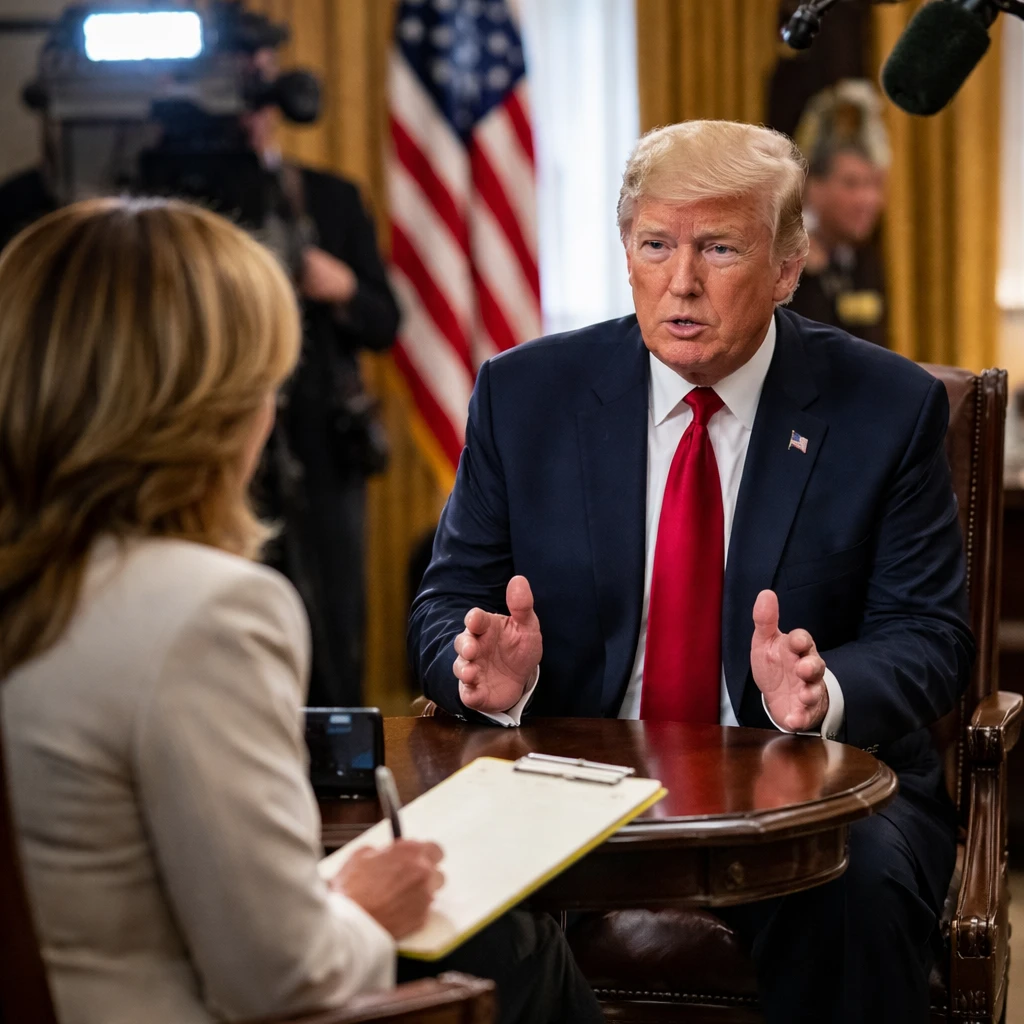
After a White House interview with Fox Business anchor Maria Bartiromo, President Donald Trump described the Iran conflict as 'very close to over.' The comments come amid a tenuous two-week ceasefire set to expire on April 21, U.S. efforts to resume talks, and a new U.S. naval blockade ordered to begin this week.

Key Points

  • President Trump told Fox Business anchor Maria Bartiromo he views the Iran conflict as "very close to over," comments shared by Bartiromo after a White House interview.
  • A tenuous two-week ceasefire between the U.S. and Iran runs until April 21 and appeared to be holding as of Tuesday evening, while Washington is pursuing further peace talks before that deadline.
  • The U.S. has ordered a naval blockade against Iran to start this week - a development with potential implications for maritime operations and regional security.

President Donald Trump told Fox Business anchor Maria Bartiromo on Tuesday evening that he believes the conflict with Iran is approaching an end. Bartiromo, who conducted the interview in the White House, reported the president saying "I think it’s close to over… I mean I view it as very close to over," in a post on social media.

The full interview is scheduled to air on Bartiromo's program "Mornings with Maria" at 06:00 ET (10:00 GMT) on Wednesday, according to the anchor. Bartiromo's account of the exchange was shared publicly ahead of the broadcast.

Earlier on Tuesday, the president told the New York Post that he expects U.S.-Iran ceasefire talks to resume within the next two days, following weekend discussions in Pakistan that largely broke down. Those comments follow a pattern of the president asserting repeatedly that the conflict is over and that the United States accomplished its stated aims - primarily degrading Iran's nuclear ambitions and curbing its military capabilities. Iranian officials have largely rejected those assertions.

Washington and Tehran agreed to a tentative two-week ceasefire that runs until April 21. As of Tuesday evening, the agreement appeared to be holding. At the same time, the White House has directed a naval blockade against Iran to begin this week.

The confrontation entered its sixth consecutive week with no definitive end state in sight. Recent accounts indicate U.S. officials are working quickly to organize additional peace talks before the ceasefire expires on April 21. Diplomatic movement in the region has included direct talks between Israel and Lebanon in Washington - their first such talks since 1993. Tehran has repeatedly insisted that any ceasefire arrangement include Lebanon.

Details about the next steps for negotiations, the precise implementation of the naval blockade, and whether the ceasefire will be extended beyond April 21 remain uncertain. The president's public optimism, the presence of a fragile truce, and parallel diplomatic efforts underline a period of active but unresolved diplomacy.


Context note: This report reflects statements made by the president to a Fox Business anchor, prior comments to the New York Post, and public developments regarding the ceasefire and naval blockade as they were reported on Tuesday evening.

Risks

  • The ceasefire is described as tenuous and is set to expire on April 21, creating uncertainty about whether hostilities could resume - a risk for energy markets and regional stability.
  • Previous talks in Pakistan largely broke down, and while U.S. officials are racing to organize follow-up negotiations, there is no guarantee they will succeed - a diplomatic and market uncertainty.
  • Contradictory public claims - including U.S. declarations that objectives have been achieved and Iran's denials - leave the durability of any settlement unclear, with potential effects on shipping, defense planning, and investor sentiment.

More from Economy

Bank of Korea Nominee Flags Possible Tightening as Import Costs Surge Apr 14, 2026 Unannounced Visit by U.S. Prosecutors to Fed Renovation Site Raises Tensions Apr 14, 2026 Dollar Retreats Near Six-Week Low as Prospects of Renewed U.S.-Iran Talks Boost Risk Appetite Apr 14, 2026 World Bank Prepares Up to $100 Billion in Response to Middle East War, Banga Says Apr 14, 2026 Bessent Says U.S. Growth Could Surpass 3% Despite Iran Conflict Apr 14, 2026