
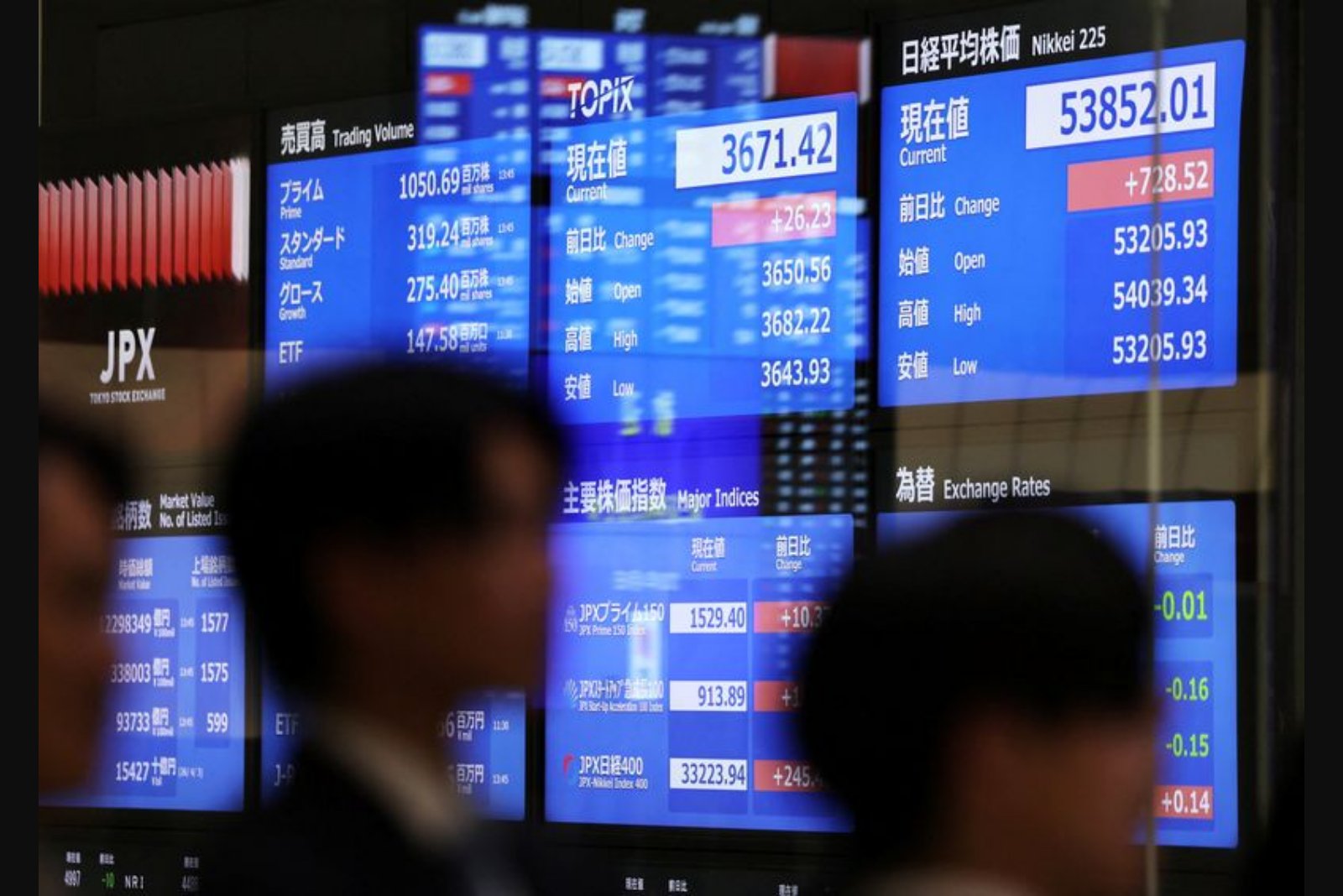
Asian markets followed Wall Street higher on Wednesday as indications that negotiations between the United States and Iran could restart helped drain some of the premium from oil and bolster investor sentiment.
President Donald Trump said talks with Iran could resume in Pakistan within the next two days after weekend negotiations had collapsed and prompted Washington to impose a blockade on Iranian ports. Pakistani and Iranian officials also indicated that negotiations might be restarted. Those signals that diplomatic engagement would continue contributed to a marked decline in oil prices, which in turn supported risk appetite across markets.
Benchmark Brent crude fell 0.7% to $94.13 a barrel, a move that followed an almost 5% drop overnight. With prices retreating firmly below $100 a barrel, equity investors responded positively: MSCI's broadest index of Asia-Pacific shares outside Japan rose 1.5% to its highest level in six weeks.
Regional benchmarks were broadly higher. Japan's Nikkei climbed 1.2% to 58,561 points, moving closer to its late-February record of 59,332.43. Chinese large-cap stocks rose 0.5% while Hong Kong's Hang Seng index advanced 1.2%.
"The impressive price action in risk assets suggests markets are keen to look through the immediate impact of the Middle East conflict," said Tony Sycamore, an analyst at IG. "There is a growing expectation that the standoff will soon be resolved, allowing the U.S. administration to pivot towards declaring victory, before stimulating the economy ahead of the midterms."
Overnight gains on Wall Street helped the mood. The Nasdaq rose 2%, marking its 10th consecutive day of gains, while the S&P 500 flirted with a record closing high.
U.S. producer price data also provided support for markets. Producer prices increased by less than economists had expected in March, which helped alleviate concerns that the conflict would trigger a fresh wave of inflationary pressure.
Heightened investor optimism that the conflict with Iran may subside also lent support to U.S. Treasuries, which had been under pressure amid inflation worries. The two-year U.S. Treasury yield slipped 1 basis point to 3.704% on Wednesday, after falling 3 basis points overnight. The 10-year yield fell 1 basis point to 4.2439%, following a 4 basis point drop overnight.
The safe-haven U.S. dollar steadied after a seven-session decline. The euro held at $1.1791, having earlier reached a six-week high of $1.1811.
Gold ticked up 0.1% to $4,846 an ounce.
Despite the easing in prices and the market rally, the International Monetary Fund on Tuesday lowered its growth outlook and warned that the global economy would be pushed to the brink of recession if the conflict were to worsen. The IMF's caution reflected the ongoing effective cut-off of oil flows through the Strait of Hormuz, a factor that has kept downside risks to growth firmly on investors' radars.
Markets continue to monitor diplomatic developments closely. Any firm confirmation that talks will resume could further reduce near-term volatility in oil and credit markets, while setbacks or renewed escalation would likely reverse recent gains and revive inflation and supply-risk concerns.