
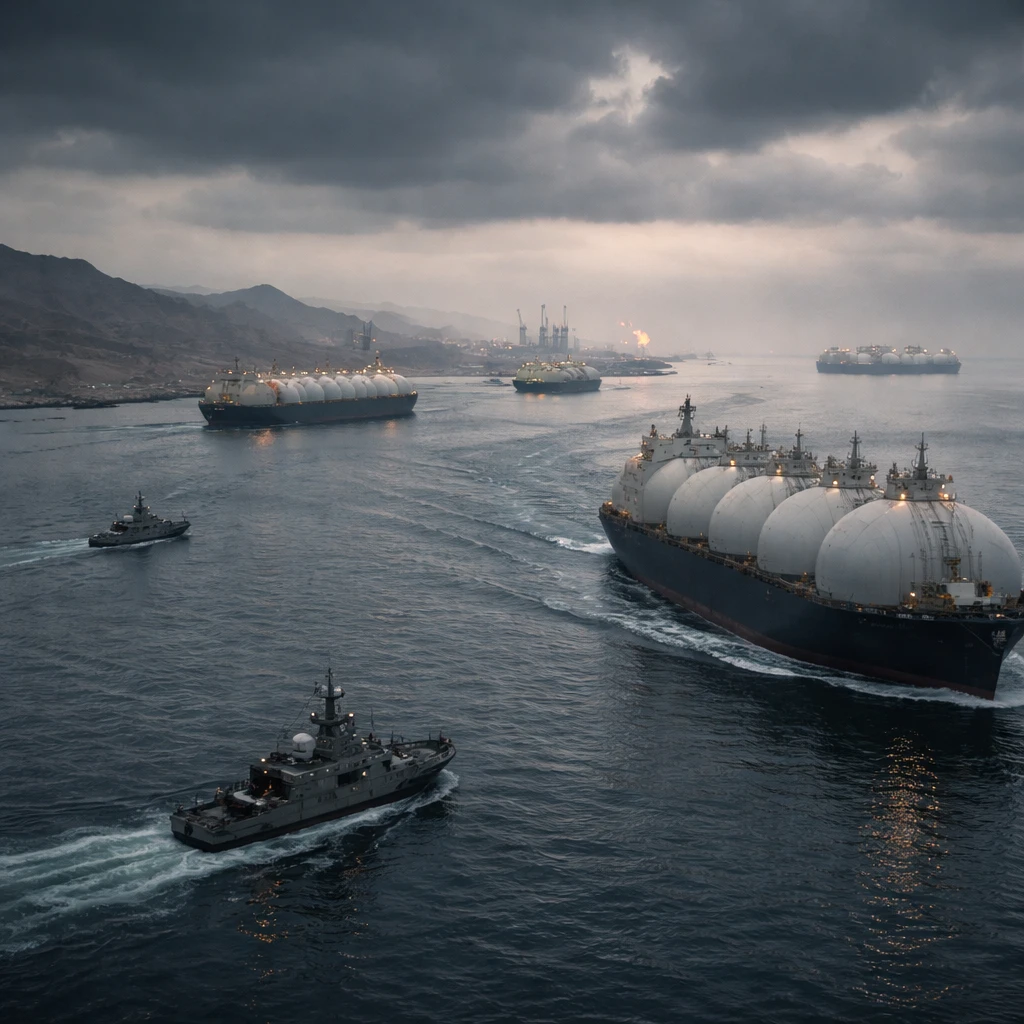
European natural gas benchmarks slid on Tuesday, with investors re-evaluating the outlook for liquefied natural gas that transits the Strait of Hormuz amid ongoing diplomatic exchanges between Washington and Tehran.
By 06:07 ET (10:07 GMT), the front-month Dutch TTF contract had fallen 3.4% to 44.66 euros per megawatt hour (MWh), based on Intercontinental Exchange data. That move followed a sharp uptick on Monday, when the TTF climbed to as high as 51.30 euros per MWh after a U.S. naval blockade of Iranian ports was initiated following weekend talks that did not produce an immediate ceasefire.
Market participants cited the continued uncertainty around movements through the Strait of Hormuz, a marine chokepoint off Iran's southern coast through which about a fifth of global LNG shipments transit. Although some reporting has indicated forward momentum in talks between the U.S. and Iran, navigational access around Iranian ports remains heavily constrained.
The U.S. blockade extended into a second day on Tuesday. British maritime officials reported restrictions on vessels attempting to enter or depart Iranian ports, and limited access in coastal areas of the Persian Gulf, the Gulf of Oman and sections of the Arabian Sea.
European LNG imports are exposed to disruptions in that waterway. The market has also been further pressured by reported strikes on energy infrastructure in Qatar, a key natural gas producer, which traders say could contribute to lower imports and keep European storage at depressed levels heading into the colder months.
Gas Infrastructure Europe data cited by Reuters showed EU storage sites were 29.5% full, down compared with 35.4% at the same time a year earlier. Those figures underline the potential vulnerability of Europe to supply shocks when inventories are below seasonal norms.
Diplomatic developments remained mixed. Reuters reported that U.S. and Iranian officials have continued to engage, with some forward motion reported toward a potential permanent ceasefire deal. Separately, U.S. President Donald Trump said the White House had been contacted by Iranian officials who would like to "make a deal," and he added that Iran "will not have a nuclear weapon." According to reporting, Washington has demanded that Iran agree not to enrich uranium for 20 years as part of negotiations.
Pakistan has surfaced as a mediation venue and, according to reports, offered to host a second round of discussions before the current two-week ceasefire expires. The first round of talks took place in Islamabad last weekend.
Regional tensions also include the situation between Israel and Lebanon. Direct peace talks between Israel and Lebanon are scheduled to begin in Washington. Air strikes by Israel on Hezbollah-linked targets in Lebanon have been cited as a significant threat to the fragile halt in hostilities between the U.S. and Iran, adding another layer of geopolitical risk to energy-market calculations.
With supply uncertainties persisting and storage below last year’s levels, market watchers said prices may remain sensitive to incremental news flows on shipping access, diplomatic progress, and reports of damage to producing infrastructure.