
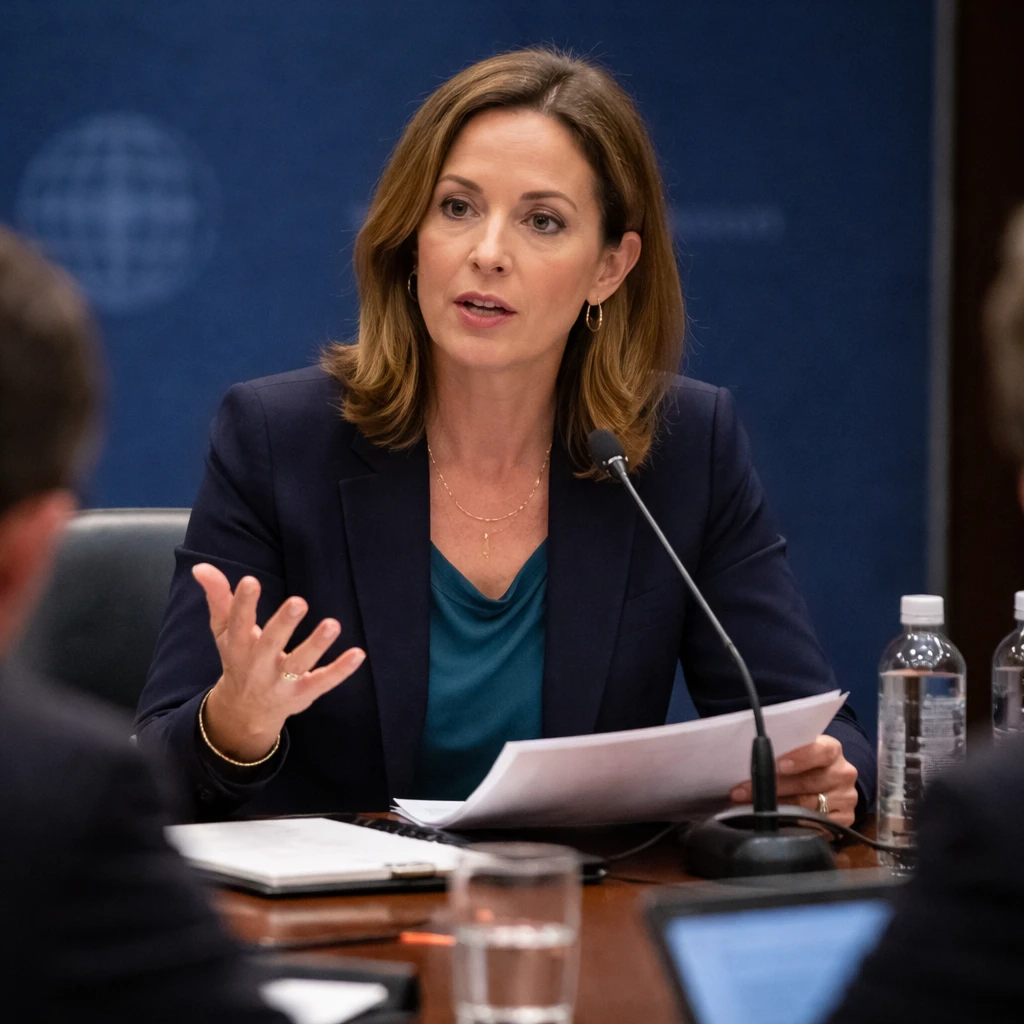
Megan Greene, a policymaker at the Bank of England, said on Tuesday that the greatest concern shaping her views on future interest rates is the potential for inflation to move higher.
Speaking at an event organized by the Atlantic Council in Washington, Greene framed upside inflation risks as paramount, even as she acknowledged that demand-side weakness is also possible.
"There are definitely downside risks to demand, and I think that’s important. But I think that the upside risks to inflation are paramount," Greene said.
Greene noted that the wider economic context includes Britain dealing with the economic fallout from the Iran war. She cautioned that any secondary or second-round inflationary effects stemming from an expected rise in headline inflation might not show up in the data immediately.
"It could take months for evidence of second-round effects from the expected increase in headline inflation to appear," she said, adding that the current data so far paints a "mixed picture."
Her comments put emphasis on the upside risks to inflation when assessing the appropriate path for interest rates, while also recognizing that downside risks to demand remain relevant. The reference to a mixed data picture underlines the uncertainty policymakers face when judging whether headline inflation increases will feed through into broader, persistent price pressures.
For observers focused on consumer behavior and price dynamics, Greene’s statement highlights the dual considerations central banks weigh: the risk that slower demand could weaken inflation versus the risk that rising headline inflation could trigger broader, sustained inflationary momentum. She explicitly warned that confirming evidence of such second-round effects may require several months of additional data.
Her remarks were delivered in Washington at a forum convened by the Atlantic Council and reflect her assessment of current risks rather than a forecast of specific policy moves.