
World April 14, 2026 07:48 AM

Pope Leo Visits St. Augustine’s Birthplace in Algeria, Reiterates Opposition to War

On a multi-country African tour, the pontiff honors the early theologian who framed rules for just warfare and renews moral criticism of the Iran conflict

By Sofia Navarro
Pope Leo Visits St. Augustine’s Birthplace in Algeria, Reiterates Opposition to War

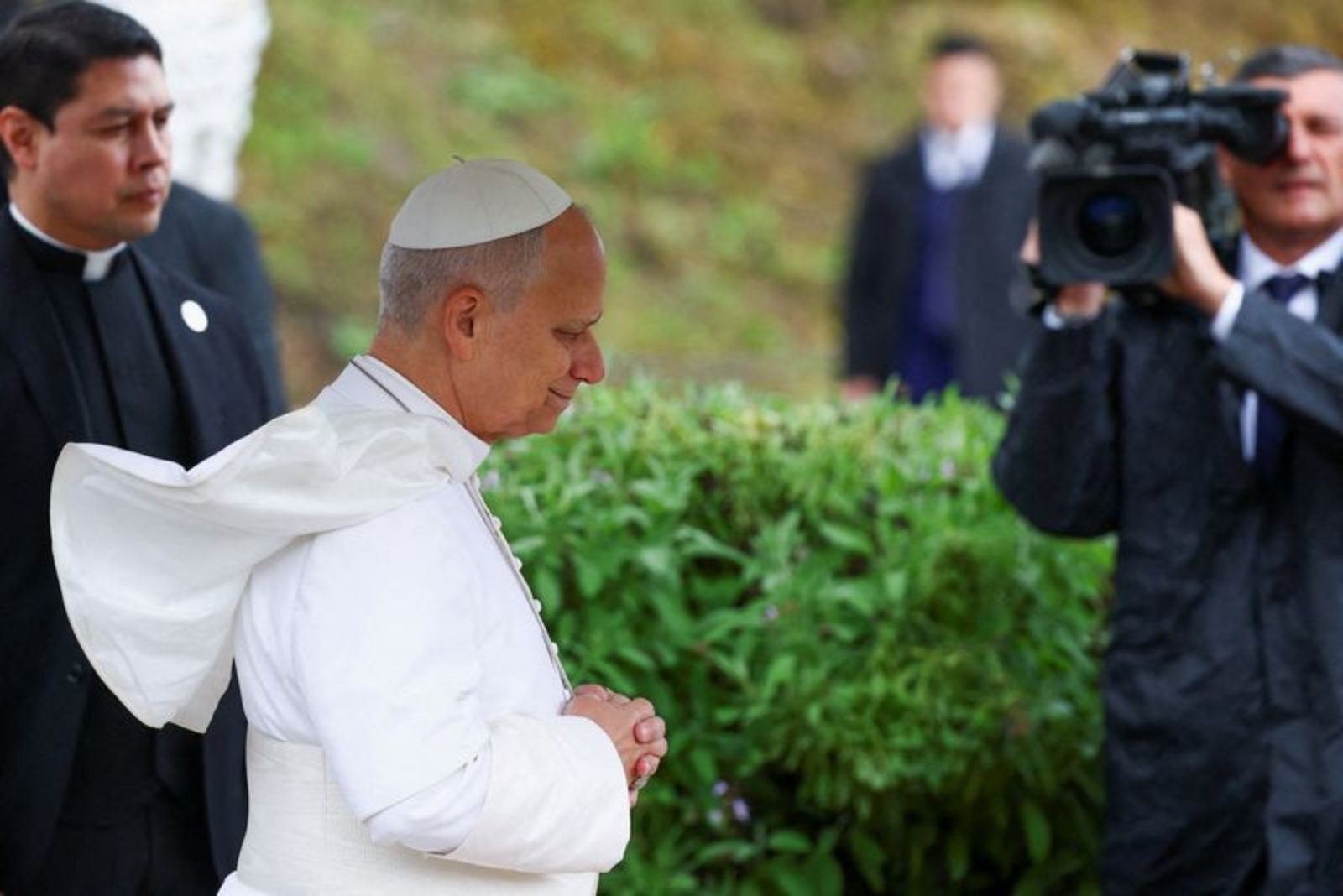
Pope Leo traveled to Annaba, Algeria, to visit the site associated with St. Augustine of Hippo, a key influence on his vocation and the early Church’s criteria for just war. During the visit he paid symbolic respects, met residents at a nearby nursing home and repeated moral objections to the war triggered by surprise airstrikes against Iran. His stance has drawn criticism from U.S. President Donald Trump, but the pope said he will continue to speak out.

Key Points

  • Pope Leo visited Annaba, Algeria, the site associated with St. Augustine of Hippo, and laid a wreath and helped plant a sapling with local Muslim Scouts.
  • St. Augustine’s criteria for just war - defending against aggression, protecting the innocent, and seeking restoration of peace - remain part of Catholic doctrine and have been cited by critics of the recent Iran conflict.
  • The pope has publicly criticized the war that began after surprise U.S.-Israeli airstrikes on Iran on February 28 and said he would continue to voice such criticism despite pushback from U.S. President Donald Trump.

Pope Leo made a pilgrimage on Tuesday to Annaba in northeastern Algeria, the ancient location tied to St. Augustine of Hippo, whose writings helped shape the spiritual path that led the pontiff to the priesthood. The visit formed part of the pope's 10-day tour of four African countries.

Arriving at the archaeological remains of Hippo amid light rain, the pope laid a wreath of yellow and white roses and joined several Algerian Muslim Scouts, wearing tan uniforms, in planting a young tree. He did not make public remarks while at the ruins.

St. Augustine, who died in the year 430, is remembered in Catholic teaching for articulating criteria under which wars might be considered just - chiefly that force may be used to repel aggression or to protect innocents, with the aim of restoring peace and not from a desire for cruelty. These principles, later updated, remain part of Catholic doctrine.

The pope's public association with Augustine took on immediate political resonance because he has sharply criticized the war that began after surprise U.S.-Israeli airstrikes against Iran on February 28. That criticism has prompted a public rebuke from U.S. President Donald Trump. Despite that, the pope told Reuters on Monday that he planned to continue speaking out against the conflict.

At a later meeting on Tuesday at a nearby nursing home operated by Catholic sisters, Pope Leo — who belongs to the Augustinian religious order — addressed residents of the Little Sisters of the Poor facility. He said, "God's heart is torn apart by wars, violence, injustice and lies," and added, "Our Father's heart is not with the wicked, the arrogant or the proud."

The pope’s emphasis on Augustine underscores both a personal spiritual connection and a broader moral framework that some critics have cited in judging the recent war. Washington Cardinal Robert McElroy is among those who have described the conflict as "morally illegitimate," explicitly invoking Augustine's principles.

The visit combined symbolic gestures at the ancient site with pastoral outreach at the nursing home, reflecting an approach that links historical theological thought with commentary on contemporary conflict. The pope's actions and remarks during the trip have kept the focus on moral criteria for warfare articulated by Augustine and their contemporary application.


Contextual note: The information in this report is limited to statements and events as presented during the pope's visit and comments made regarding the conflict.

Risks

  • Continued public criticism by a prominent religious leader could heighten diplomatic tensions between the Vatican and political leaders who support the war - this concern touches on international relations and defense sectors.
  • Invoking moral frameworks for judging warfare may deepen divisions among religious and political constituencies, potentially affecting institutions involved in international humanitarian and faith-based work.
  • Sustained controversy over the conflict and the rhetoric used by high-profile figures could influence public sentiment and policy discussions, with implications for political risk assessment in affected regions.

More from World

Trump Rebukes Meloni, Says He Is 'Shocked' by Italian Prime Minister Apr 14, 2026 Military Strikes Fail to Deliver Political Breakthrough for Netanyahu in Iran Conflict Apr 14, 2026 Airstrike on Gaza Police Vehicle Kills Four, Including Child, Health Officials Say Apr 14, 2026 Aid Agencies Begin Overland Deliveries of Emergency Supplies to Iran Apr 14, 2026 Envoys from Lebanon and Israel to Meet in Washington as Israel Intensifies Campaign Against Hezbollah Apr 14, 2026