
More than six weeks after Israel launched a campaign aimed at dismantling core elements of Iran’s military and deterrent capabilities, the hoped-for political payoff for Prime Minister Benjamin Netanyahu has not materialised. Military operations, which have included heavy Israeli and U.S. airstrikes and targeted removals of senior figures, have degraded some enemy capabilities but have not produced a decisive strategic victory.
Iran remains a functioning state with its nuclear stockpiles intact. Its missile capability, according to analysts cited by Israeli sources, is now proven in practice and Tehran retains control over the Strait of Hormuz - a critical shipping lane that carries about a fifth of global oil flows. Palestinian militant group Hamas has not been disarmed in Gaza, and Hezbollah continues to launch rockets from Lebanon into northern Israel. Those developments have complicated Netanyahu’s goal of turning battlefield action into lasting political capital.
"Netanyahu is not winning," said Danny Citrinowicz, a senior researcher on Iran at Israel’s Institute for National Security Studies. "This war is a strategic failure. There is a gap between what he promised at the start of the campaign and where we ended up."
Declining public support
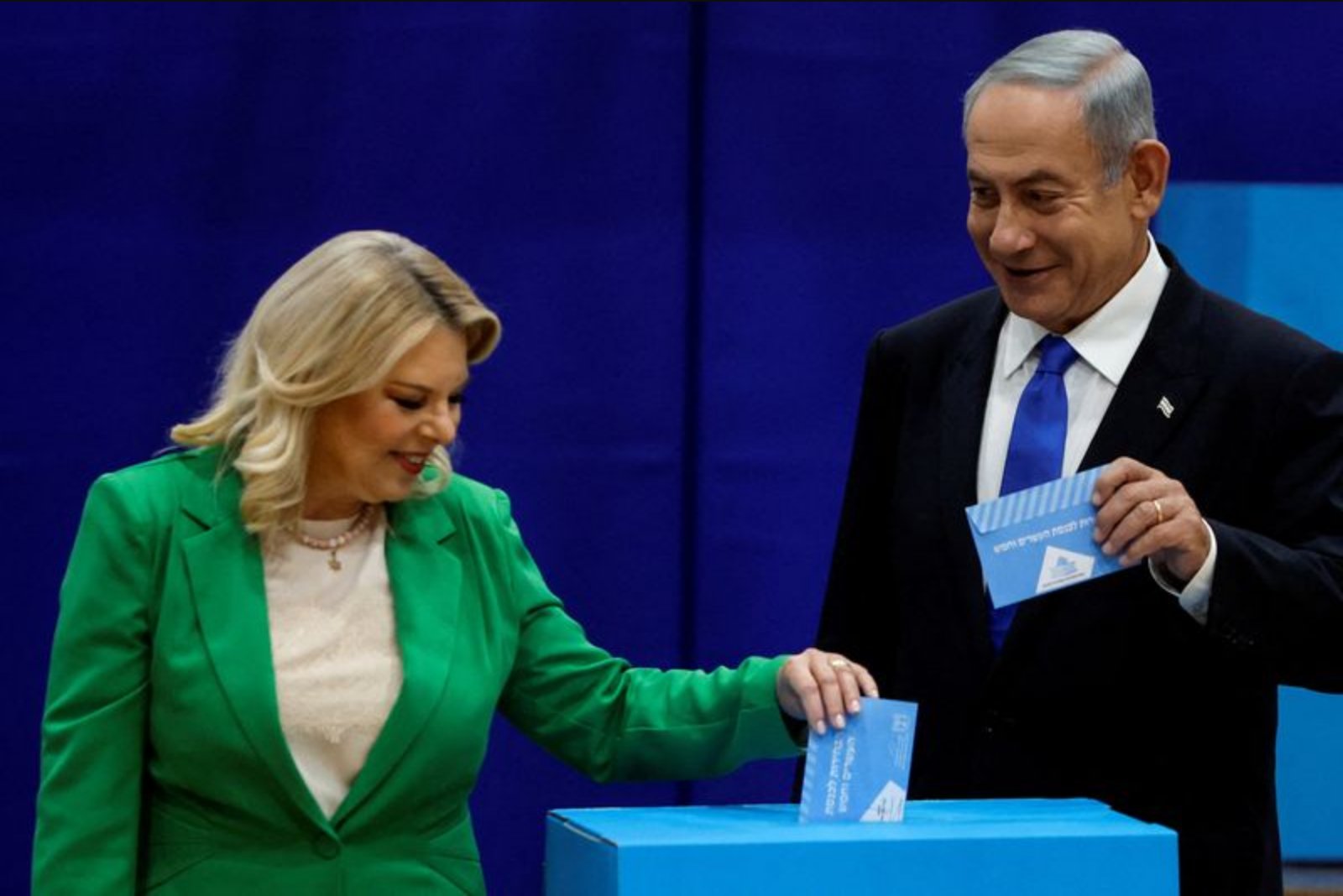
Political fallout at home is visible. Netanyahu, 76, faces falling approval ratings amid a campaign that began with strong domestic support following the October 7, 2023 Hamas attack that precipitated the Gaza war. Early gains in public sentiment tied to a hardline posture have since eroded. An April 11 survey by Hebrew University’s Agam Labs found that only 10% of Israelis judged the campaign a success, while support for Netanyahu had dropped to 34% from 40% at the war’s outset. More than half of respondents rated his leadership as poor or very poor.
Netanyahu has publicly defended the campaign and disputed assessments that understate Israel’s achievements. In a recent statement he said: "There are massive achievements here. This is a historic change. We crushed the nuclear program. We crushed the missiles. We crushed the regime." He also urged Iranians early in the campaign that they would be "called upon to take to the streets" and topple their clerical rulers, a forecast that security officials now doubt will occur in the near term.
From tactical blows to strategic ambiguity
Analysts and former advisers say that while Israel’s air campaign has demonstrated tactical and operational proficiency, those gains have not added up to the kind of comprehensive strategic outcome Netanyahu had sought. Aviv Bushinsky, a former adviser to Netanyahu, observed that the initial effect of the Iran campaign was to rehabilitate the prime minister’s public standing following the October attacks. But he and others now see that short-term political boost diminishing as the campaign stretches on.
Security officials told Reuters that the initial expectation inside government was for a swift operation to "finish the job" within three weeks. Instead, the campaign has broadened into a larger confrontation with regional and global ramifications, forcing reassessments of what airpower alone can accomplish.
"There is this idea that F-15s and F-35s (fighter jets) can shape or remake the Middle East - that if you kill enough Iranian leaders, the regime will fall," Citrinowicz said. "It’s a flawed assumption, and the cost of it keeps getting higher every time." He and others stressed that targeted assassinations, while disruptive, do not necessarily produce regime collapse. Bushinsky said of the strikes that killed senior Iranian figures - including, the article reports, Iran’s Supreme Leader Ali Khamenei among those killed - that eliminations create successors rather than ending the threat. "There is always someone who replaces them," he said. "It wakes the bear, it doesn’t kill it."
Diplomacy, ceasefire plans and political calculations
Diplomats and officials describe a complex interplay between military operations and diplomatic initiatives. Israeli officials and a Western source said Netanyahu learned about a ceasefire plan that was being negotiated only in its final stages, and that he was angered at being left out of the process. The plan was described as Pakistan-brokered. Netanyahu has since sought to counter any impression that he was sidelined, issuing a statement that U.S. Vice President JD Vance called him from his plane to brief him on the talks.
At the same time, some regional diplomats suggest Netanyahu might try to slow or block a quick diplomatic resolution if he judges a U.S.-Iran agreement would intensify his domestic political difficulties. Israel has said it would accept a deal if it meaningfully constrained Iran’s missile and nuclear programs and removed enriched uranium, according to official statements.
Economic costs and long-term geopolitical effects
The campaign has carried a substantial fiscal price tag. Israel’s finance ministry reported the war effort has run up about $11.5 billion in budgetary costs, with a significant portion allocated to defence spending. Beyond direct government spending, regional trade and energy markets face heightened uncertainty: Iran’s demonstrated ability to threaten Gulf infrastructure and to influence the Strait of Hormuz adds a new layer of risk for global oil flows.
Experts on Iran say the conflict has crossed a threshold for Washington and for regional actors. Iran, despite suffering attacks, appears to have shown it can survive a clash with U.S.-aligned forces and still pose a threat to shipping and Gulf infrastructure. "You can’t put the genie back in the bottle," Citrinowicz said, referring to Iran’s influence over the strait, adding that Tehran now feels emboldened and seeks more than previous negotiations had conceded.
Aaron David Miller, a former U.S. Middle East negotiator, said the Gulf Arab states are among the biggest losers from the current dynamic, confronting a potentially harder-line Iran. Abdulaziz Sager, chairman of the Saudi-based Gulf Research Center, said Gulf states would accept the risks of increased confrontation to ensure the strait remains open rather than allow Tehran to threaten shipping or Gulf ports.
Political outlook and unresolved security challenges
With legislative elections scheduled by late October, Netanyahu’s political calculations are shifting. Analysts say his inability to secure a clear-cut victory risks intensifying domestic political vulnerability. The continuation of security problems in Gaza and the West Bank, and the ongoing threat from Lebanon, are likely to complicate any effort to translate battlefield activity into durable domestic advantage.
Diplomats and regional analysts also warn that absent decisive military breakthroughs, the dilemma facing Netanyahu could deepen. Some suggest he may prefer to delay or oppose a diplomatic breakthrough with Iran to avoid a domestic perception that he has lost leverage or been politically weakened. Israeli officials did not immediately respond to requests for comment on those assessments.
Conclusion
Despite the display of superior airpower and a series of targeted operations, the campaign against Iran has so far produced limited strategic gains relative to the objectives articulated at its outset. Iran’s core capabilities and regional influence remain; key adversaries have not been neutralised; public sentiment in Israel has soured; and the economic and geopolitical consequences - especially for energy routes and Gulf security - are likely to endure as the conflict unfolds.