
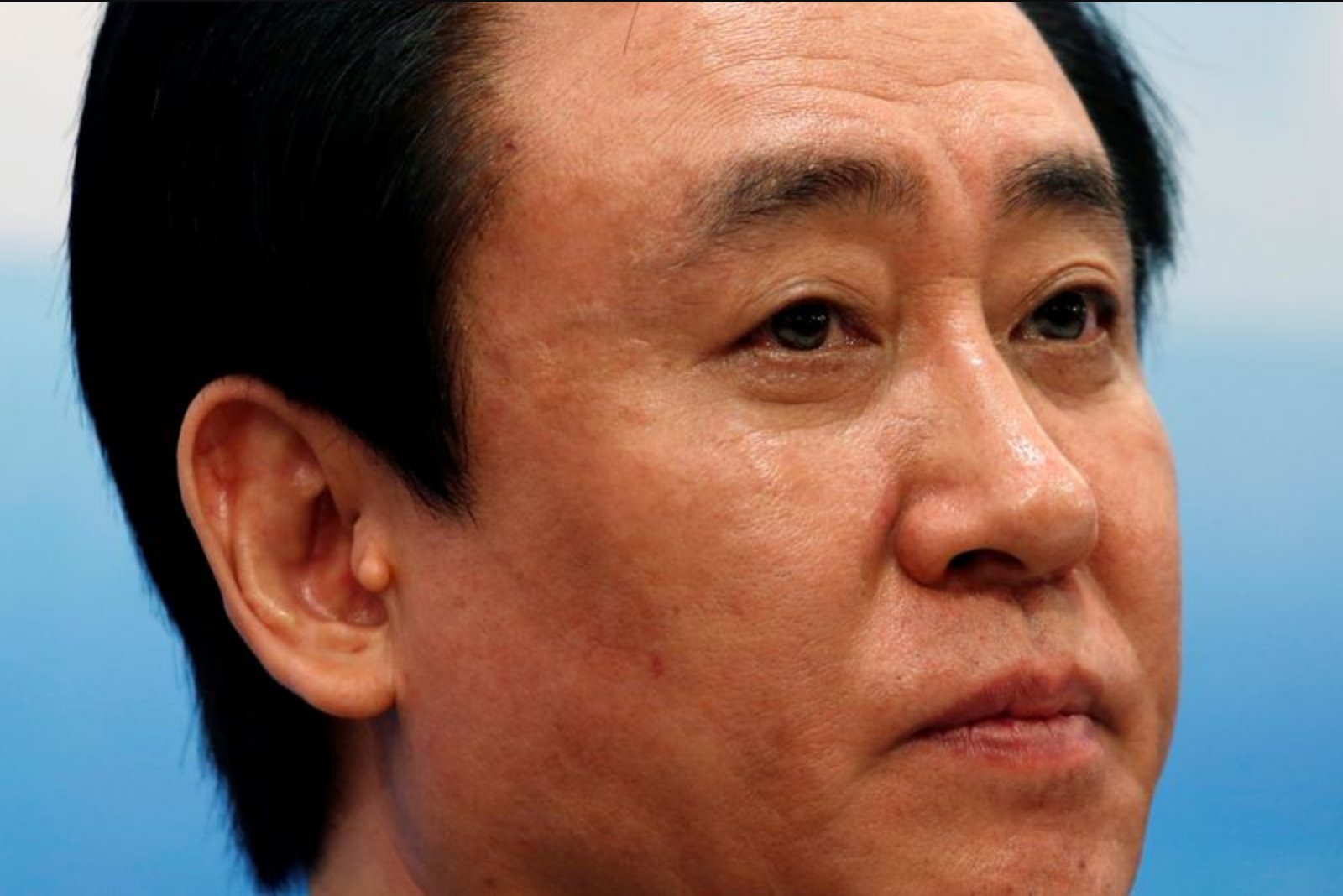
At the July 1, 2021 centenary festivities for the Chinese Communist Party, Hui Ka Yan presented a composed image.
Dressed in a navy-blue suit and an open-collared shirt, the Evergrande founder stood on a platform overlooking Tiananmen Square among other influential figures. At the time many observers read such an invitation as a sign of establishment support for the billionaire businessman. He spoke publicly about plans to reduce the group’s indebtedness, reiterating targets he had outlined only weeks earlier to a gathering of more than 1,000 suppliers.
Fast forward nearly five years and the picture has changed dramatically. China Evergrande Group, once the world’s most indebted property developer, is now in liquidation with aggregate liabilities in excess of $300 billion - an amount comparable to the gross domestic product of Finland. Hui, 67, has pleaded guilty to charges that include fundraising fraud and bribery after spending three years in detention. The guilty plea marks a definitive legal end point to the downfall of the group that reshaped large swathes of China’s property market.
The liquidators overseeing Evergrande, who were appointed by a Hong Kong court, declined to comment. Attempts to reach Hui for comment were not successful. The municipal government in the southern city of Shenzhen did not respond to a request for comment.
Hui’s origins were modest. Raised by his grandmother in a rural village in Henan province and trained as a steel technician, he founded Evergrande in 1996 in the southern city of Guangzhou. The company’s growth strategy under his leadership relied on rapid expansion: large-scale land purchases financed through heavy borrowing, and a focus on quick sales achieved by pricing homes at lower margins to accelerate turnover.
Those tactics helped Evergrande scale quickly. By 2020 the developer reported annual sales of 700 billion yuan. At his personal peak, Hui was rated Asia’s richest man in 2017 with a net worth of $45.3 billion, as reported by Forbes. By 2023 his net worth was estimated at $3 billion.
Colleagues describe Hui as a workaholic who maintained a low public profile and expected intense commitment from others. When pressed about the company’s heavy leverage in interviews and investor meetings over the past decade, he frequently argued that the group’s fast turnover and asset holdings would be adequate to cover its debts.
Hui was not confined to real estate alone. He explored other businesses that aligned with national priorities, including electric vehicles and soccer, sectors associated broadly with the leadership’s interests. Internationally, he cultivated relationships with Hong Kong business figures and became a member of an exclusive investment-oriented social circle known informally as the "poker club." Sources familiar with the group said Hui ingratiated himself by playing down his winnings and building friendships within the club.
One well-known relationship from that era involved Cheng Yu Tung, founder of New World Development, who according to Evergrande’s listing prospectus invested $150 million in Evergrande a year before the company’s Hong Kong initial public offering in 2009. That injection came at a time when the group was seeking support during a period of rapid expansion.
Regulators had long expressed concern over Evergrande’s debt levels and urged the company to act to prevent risks that could spread through the financial system. Hui also made public statements about contributions to state revenues and social causes: at the 2018 China Charity Awards, where he was recognized for an eighth consecutive year, he said Evergrande had paid 185 billion yuan in taxes over 22 years and donated more than 10 billion yuan.
"Without the country’s policy to reform higher education, I could not have left the village. Without the country giving me a scholarship of 14 yuan every month, I could not have completed university," Hui said at the charity awards. "Without the country’s good policy to reform and open up, Evergrande would not have become what it has today. Therefore, everything that Evergrande and I have, they are all given by the Party, by the country, and by society."
The exchange rate at the time of reporting was $1 = 6.8171 Chinese yuan.
Hui’s guilty plea, the company’s liquidation and the appointment of liquidators by a Hong Kong court close a chapter on a company whose debt problems brought intense scrutiny to China’s property sector and its potential to affect broader markets. The legal outcome and the size of Evergrande’s liabilities highlight the challenges that can accompany rapid expansion financed through heavy borrowing and quick sales strategies.
Summary: Hui Ka Yan, founder of China Evergrande Group, has pleaded guilty to fundraising fraud and bribery after three years in detention. Evergrande is in liquidation with total liabilities above $300 billion. Hui’s rise from rural Henan to a leading property magnate included diversification into other ventures and close ties with influential business figures, even as regulators cautioned about the firm’s leverage. His public remarks emphasized gratitude to state policies and claimed large tax payments and charitable donations by Evergrande.