
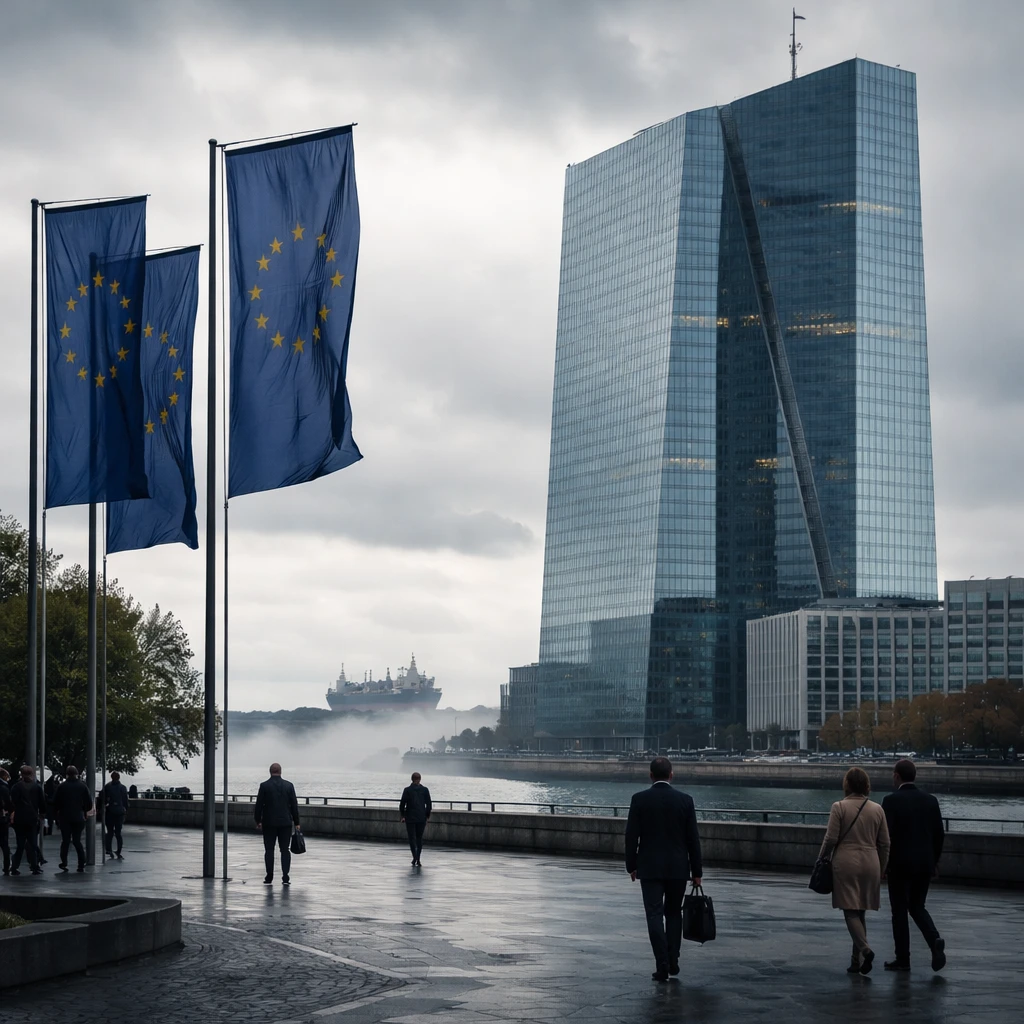
Olli Rehn, governor of the Bank of Finland and an ECB policymaker, said on Tuesday that a rate increase at the European Central Bank’s April 30 policy meeting should not be taken for granted. Rehn highlighted the central bank’s vigilance regarding the ongoing conflict in the Middle East and the broader economic effects that may flow from it.
Rehn told reporters that an uptick in headline inflation during this year is unavoidable, but he stressed that the medium-term consequences of the war on inflation are not yet clear. He warned that the situation merits close attention before committing to further monetary policy moves.
"A rate hike is not self-evident, but we have to proceed by keeping calm and closely analysing the effects of the war in Iran and the closure of Strait of Hormuz on the economy," Rehn said, framing the decision as conditional on how events evolve and on incoming economic data.
The governor also noted that the war’s economic impact will not be uniform across the euro area. He pointed to Finland as an example of a country likely to face a more moderated effect, attributing this to faster progress in its energy transition compared with some other member states.
Rehn used the situation to underscore the strategic value of moving toward cleaner energy sources. He argued that the conflict underlines the importance of the green transition for Europe’s economic resilience and competitive position. "Slowing the green transition now would be a serious mistake," he said.
The remarks portray the ECB’s policy path as contingent on uncertainties tied to geopolitical developments and their inflationary implications. While an increase in headline inflation this year is treated as a near-term certainty, the medium-term outlook remains ambiguous, leaving room for a range of policy responses at the April meeting.
Readers should note that decisions at the April 30 meeting will reflect how these risks play out and how incoming data alter the central bank’s assessment of inflation prospects and economic resilience across member states.