
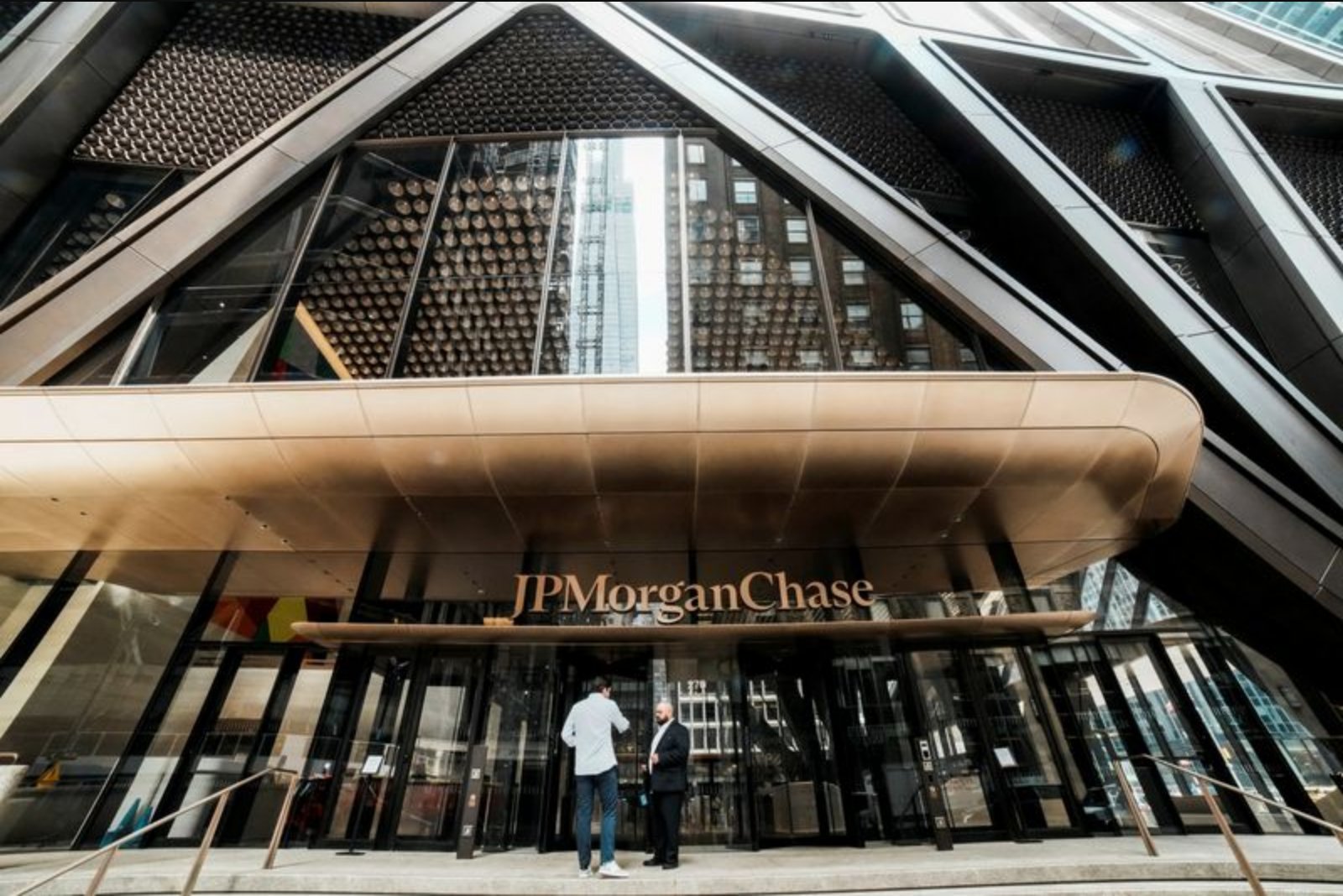
April 14 - JPMorgan Chase reported a rise in first-quarter profit as market turbulence helped lift its trading business. For the three months ended March 31, the bank logged net income of $16.5 billion, or $5.94 per share, up from $14.6 billion, or $5.07 per share, in the same quarter a year earlier.
Management said markets volatility was a central factor behind the quarter's results, with clients trading and hedging more actively in response to episodic selloffs across global markets. The bank's markets revenue increased 20% in the first quarter, a primary contributor to overall earnings growth and a pattern mirrored at peer institutions such as Goldman Sachs, which beat expectations for quarterly results on Monday.
"There is an increasingly complex set of risks - such as geopolitical tensions and wars, energy price volatility, trade uncertainty, large global fiscal deficits and elevated asset prices," JPMorgan CEO Jamie Dimon said in a statement. "While we cannot predict how these risks and uncertainties will ultimately play out, they are significant and they reinforce why we prepare the Firm for a wide range of environments."
The bank's shares rose about 1% in premarket trading after the results were released. Executives noted that first-quarter market swings - driven in part by worries over the impact of artificial intelligence on software companies and by the uncertain outcome of the Iran war - produced repeated bouts of selling that tended to prompt clients to rebalance portfolios and increase trading and hedging activity.
Spotlight on dealmaking
Alongside stronger trading revenue, JPMorgan saw a meaningful pickup in investment banking activity. Investment banking fees rose 28% in the first quarter compared with a year earlier, the largest increase among global banks during the period, according to Dealogic data cited by the bank. Overall, the total value of mergers and acquisitions exceeded $1 trillion in the quarter.
Bank executives said U.S. investment banks are anticipating a strong year for capital markets and dealmaking as they monitor possible large public listings in sectors such as AI and space, and as some market participants expect regulatory approaches under the administration of President Donald Trump to be more permissive. Despite cautious forecasts for M&A from the volatile conditions, corporate buyers continued to show appetite for transactions.
JPMorgan played prominent roles on several major transactions during the quarter. It acted as bookrunner on a $37 billion bond offering for Amazon, served as lead adviser to AES on its announced $33.4 billion take-private transaction, and was among the lead underwriters on SoftBank-owned fintech firm PayPay's $880 million U.S. initial public offering in March.
Promotional note on investment tools
The bank's results have prompted investor interest in whether to add JPMorgan shares to portfolios. One external tool referenced in market conversations evaluates JPM alongside thousands of other companies each month using more than 100 financial metrics and uses AI to screen for opportunities across fundamentals, momentum, and valuation. That tool has highlighted past winners and offers comparative assessments to identify potential risk-reward tradeoffs.
The quarter's combination of elevated trading revenue and stronger investment banking fees underpinned JPMorgan's improved profitability, even as executive commentary emphasized a slew of macroeconomic and geopolitical risks that could influence future markets and client behavior.