
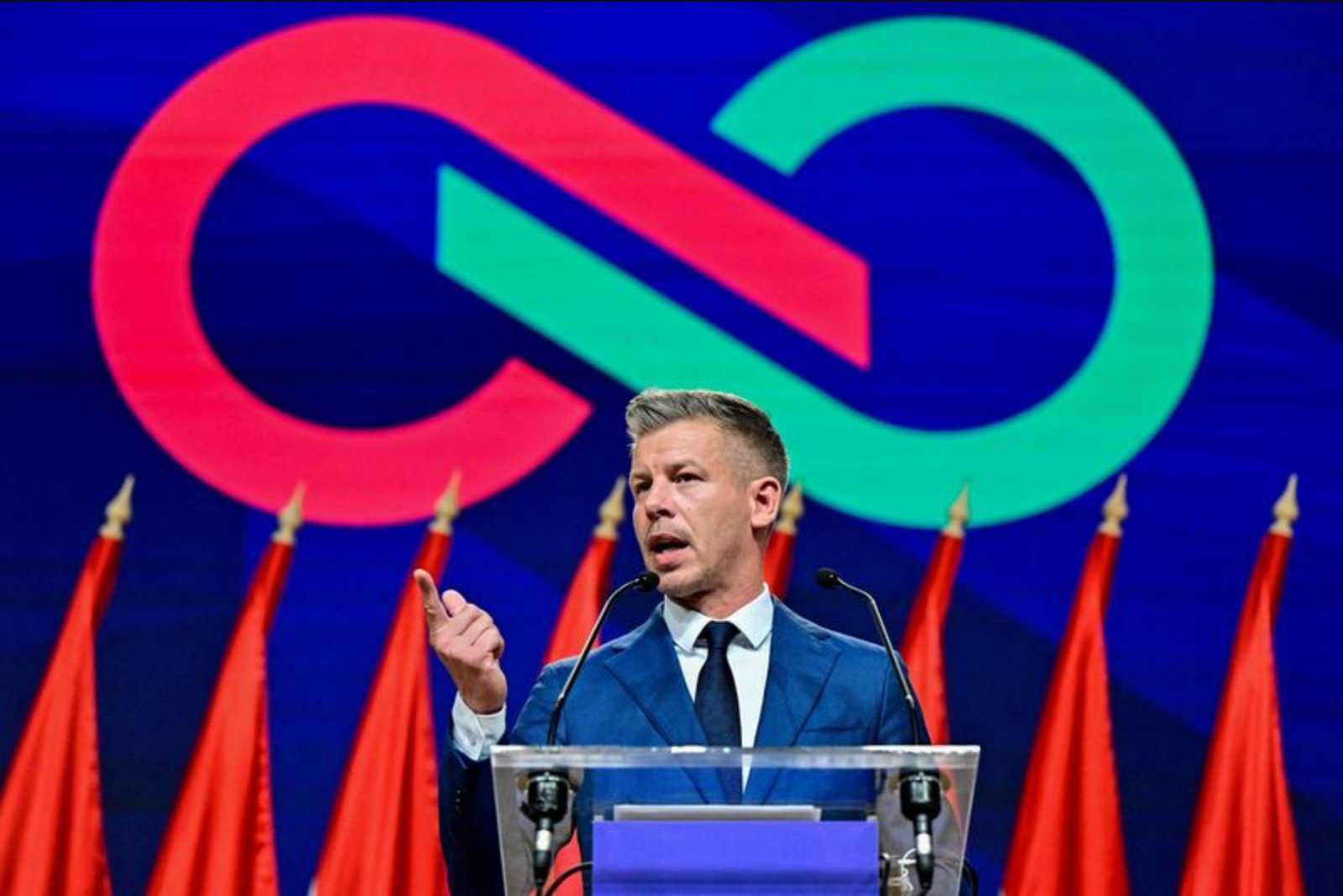
Peter Magyar’s commanding election victory has created a window of opportunity for Hungary to reset relations with the European Union and unlock substantial financial support - assuming the new government follows through on its reform commitments.
Magyar leads the centre-right Tisza party, which now has the parliamentary majority needed to pursue changes to laws governing the judiciary, elections, public tendering and media oversight. Those areas were central to the dispute between the previous government and Brussels, a standoff that resulted in roughly 18 billion euros of EU funding being withheld.
At a lengthy press conference after the vote, Magyar presented an ambitious reform agenda. He pledged sweeping legal changes, membership of the European Public Prosecutor’s Office, a two-term limit for prime ministers and moves to facilitate the release of a 90 billion euro EU loan for Ukraine. He said the withheld EU funds should be used to help stimulate Hungary’s economy.
Economists and market participants have been quick to quantify the potential economic benefit of restored EU funding. Morgan Stanley notes that the unfreezing of the funds, which represent about 8% of Hungary’s annual gross domestic product, could contribute roughly 1 to 1.5 percentage points to growth. For global investors with options across markets, that prospective boost to growth and a revived policy environment are meaningful catalysts for reallocating capital to Hungary.
Market reactions to the election outcome were immediate. The forint strengthened to its best level against the euro in four years, 10-year Hungarian government bond yields dropped by half a percentage point to their lowest since 2024, and the Budapest stock market rose by nearly 5%.
International banks and EU officials have signaled readiness to engage with the new administration. Analysts at JPMorgan expect a near-immediate reset in relations with Brussels, and they indicate that early formal commitments to reform could be sufficient to begin the process of releasing the frozen EU funds. EU Commission President Ursula von der Leyen described Magyar’s victory as "a victory for fundamental freedoms," drawing comparisons to Hungary’s major historical breaks with authoritarian control.
There remains, however, a practical timeline issue. The mid-year deadline for absorbing the EU’s post-COVID Recovery and Resilience Facility funds appears tight on the surface. JPMorgan suggests that the EU may respond with exceptional flexibility under the "extraordinary circumstances" presented by the electoral outcome.
Beyond the initial market euphoria, investors are likely to demand clarity on Hungary’s public finances. The country currently runs one of the largest budget deficits in the EU, in excess of 5% of GDP, while its debt-to-GDP ratio sits above 70% and is trending upward. Credit rating agency S&P Global has Hungary just one downgrade away from non-investment grade.
Magyar has pointed to stronger economic growth and improved market sentiment, which could lower government borrowing costs, as pathways to easing fiscal pressures. He has also vowed to tackle corruption, end so-called "prestige" investment projects and stop overpriced public procurement processes.
Some market professionals expect the incoming government’s audit of state finances to reveal problems. Aberdeen emerging market debt portfolio manager Viktor Szabo said he is "sure they will find some skeletons" in the accounts, but he also expects S&P to stabilize Hungary’s rating if EU funds are released.
Szabo and others identify a credible medium-term budget plan as a central requirement. Such a framework needs to be submitted to the European Commission by October, yet officials may need to present at least an outline and interim measures well before that deadline to reassure markets.
The agenda being pursued by Tisza extends beyond short-term budget fixes. Euro adoption remains a campaign priority for Magyar and, with Tisza’s parliamentary supermajority, the government should have the capacity to implement the constitutional changes necessary to move toward the single currency. That said, Deutsche Bank analysts caution that Hungary’s current fiscal and debt trajectory is not in line with the Maastricht criteria that underpin euro zone entry. The Maastricht framework requires a budget deficit below 3% of GDP and a debt-to-GDP ratio at or heading toward 60%, benchmarks that Hungary does not currently meet.
Monetary conditions are another point of difference. Hungary targets inflation of 3% plus or minus one percentage point, while the European Central Bank’s preferred inflation posture is a "close-but-below" 2% objective. Aligning these targets would be part of a longer-term convergence process for euro adoption.
Observers also caution that logistical and political realities will constrain how quickly EU funds can flow back into Hungary. PGIM’s head of emerging market macro research, Magdalena Polan, warned that a rapid disbursal before reforms are firmly established could expose Brussels to legal challenges from other member states. That risk could slow or complicate the unfreezing process.
Domestic structural issues present additional headwinds to sustained growth. Hungarian firms face a labour shortage exacerbated by demographic aging, language barriers and restrictive immigration policies. Living standards, according to assessments referenced by analysts, have not advanced as rapidly as in some neighbouring countries. Energy security considerations also persist: efforts to reduce reliance on Russian gas are made more difficult by external geopolitical tensions in the Middle East.
Despite these constraints, the transition of power away from Viktor Orban has clearly shifted market sentiment. Many investors view the change as a positive inflection point for Hungary, provided the incoming government can enact credible reforms and present a convincing fiscal plan.
"We are in a completely new situation here," Polan said, reflecting the broad sense among market participants that Hungary’s political reset could lead to improved relations with the EU and better investment conditions - if commitments are followed by delivery.
(Exchange rate used in coverage: $1 = 0.8491 euros)