
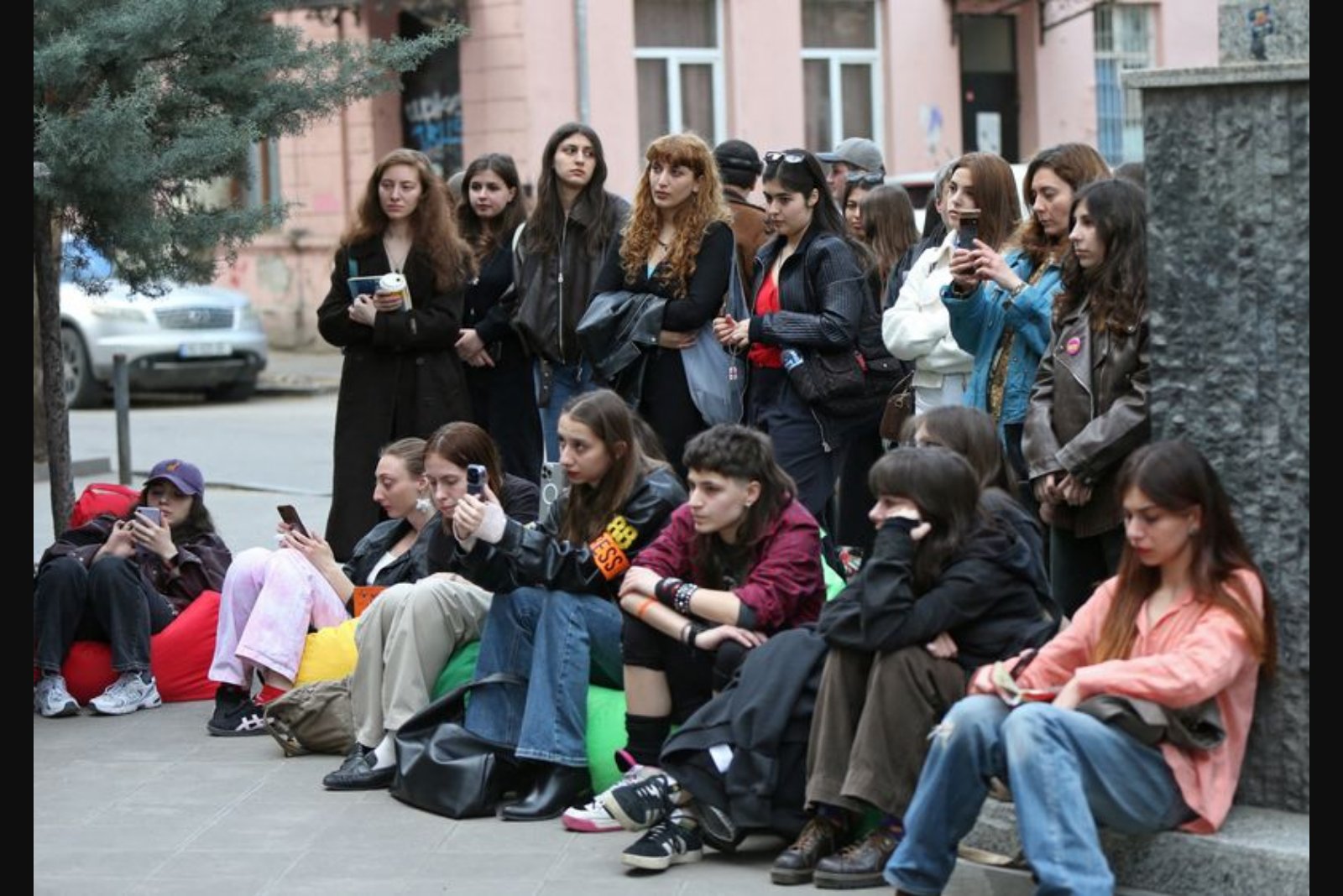
When large anti-government rallies began in late 2024, 20-year-old Luka Mishveladze began sleeping on the floor of his university building to remain close to student activity. Eighteen months on, he has taken on an organising role in protests that have returned outside the same campus in Tbilisi as students and staff contest sweeping changes to higher education that could effectively close his university.
The package of reforms, approved by the government in February, restructures financing, reassigns where academic faculties may operate and imposes a new rule the authorities describe as "one faculty, one city." Officials present the changes as steps to better align higher education with labour-market needs, strengthen regional universities and reduce what they call an excessive concentration of institutions in the capital. Critics say the measures are part of a wider shift away from Western ties under the Georgian Dream governing party and a deepening orientation toward Moscow.
How the reforms work
Under the new framework, the state will determine which subjects can be taught at each of the 19 public universities, which collectively enroll more than half of Georgia’s university students. Admission quotas will be redistributed among the institutions, and only one university in a given city will be permitted to offer particular degree programmes.
Tbilisi’s Ilia State University (ISU) is among the most affected institutions. The university, which currently enrolls about 17,300 students, says it expects to see more than 90% of its programmes eliminated and anticipates winding down operations over a three-year period. ISU has been identified by its leaders as one of Georgia’s leading research institutions with pronounced European partnerships; the university reports that this autumn it will be able to admit only 335 new undergraduates, compared with 3,770 admitted the previous year.
"It was hard for me to realise that this was happening in reality, that I am losing my university, the place I am used to calling home," Mishveladze said.
ISU’s chancellor, Ketevan Darakhvelidze, characterised the reforms as effectively dismantling the university’s European integration. "No other sector in Georgia has been so integrated into the European space than higher education. So they’re killing it," she said. The university’s rector, Nino Doborjginidze, warned that many double-degree programmes and foreign grants could be at risk under recent legislative adjustments.
Political context and institutional reactions
Opponents of the government frame the higher education changes as another manifestation of an anti-Western trajectory they trace to the period after Russia’s invasion of Ukraine in 2022. Once considered a fast-moving candidate for European Union membership, Georgia is now described by critics as distancing itself from Western partners while strengthening ties with Moscow.
Georgian Dream, which has held power since 2012, maintains that its policies are not authoritarian and that the reforms aim to preserve stability. The party accuses opposition groups of attempting to spark violent upheaval. The government did not provide comment for this report, and Education Minister Givi Mikanadze, who was part of the state committee that drafted the measures, did not respond to interview requests.
Resistance to the changes has invigorated nightly rallies that began after the government suspended talks on EU accession in late 2024. While the demonstrations remain relatively small in scale, they have spread across campuses in Georgia and drawn support from faculty as well as students. ISU sociology professor Nino Rcheulishvili warned that the measures could target "every free-thinking institution capable of critical reasoning."
Other institutions also face reductions: seven additional universities received cuts to admission quotas, though ISU is the only public university publicly indicating it will be forced to close. Shalva Tabatadze, head of an education policy research centre, described state funding as having been used historically to prop up universities with political ties, calling that practice problematic.
A mission report by the Organization for Security and Co-operation in Europe issued in March noted "marked democratic backsliding" in Georgia and briefly referenced the higher education reforms, including concerns that faculty redistributions might be intended to disperse large numbers of student protesters.
Student sentiment and next steps
The reforms have prompted a mix of defiance and uncertainty among younger Georgians. Some students express a desire to emigrate but say they will remain politically active while the current government is in office. "If they are here (in power), I want to stay here and protest against them," said 20-year-old Davit Mshvenieradze.
In a concession to demonstrators, the government abandoned a proposed merger of two Tbilisi universities in February. Even so, many students fear diminished academic opportunities and the loss of international partnerships that had been central to program offerings and grant funding. ISU highlighted its partnerships with 145 European institutions that enabled double-degree programmes; university leaders contend that most of those arrangements are threatened by the new legal environment.
The dispute frames higher education as both an object of policy-driven redistribution and a focal point of broader political friction in Georgia. As students, staff and policymakers continue to clash, uncertainty remains over how the measures will be implemented in practice, how broadly they will affect research collaborations and external funding, and whether the redistribution of faculties will achieve the government’s stated goal of regionalising higher education without the significant dislocation opponents predict.