
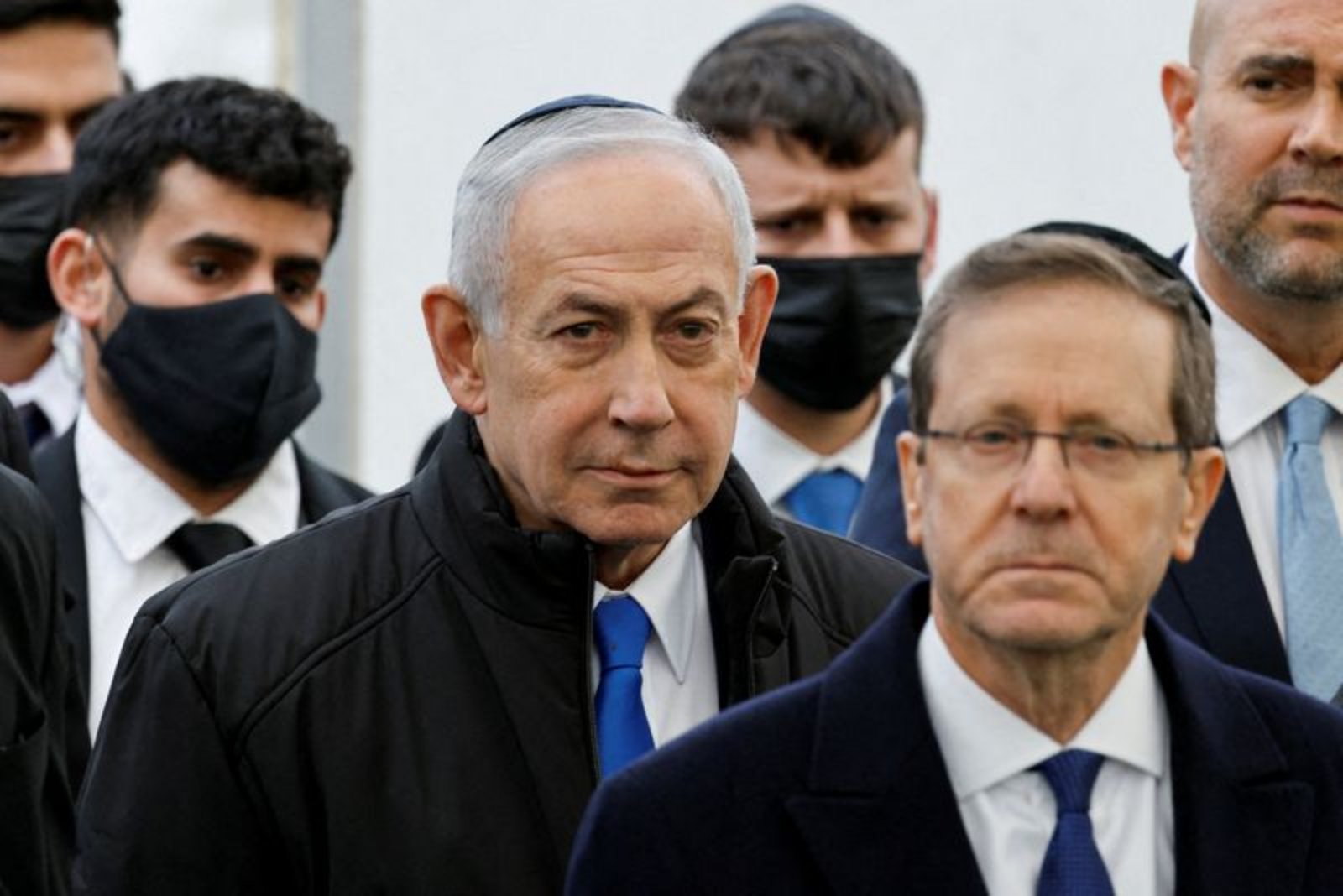
JERUSALEM, April 26 - Israel's president said on Sunday he will defer consideration of Prime Minister Benjamin Netanyahu's request for clemency until efforts to negotiate a plea bargain have been fully exhausted, indicating that a ruling on the petition is not expected in the near term.
President Isaac Herzog said a negotiated settlement would be the preferable outcome in the long-running legal matter surrounding Netanyahu. Herzog's office released a statement saying the president believes attempts to reach an agreement between the parties outside the courtroom should be completed before the pardon request itself is addressed.
The statement followed a report in the New York Times that said the president planned to initiate mediation to explore a plea deal, and that any decision on a pardon would be postponed for the time being. A spokesperson for Herzog declined to expand beyond the published statement when asked whether active efforts to reach a plea agreement were already under way. Netanyahu's office did not provide a comment in response to a request.
Netanyahu filed a pardon petition in November. Under Israeli law the president has the authority to grant pardons, but there is no precedent for issuing a pardon while a trial is still in progress. The prime minister has denied the charges of bribery, fraud and breach of trust.
The proceedings against Netanyahu began with investigations about a decade ago and formal charges were brought in 2019. The trial, which began in 2020, has been a focal point of deep political division in Israel and has coincided with multiple national elections - five ballots were held between the year of the indictment and 2022. The next scheduled national election is set to take place by the end of October 2026.
Israel's sitting prime minister is the first to face criminal charges while in office. The trial was paused at times; U.S. President Donald Trump has publicly urged Herzog on multiple occasions to grant a pardon to Netanyahu, including in March when the trial was put on hold during the Iran war. Netanyahu is due to return to court this week as the trial resumes.
Clear summary
President Herzog wants any potential plea negotiations to be pursued fully before he considers a pardon for Prime Minister Netanyahu, meaning a prompt decision on the pardon request is unlikely.
Article status - Factual details in this report are limited to statements released by the president's office, the timing of the trial and public comments noted in reports; no additional confirmations were provided by either Herzog's or Netanyahu's offices.