
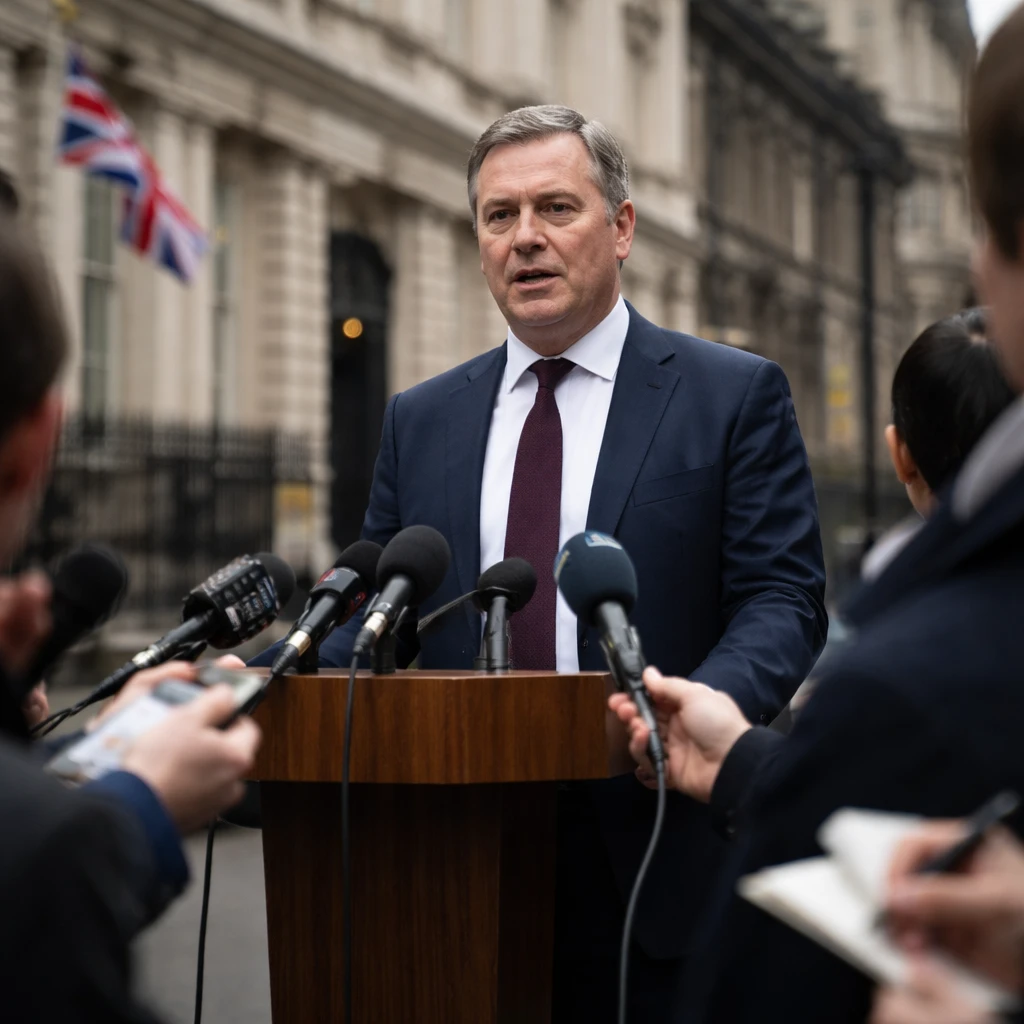
Prime Minister Keir Starmer has pushed back against mounting pressure to leave office as the dispute over his selection of Peter Mandelson as Britain’s proposed ambassador to the United States continues to escalate. In public remarks, Starmer dismissed talk of a leadership challenge as political noise, even as he acknowledged the appointment was a serious mistake.
The episode has shifted the government’s focus away from other pressing domestic and international matters as the controversy remains at the center of public debate. The appointment has drawn further attention because Mandelson was previously associated with the late financier Jeffrey Epstein, a detail cited in reporting about the decision.
Credibility under scrutiny
Starmer’s standing has come under strain following testimony from senior civil servants whose accounts appear to conflict with the Prime Minister’s earlier statements. Last week, Olly Robbins, the former senior official at the Foreign Office, told a parliamentary committee that he faced substantial pressure from Downing Street to speed up the appointment process.
Robbins’ account appears to contradict Starmer’s prior declaration in the House of Commons that "no pressure whatsoever" had been put on the civil service. Starmer has described the interactions as the routine "everyday pressure of government," but the inconsistency has handed political opponents material to challenge his conduct.
Political headwinds mount
The controversy arrives at a sensitive moment for the Labour Party. With local elections scheduled for next month, the party anticipates significant losses and is confronting a measurable decline in public trust. Relations with the civil service - a crucial pillar of effective government operations - have been visibly strained.
More evidence is pending: further testimony from officials, including former chief of staff Morgan McSweeney, is expected in the coming week. These hearings could add additional detail to the record and further shape public and parliamentary reaction.
Market and investor watch
Investors are monitoring the situation closely to determine whether the resulting political stalemate will impede the government’s capacity to manage an already complex economic and geopolitical agenda. Market attention has been directed at the potential impact on the British Pound and gilt markets as the political uncertainty persists.
At present, the available record details the clash between senior civil servants and Downing Street accounts and outlines forthcoming testimony. Beyond that, the public record in these proceedings will determine whether the controversy materially changes the government’s policy trajectory.