
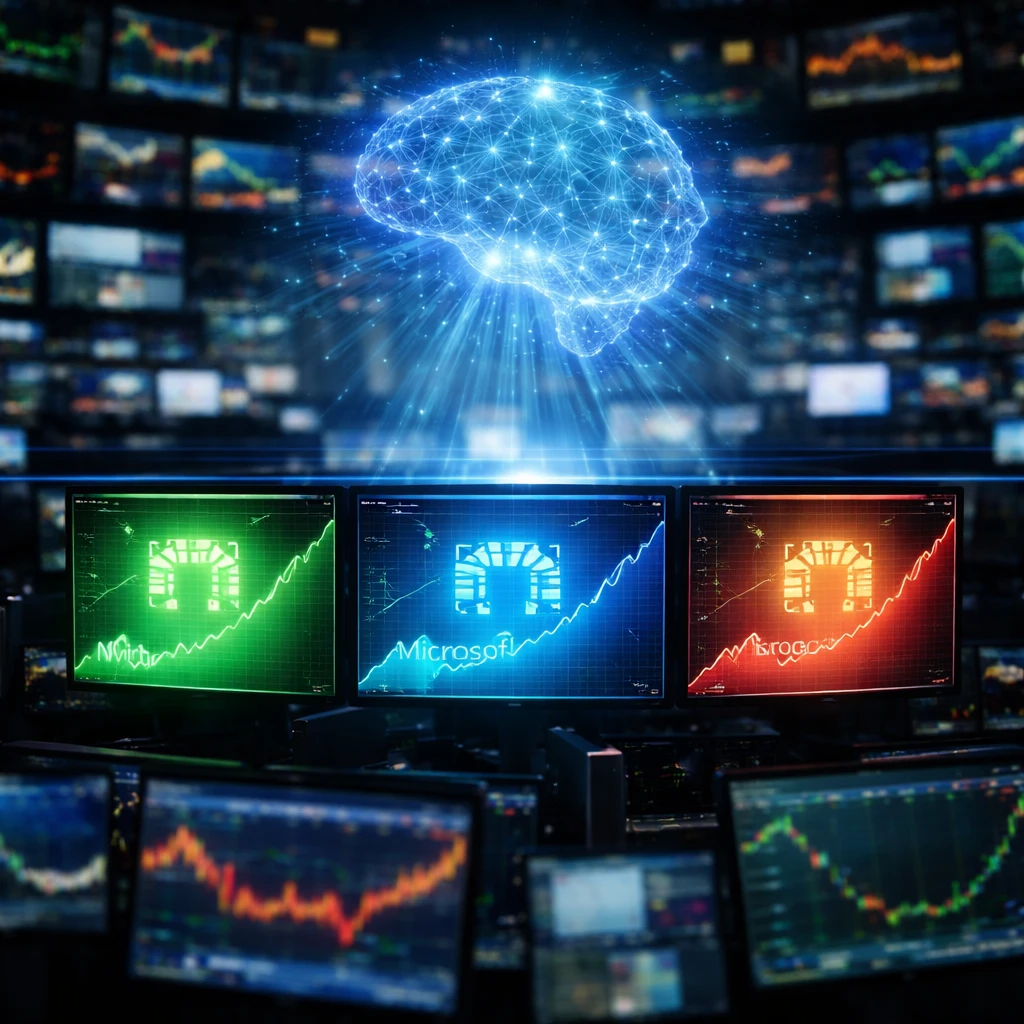
The U.S. stock market's move to fresh records has been propelled by a narrowly focused surge in AI-related names, obscuring a more widespread deterioration among the average components of the S&P 500.
At the index level the S&P 500 continues to reach new peaks, but that performance is not broadly shared. The headline gains are largely concentrated in a select group of so-called "AI-version" Magnificent Seven stocks. Outside of the AI heavyweights, including Nvidia (NASDAQ:NVDA), Microsoft (NASDAQ:MSFT), and Broadcom (NASDAQ:AVGO), the S&P 500 would effectively be trading lower.
Since late February, when geopolitical tensions in the Middle East rose, 118 stocks within the S&P 500 have fallen by more than 10%. That weakness has been driven in part by rising input costs and by exposure to economically sensitive areas such as agriculture. By contrast, only 82 stocks, most of which are directly tied to AI themes, have posted gains of 10% or greater.
This disparity has amplified valuation pressure on AI-linked names and created what market participants describe as a froth around those companies. The excitement has extended beyond current public equities to demand for entry into major impending IPOs that are associated with the AI narrative, including Anthropic and OpenAI.
Supporters of the market's leadership argue this cycle differs from past episodes of speculative excess. They point to the scale of AI's potential economic impact and contend that current leaders trade at valuations that are more reasonable than some of the most extreme examples from the dot-com period. That view underpins the willingness of investors to pay a premium for companies they see as central to AI adoption.
Yet the central question facing markets is whether prices have outrun the realisation of AI-driven business outcomes. Investors are currently underwriting extensive investment in infrastructure, notably the construction of data centres, even as significant free cash flow from AI developers remains a longer-term expectation, with meaningful cash generation anticipated toward the end of the decade.
History underscores that the danger of an asset bubble is not only the peak itself but the uncertainty over timing. Even if excess valuations are correctly identified, exiting positions too early can be as costly as holding through a correction. Market participants are therefore faced with choosing whether to assume that AI's transformational potential will validate current prices or that a speculative episode could end in a sharp repricing.
The present environment is best described as a tale of two markets: a narrow cohort of high-flying AI-linked firms driving headline indices and a much broader set of S&P 500 constituents experiencing meaningful declines. That bifurcation has direct implications for sector-level performance and for investors weighing valuation, timing and concentration risk.