
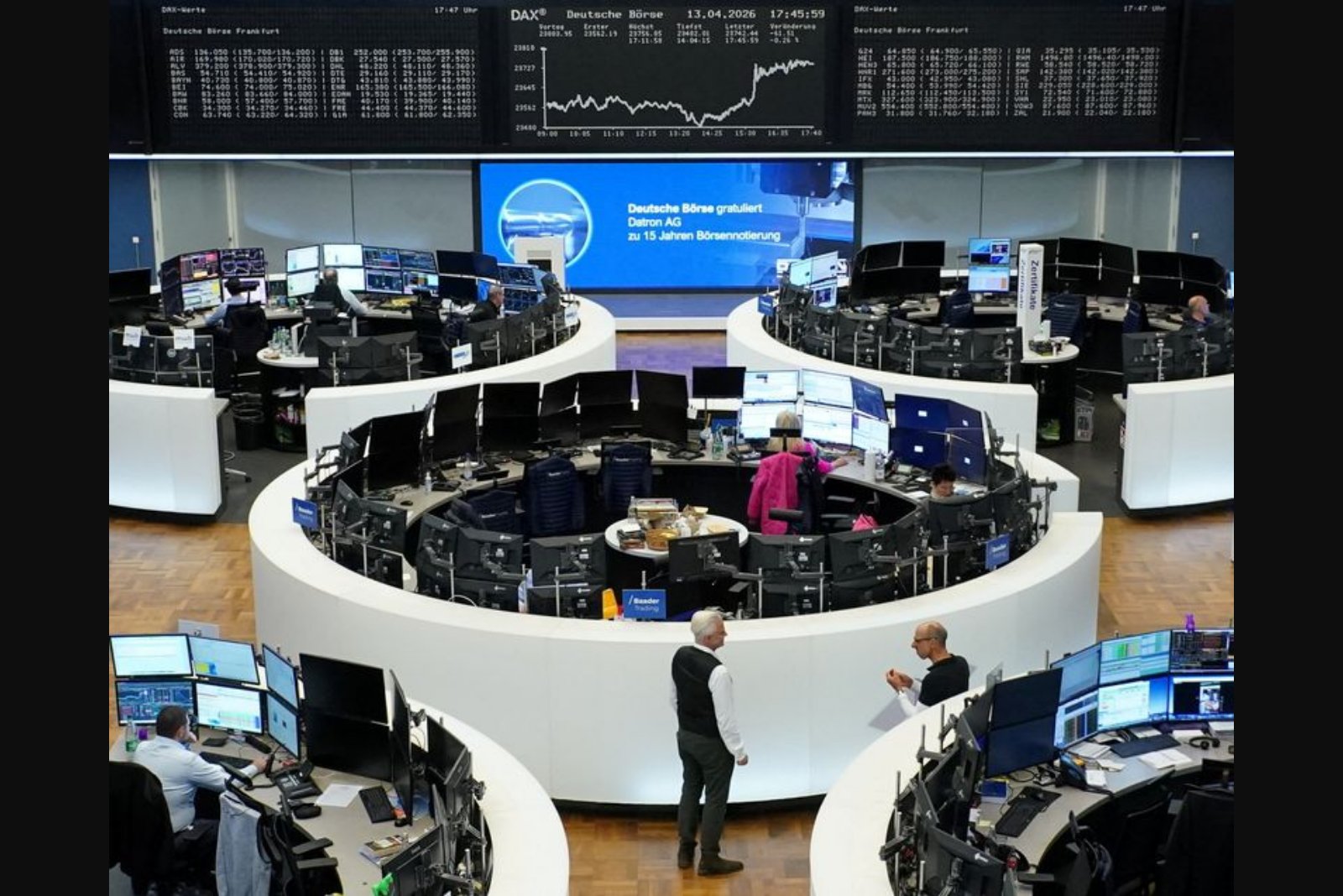
European share markets traded higher on Tuesday, recovering from a weak start to the week as market participants reacted to reports of potential follow-up talks between the United States and Iran. The pan-European index was up 0.6% at 617.58 points as of 0717 GMT.
Sources familiar with the discussions said negotiating teams from the U.S. and Iran could return to Islamabad this week, days after previous talks concluded without a breakthrough. The possibility of resumed negotiations helped trigger a bounce in equities, even as the United States put in place a blockade of Iranian ports.
Oil prices eased below $100 a barrel, a retreat that accompanied the broader market rebound. Europe’s energy sector nevertheless finished the day lower, down 0.2%.
Analysts warned that inflationary pressure tied to high energy costs is likely to endure while the strategically important Strait of Hormuz remains closed to commercial shipping. That constraint was flagged as a continuing source of elevated energy prices and attendant inflation risk.
Despite the headwinds from the continent’s reliance on energy imports, the STOXX 600 index has gained about 4% year-to-date, slightly outpacing the U.S. benchmark S&P 500’s 0.5% rise over the same period. Within Europe, industrial and technology sectors were among the strongest performers on the day, rising 0.9% and 1.5% respectively.
Not all sectors participated in the rally. The personal and household goods sector led decliners, down 0.4% on the session. Among individual names, France’s LVMH fell 2% after the luxury group said the Iran war shaved at least 1% from group sales in the last quarter because of reduced spending in the Gulf.
Markets are being driven by a mix of geopolitical headlines and their knock-on effects for commodity prices and consumer demand in affected regions. The prospect of renewed diplomacy contributed to a softening in crude prices and lifted cyclical stocks, while energy-related inflation concerns and region-specific drops in consumer spending continued to weigh on some sectors.
Looking ahead, investors will likely watch for confirmation that negotiating teams reconvene in Islamabad and for any further shifts in shipping access through key regional chokepoints, which could influence energy prices and related inflationary trends.