
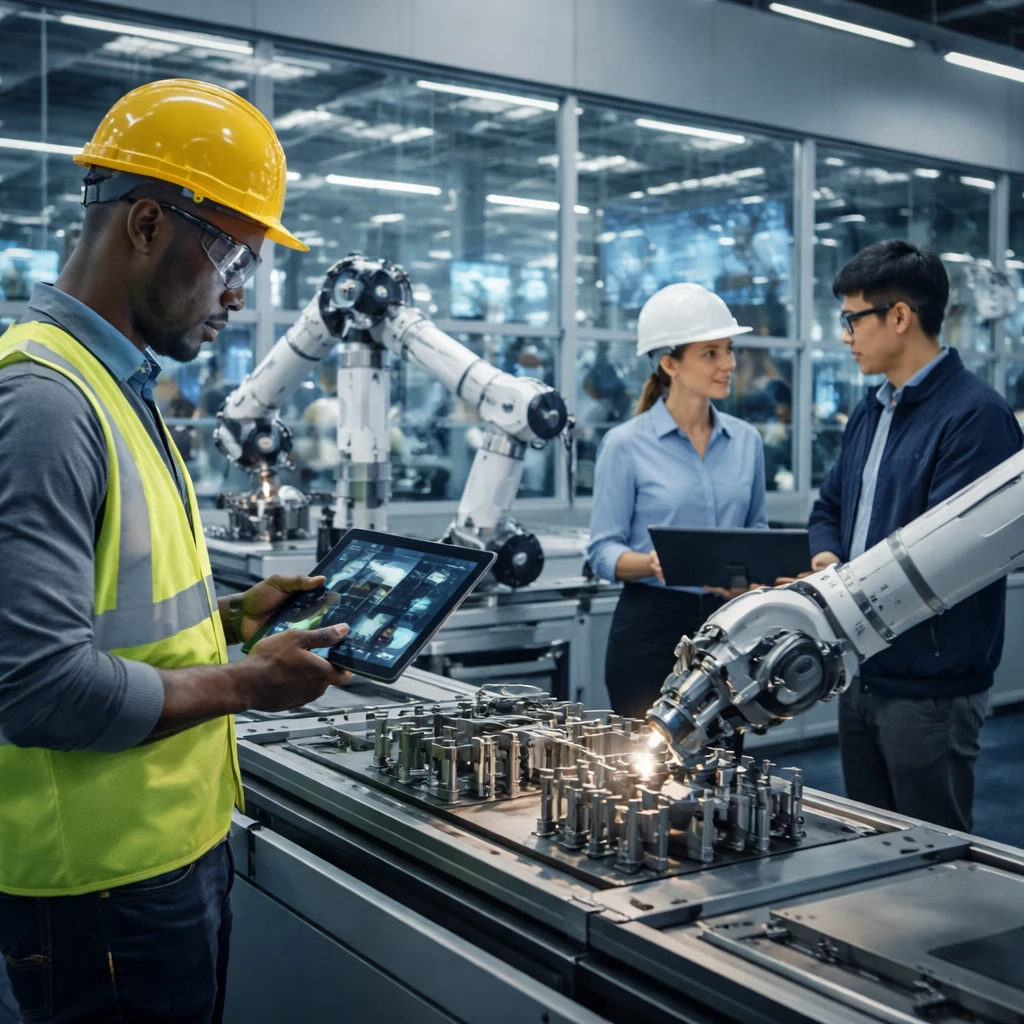
New research from Morgan Stanley suggests the early impact of Artificial Intelligence on the U.S. workforce is proving to be more additive than subtractive. Rather than driving broad job cuts, the firm's analysis finds that AI-exposed industries are seeing a rise in productivity defined as output per employee, and that this rise is being driven by stronger output growth rather than by falling employment.
According to Morgan Stanley's review, the productivity acceleration is most pronounced in sectors where AI deployment has been accompanied by capital deepening. In 2025, industries designated as having "high AI exposure" recorded higher absolute levels of output per employee and a sharper acceleration in that metric compared with less-exposed peers. The analysis identifies capital investment as a complement to AI, with the combination associated with the largest productivity upticks.
Importantly, the lift in productivity is not confined to technology firms. Morgan Stanley notes that production processes across a range of industries have improved as AI tools have been incorporated, indicating the technology is optimizing operational workflows beyond the firms most commonly associated with AI. That pattern challenges the widespread expectation that AI's primary near-term function would be to reduce payrolls as companies seek labor cost savings.
Instead of broad-based layoffs, the report finds firms are often using AI to augment the capabilities of their existing workforce, enabling higher volumes of output without proportionate increases in staffing. This mode of adoption implies a "productivity-first" cycle in which AI delivers efficiency improvements that raise output per worker before any large-scale structural shifts in employment composition emerge.
From an investor perspective, the observed productivity gains are generally viewed as positive for corporate margins. If companies can sustainably raise output per employee through AI-driven improvements, they may achieve revenue and margin expansion without the inflationary pressure that typically accompanies aggressive hiring in tight labor markets.
Still, Morgan Stanley's findings do not dismiss longer-term concerns about job displacement. The report acknowledges that debates about the potential for AI to substitute for human labor over time remain valid. What the current economic evidence shows, however, is that the initial phase of adoption has been characterized by output increases rather than immediate reductions in employment.
Looking ahead, the analysis suggests the emphasis will shift from experimentation with AI to how productivity gains are converted into earnings growth. Companies that successfully deploy AI as a tool to augment human output, as opposed to seeking wholesale automation of roles, are likely to emerge as leaders in efficiency within their sectors.
Key points
- High AI-exposure industries saw faster growth in output per employee in 2025, with gains driven by output expansion rather than by cutting headcount - impacts notable across sectors including but not limited to technology.
- Capital deepening alongside AI integration correlates with the strongest productivity increases, highlighting the role of investment in magnifying AI's effects - relevant to capital-intensive sectors and manufacturing.
- Investors view the productivity gains as supportive for corporate margins, offering a pathway to growth without the inflationary effects of steep hiring - pertinent to corporate earnings and equity markets.
Risks and uncertainties
- Long-term job displacement remains an unresolved risk; while current evidence points to productivity-led adoption, future dynamics could shift and affect labor markets and employment-sensitive sectors.
- The durability of productivity gains is uncertain; how short-term output increases translate into sustained earnings growth will determine the broader economic and market impact.
- Concentration of gains where capital deepening occurs suggests unequal benefits across industries - sectors without the ability or willingness to invest in complementary capital may lag in productivity improvements.