
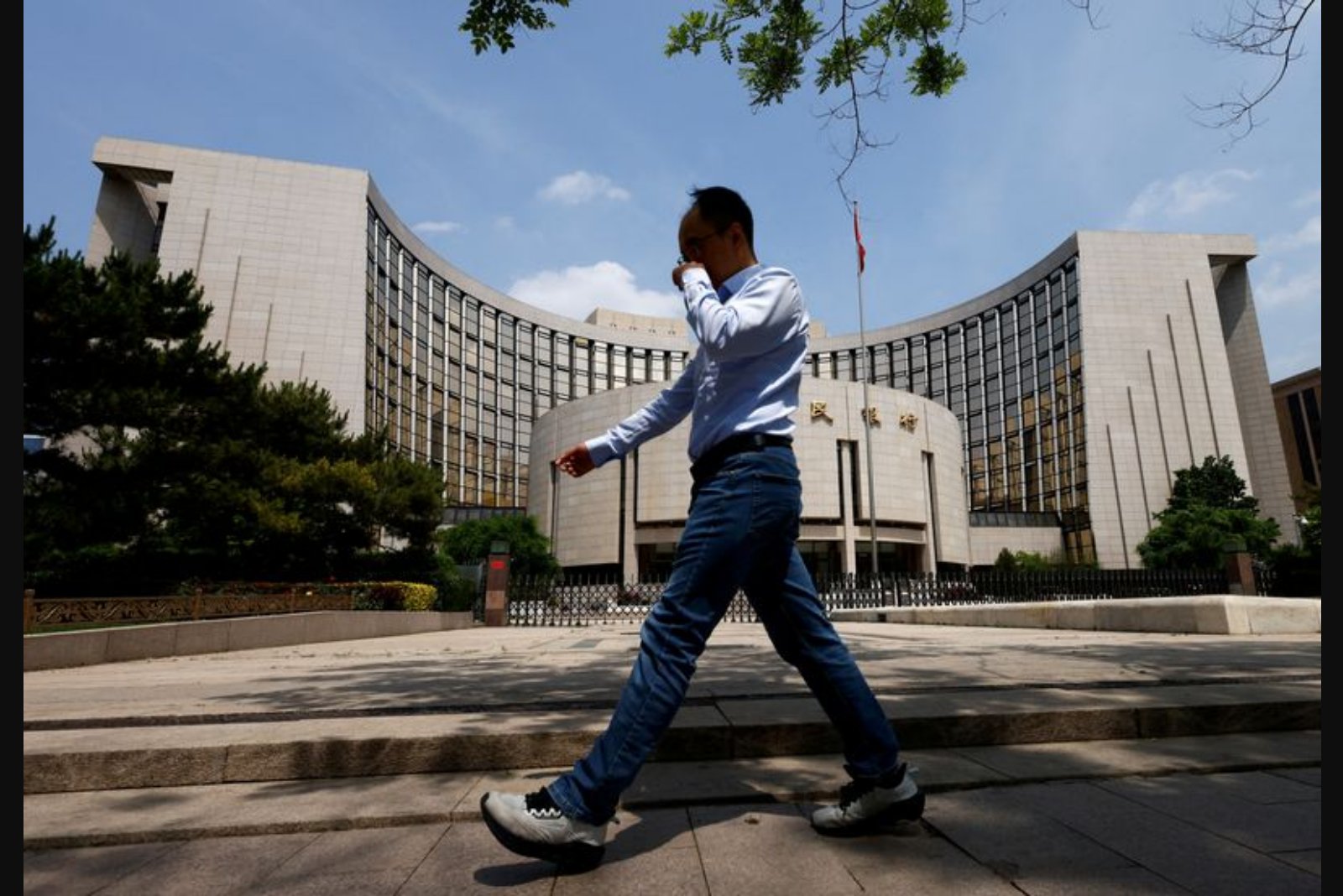
April 28 - China’s central bank convened a meeting in April during which it asked certain commercial lenders to increase loan issuance for the month and to ensure that outstanding loan balances record month-on-month gains, according to sources with direct knowledge. The individuals spoke on condition of anonymity because they were not authorised to discuss internal deliberations with the media. The central bank did not immediately respond to a request for comment.
Such an explicit instruction from the People’s Bank of China for banks to expand credit is uncommon and comes as policymakers fret over a possible acceleration of external pressures on the economy. The call for a demonstrable month-on-month rise in outstanding loans is aimed at shoring up economic activity by preventing a pronounced slowdown in credit growth, the sources said.
Analysts and market observers expect April credit figures to soften, in part because April is typically a lower-demand month for lending. Banks often concentrate their loan origination in the first quarter during customary sales campaigns, which can make lending volumes in subsequent months look weaker by comparison.
According to the sources, the guidance signals concern among authorities that the economic recovery is uneven and that effective financing demand remains tepid. By urging financial institutions to maintain a reasonable pace of lending, policymakers are attempting to avoid a sudden retrenchment in credit supply and to keep lenders active in supporting growth.
The demand-side picture already showed signs of strain in March, when new bank lending rose by less than anticipated, a result the sources said points to softer underlying credit demand as borrowers grow more cautious about future income and growth prospects.
China’s broader macro picture is mixed. The economy regained some momentum in the first quarter, driven by strong exports, but forecasters expect growth to slow over the remainder of 2026 as the Iran crisis raises concerns about corporate profitability and external demand. In response to these headwinds, Beijing has set a budget deficit target of about 4% of GDP for 2026 and planned substantial bond issuance to support the economy.
Meanwhile, the central bank has pledged to keep monetary settings accommodative, even as its scope to cut interest rates is constrained by a gradual rise in inflation. The combination of guidance to banks on lending, fiscal plans and an accommodative stance from the PBOC reflects policymakers' intent to bolster credit and aggregate demand while navigating limited policy space.
Key points
- The PBOC held a meeting in April asking some banks to expand lending and to ensure outstanding loans post month-on-month growth.
- Policymakers are acting to avert a sharp pullback in credit amid weak consumption, a property sector debt crisis and rising external risks related to the Middle East.
- Fiscal measures include a roughly 4% of GDP budget deficit for 2026 and plans for heavy bond issuance; the PBOC says it will remain accommodative despite limited room for rate cuts as inflation edges up.
Risks and uncertainties
- Escalation of the Iran or broader Middle East crisis could further pressure corporate profits and reduce overseas demand, affecting exporters and corporate borrowers.
- Persistent weakness in consumption and ongoing stresses in the property sector may constrain effective credit demand and strain lenders' asset quality, particularly for real estate exposures.
- Limited central bank room to lower interest rates as inflation rises could reduce the effectiveness of monetary accommodation in supporting lending and growth.
Authorities' direction to banks underscores a preference for active management of credit flows to smooth the recovery, but outcomes will depend on borrowers' appetite for credit and the evolving external environment.