
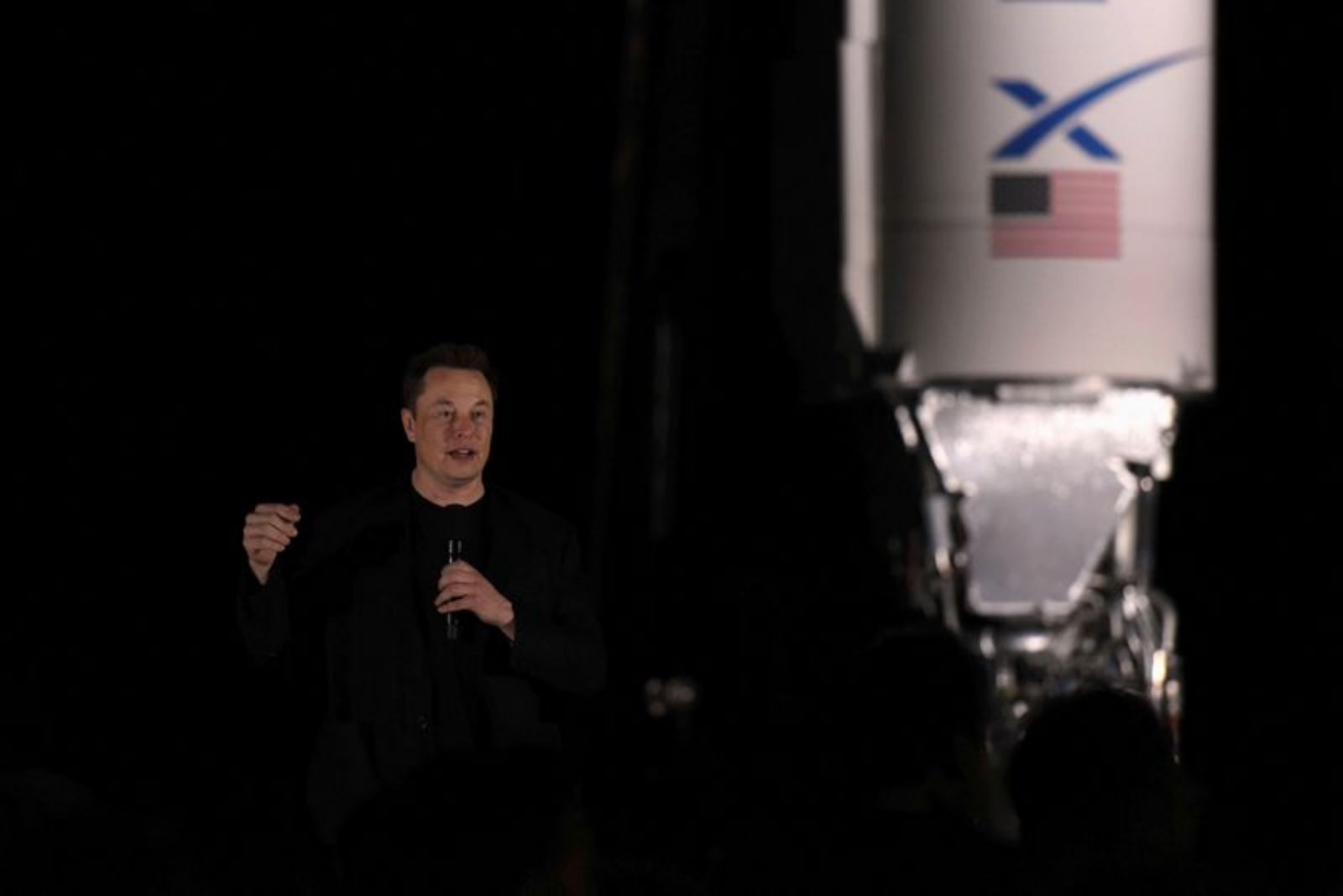
SpaceX's board has authorized a far-reaching compensation arrangement for founder Elon Musk that links potential equity awards to goals more commonly associated with science fiction than corporate incentive plans. The company's confidential registration statement filed recently with the Securities and Exchange Commission and reviewed by Reuters details the package, which conditions awards on both the creation of a large-scale human settlement on Mars and the operation of extremely powerful data centers in outer space.
Under the package the board approved in January, Musk would be eligible for 200 million in super-voting restricted shares if SpaceX reaches a market value of $7.5 trillion and establishes a permanent human colony on Mars with at least 1 million residents, according to excerpts of the registration statement. In addition, the plan provides for as many as 60.4 million restricted shares, awarded on March 23, if SpaceX attains separate valuation thresholds and operates data centers in space that together deliver at least 100 terawatts of compute capacity - an amount the filing describes as equivalent to roughly 100,000 gigawatts, or about 100,000 one-gigawatt nuclear reactors running at full output.
Both potential awards are to be issued as Class B restricted stock with super-voting rights - carrying 10 votes for every 1 Class A share - and will vest in tranches as the company's market value increases. However, the registration statement makes clear that Musk would receive none of the shares if the board's valuation targets are not met. The awards are not tied to a specific timetable beyond a requirement that Musk remain employed with SpaceX.
The filing notes Musk's nominal annual compensation from SpaceX has been $54,080 since 2019. Because SpaceX remains privately held, the overall monetary value of the package cannot be precisely calculated from the filing alone.
SpaceX is targeting an initial public offering around the time of Musk's birthday on June 28, a move that Reuters has reported could value the company near $1.75 trillion. The registration statement also shows that as of Dec. 31 Musk held 68.8 million in previously awarded Class B stock options with a strike price of about $42 that expire in 2031, enabling him to realize any gain above that level if he exercises those options prior to expiration.
Outside of SpaceX, the filing indicates Musk's net worth was estimated at $776 billion by Forbes. The registration statement further notes that Musk owned roughly 20% of Tesla's stock as of November. The filing does not indicate any timeline for the SpaceX awards and does not change the fact that the proposed stock grants are conditional on the stated performance measures.
The novel structure and extraordinary scale of the targets have drawn attention from corporate governance experts, who said they could complicate relationships among Musk's holdings and raise unusual measurement questions. Farient Advisors' chief data officer and executive compensation specialist Eric Hoffmann said he knew of nothing remotely comparable at other companies and highlighted the difficulty of assessing whether the Mars-related milestones have been achieved.
"I'm not a physicist or astronomer and I wouldn't know where to start," Hoffmann said. "The measuring stick is, has it been done in human history? These haven't. So that's hard."
Hoffmann also noted that the two companies where Musk holds majority influence - SpaceX and Tesla - may now be effectively competing for his attention. He pointed to events last autumn in which Tesla's board argued for generous compensation to keep Musk focused on the automaker, and he referenced previous disclosures that Musk had threatened to leave Tesla if shareholders did not approve its pay plan.
"What's interesting about this situation is now, SpaceX and Tesla, both effectively controlled by Elon Musk, are now bidding against each other for his attention," Hoffmann said.
Equilar's director of research Courtney Yu echoed that the non-financial, highly unconventional targets stood out. She said she could not recall other examples - outside of Tesla - where CEO pay was tied to metrics beyond traditional financial measures like earnings or revenue. Yu also said it is ultimately the responsibility of each company's board to decide how best to allocate Musk's time between his roles.
On the question of whether a $7.5 trillion market cap for SpaceX is realistic, Yu observed that using such a figure does serve to clarify the board's expectations for investors about the company's long-term ambitions.
Investment prompting referenced in the filing
The registration material includes an embedded promotional element asking, "Should you invest $2,000 in TSLA right now?" and describes a service called ProPicks AI that the filing says evaluates TSLA among other companies using more than 100 financial metrics. The text states the AI generates stock ideas by analyzing fundamentals, momentum and valuation and that it has produced notable past winners. The filing's embedded text invites readers to explore whether TSLA appears in ProPicks AI strategies or whether alternative opportunities exist in the same sector.
What remains uncertain
- The registration statement does not establish a timetable for achieving the valuation or operational milestones tied to the awards other than Musk's continued employment requirement.
- The overall dollar value of the package cannot be calculated from the filing since SpaceX is not publicly traded.
- How the boards of SpaceX and Tesla will manage potential conflicts over Musk's time and focus is not determined by the filing and remains an open governance question.
SpaceX and Tesla did not respond to requests for comment included in the reporting on the filing. Previously, information outlets had reported various details about SpaceX's proposed pay plan linking Musk to a Mars colony and to space-based data centers; the registration excerpts reviewed in this reporting align with those elements.