
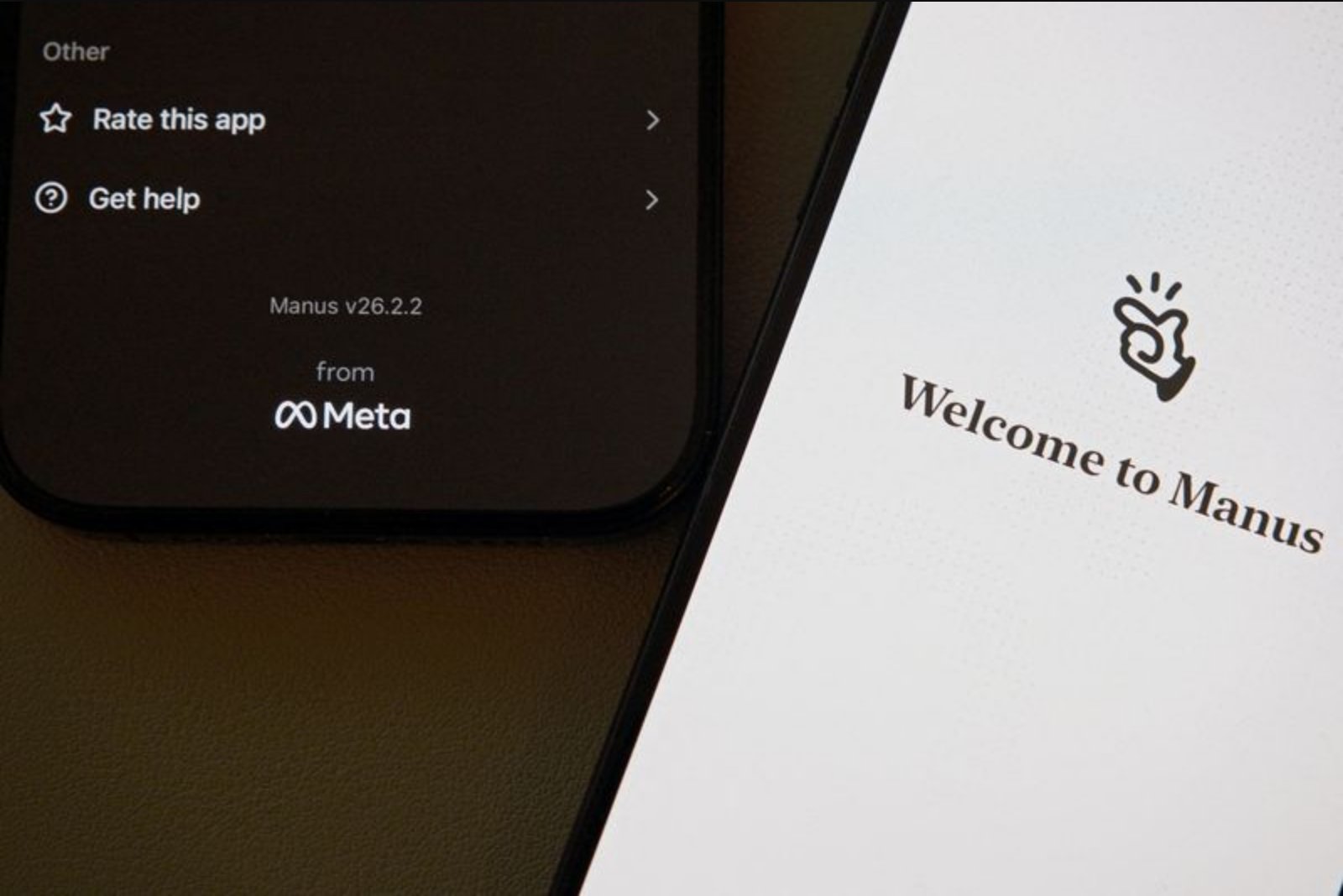
China's top economic planner has ordered Meta to reverse its purchase of Manus, a China-founded, Singapore-headquartered artificial intelligence startup, escalating concerns among global investors about the viability of cross-border deals involving firms with Chinese ties. The National Development and Reform Commission (NDRC) issued the directive on Monday under China's foreign investment national security review mechanism that was introduced in 2021, instructing that the more-than-$2-billion transaction be unwound.
The NDRC's intervention is notable for its breadth - a state agency moving to block and reverse the takeover of a company that relocated its legal center to Singapore. Lawyers and market analysts say the ruling signals that Beijing will assert control over transfers of technology and personnel with substantial links to China, and that companies founded in China cannot rely solely on offshore incorporation to avoid scrutiny.
Beijing's stated focus and official commentary
State-backed commentary in China emphasised that the issue at the heart of the decision was not where Manus was incorporated or where its management sits, but rather the depth of its connections to China through technology, personnel and data. The Global Times said the core concern was whether the transaction could harm China’s industrial security and development interests, and pointed to Manus’ abrupt distancing from China after receiving U.S. investment as a particular point of friction.
Legal practitioners and commentators quoted in reports highlighted the message conveyed by the NDRC: that homegrown AI talent and related technologies are subject to strict limits on foreign acquisition. "Beijing effectively drew a bright red line that Chinese AI talent and technology are not for sale to American companies, full stop," said Han Shen Lin, Shanghai-based China country director at The Asia Group.
The Manus case facts
Manus, described publicly as an agent tool which layers Western and local AI models to autonomously execute complex tasks, was celebrated last year by state media alongside other domestic AI innovators. The company was founded by Chinese engineers and built on work developed within the Chinese infrastructure environment. Reports indicate that in the year after Manus’ launch, company co-founders CEO Xiao Hong and chief scientist Ji Yichao were summoned to Beijing for regulatory talks in March and have since been barred from leaving China.
According to sources with knowledge of the transaction, Meta completed the acquisition in December after only a few weeks of due diligence. At the time, Manus relocated its incorporation to Singapore; neither Meta nor Manus sought Chinese regulatory approval for the deal or for the firm's relocation. After the acquisition closed, Manus became part of Meta and earlier investors including U.S.-based Benchmark Capital, China’s HSG, ZhenFund and Tencent Holdings exited the company.
Meta and the NDRC did not immediately respond to requests for comment. Meta issued a statement on Monday reiterating that the transaction complied with applicable law and saying it would anticipate an appropriate resolution to the inquiry.
Legal and practical challenges of reversing the deal
Unwinding the takeover of a knowledge-intensive startup is likely to be legally and operationally complex. Lawyers point out that reversal could require the return of funds and equity transfers, deletion of transferred code, data and other intellectual property, and the withdrawal of personnel who moved as part of the deal.
"Fully reversing such transactions is often difficult in reality, particularly in knowledge-intensive sectors, as information already absorbed by engineers or transferred during due diligence cannot easily be undone," said Andy Han, a partner at AllBright Law Offices in Qingdao.
Other legal advisers emphasise the practical difficulties when a buyer has already integrated a target into its operations. "Unscrambling the eggs is always an issue when a deal is blocked by a regulator, unless the acquirer has kept the target separate, which does not appear to have been the case here," said Jeremie Jourdan, a Brussels-based partner at Geradin Partners. Jourdan also noted that Manus’ relocation to Singapore will complicate enforcement of the NDRC ruling, though Chinese authorities could potentially pursue other levers such as local assets to press for compliance.
Implications for founders, investors and cross-border exits
Legal advisers say the Manus decision underlines the increasing need for substantive, not merely formal, operational separation when investors or acquirers seek to mitigate China-related regulatory risk. "This is perhaps a warning shot that having a Singapore set-up is not entirely a silver bullet. If the business still has deep China roots, Beijing may treat it as effectively domestic for sensitive transactions," said Lam Zhen Guang, a lawyer at Clyde & Co.
Lam added that investors will now demand evidence of genuine operational separation - such as IP assignment, relocation of research and development, clear governance structures, and transparent ownership disclosures - rather than just paper relocation. Absent such measures, cross-border exits, particularly to U.S. buyers, may carry a higher regulatory discount unless approvals and China touchpoints are addressed early.
Sources said Meta was conducting a global search for AI targets amid an industry push to develop in-house models, and that Manus’ move to Singapore was seen by its founders as a step required to survive at a time of heightened U.S.-China geopolitical tension. Those actions reportedly drew the attention of senior Chinese officials and triggered an investigation that affected other startups and investors.
Timing and wider context
The NDRC’s move comes just weeks before a planned mid-May summit between U.S. President Donald Trump and Chinese President Xi Jinping in Beijing. Observers note the ruling could reverberate across the market for AI investments, altering valuations and exit expectations for China-founded startups with international backers or acquirers.
Market reaction and outlook
China’s decision complicates the calculus for foreign technology companies considering the acquisition of China-founded AI startups. Commentators warn that buyers must now treat the NDRC foreign investment security review as a tangible deal risk regardless of where a target is incorporated, particularly in sensitive sectors such as artificial intelligence that Beijing views as central to national security.
For founders and venture capitalists, the Manus case highlights a higher level of uncertainty around cross-border liquidity events. Legal and business advisers caution that deal certainty may be undermined in transactions involving China-rooted technologies unless regulatory concerns are resolved early in the process.
Key takeaways
- China's NDRC has ordered Meta to unwind its acquisition of Manus, citing national security review powers under rules effective from 2021.
- The decision signals Beijing's emphasis on technology, talent and data links to China rather than a company's place of incorporation when assessing foreign transactions in sensitive sectors.
- Reversing the deal could involve returning funds, reversing equity transfers, deleting transferred IP and personnel withdrawals, but practical and legal challenges may limit the effectiveness of such measures.
Short-term risks and uncertainties
- Regulatory risk to cross-border M&A in AI and other sensitive tech sectors - deals may be blocked or unwound if firms are judged to retain substantial China links.
- Deal execution and exit risk for founders and venture capital investors - firms with China roots may face higher regulatory discounts and less deal certainty, especially for sales to U.S. buyers.
- Operational and legal complexity in attempting to reverse knowledge-intensive transactions - information and personnel transfers are difficult to undo, creating enforcement and compliance challenges.