
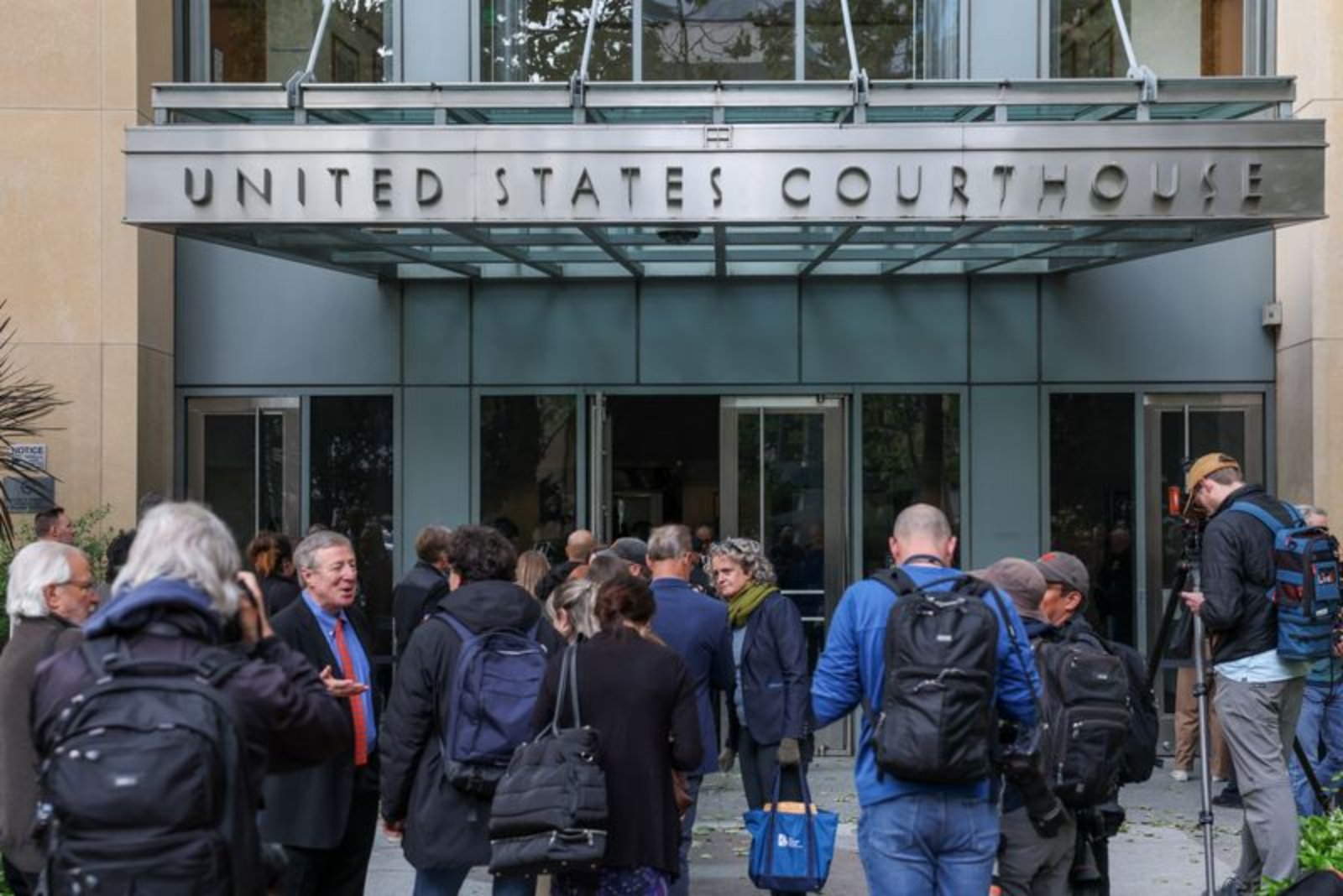
Opening statements in a consequential civil trial began in federal court in Oakland after nine jurors were selected, launching a case that could influence how one of the most prominent AI developers is governed and financed.
The plaintiff, Elon Musk, argues that OpenAI’s chief executive Sam Altman and president Greg Brockman altered the organization’s course away from its founding nonprofit mission to create a for-profit enterprise that he describes as a "wealth machine" for executives and investors. Musk is seeking $150 billion in damages, with proceeds proposed to go to OpenAI’s charitable arm, and is asking the court to restore OpenAI to nonprofit status while removing Altman and Brockman from their official roles and Altman from the board.
Musk alleges that he provided about $38 million in seed funding to advance OpenAI’s original aims, and that a little more than a year after he left the board the organization formed a for-profit entity in March 2019. He has brought claims of breach of charitable trust and unjust enrichment and is no longer pursuing damages for himself personally.
OpenAI has contested Musk’s account, saying he was aware of and supported the restructuring. The company also contends that Musk only filed suit after failing to secure the CEO role and after founding his own AI venture, actions OpenAI views as aimed at hampering its growth. Microsoft, one of OpenAI’s largest investors and a defendant in the suit, denies colluding with OpenAI and says its commercial relationship began after Musk left the board.
The trial timetable as set by U.S. District Judge Yvonne Gonzalez Rogers includes a target for jurors to begin deliberations on liability by May 12. The panel selected includes individuals from varied walks of life - among them nurses, city workers and retirees.
Witnesses and testimony
The court is expected to hear testimony from key figures, including Musk, Altman and Microsoft chief executive Satya Nadella. Court filings and statements indicate Musk could take the stand as early as this week, underscoring the personal nature of the dispute.
Origins and evolution of OpenAI
Musk and Altman co-founded OpenAI in 2015 with a stated mission to advance artificial intelligence in a manner that benefits humanity and to guard against competitive threats. The organization grew from early research activity - described in filings as beginning in an apartment belonging to co-founder Greg Brockman - into a highly valued entity. At various points in the case record the company is described as being worth more than $850 billion.
OpenAI last fall revised its corporate framework again, becoming a public benefit corporation. Under that structure the nonprofit retains a stake of 26% plus warrants tied to valuation targets, and other investors, including Microsoft, hold equity. The public benefit corporation model is intended to align investor interests while preserving charitable origins.
Market and competitive context
OpenAI’s commercial trajectory - including large investments in computing resources and expansion of services such as ChatGPT - has attracted competition from other AI firms like Anthropic. The company has been discussed in the context of a potential initial public offering, with reporting referenced in court documents and filings that puts possible valuations as high as $1 trillion. Musk’s own AI venture, xAI, founded in 2023 shortly after ChatGPT’s launch, is described as trailing OpenAI in usage. Musk has since integrated that business into his rocket company, SpaceX, which itself has been noted for potential public listing activity.
Legal posture and next steps
If jurors find liability, the trial will move to arguments over remedies before the judge. Both sides have signaled that the outcome could have ramifications for OpenAI’s governance and strategic plans, including any public offering and the company’s investment relationships.
This litigation frames questions about the interplay between nonprofit origins and investor-oriented structures, leadership changes and the competitive dynamics of the AI sector. The court record reflects sharply opposing narratives about motives and actions, which jurors will weigh as testimony progresses.