
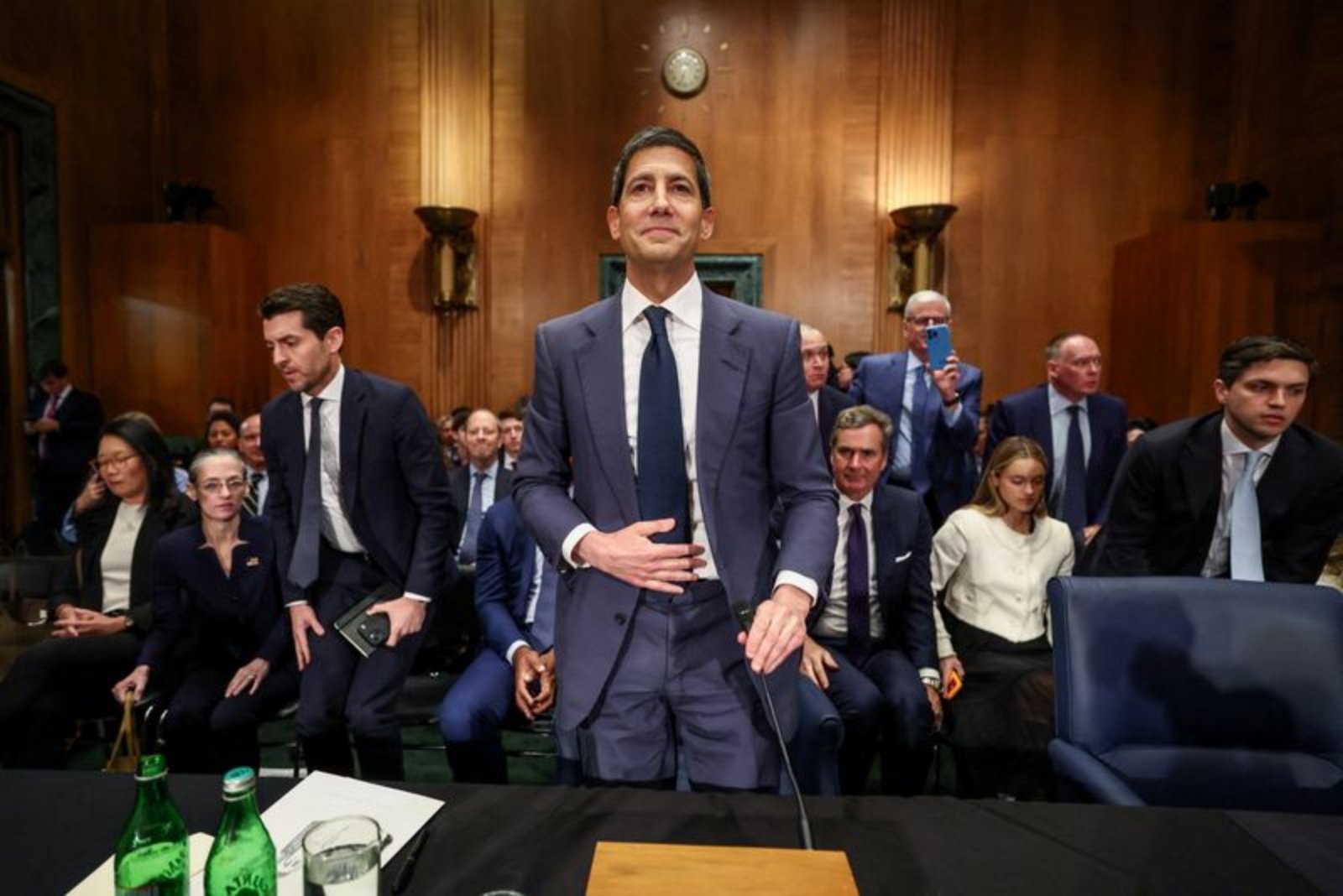
Kevin Warsh has said he wants a "good family fight" when he takes the reins of the Federal Reserve. That combative metaphor may prove apt: the committee that sets U.S. interest rates is split on the trade-offs facing monetary policy, and many of Warsh’s future colleagues may be reluctant to support the deep interest-rate cuts some have linked to his nomination.
Of the 19 officials who participate in interest-rate decisions and who will gather on Tuesday for what is likely the last two-day policy meeting under Chair Jerome Powell’s leadership, roughly half lean toward a hawkish stance. These policymakers prioritize the risk of rising inflation over a weakening labor market and are therefore unlikely to back near-term reductions in borrowing costs. About a third of the committee sits in a centrist position, while only three members have publicly argued for cutting rates in the near term.
Warsh, a 56-year-old lawyer and financier, would join the Fed if his nomination is confirmed. Fed Governor Stephen Miran, who has positioned himself on the dovish side of the board, is expected to step down to make room for Warsh. The Senate Banking Committee is scheduled to advance Warsh’s nomination on Wednesday, increasing the likelihood that he could preside over the Fed’s June 16-17 meeting.
Where labor fits into the debate
At his confirmation hearing, Warsh told lawmakers he believes the U.S. economy is operating close to full employment - using the Fed’s own metric that Americans who want a job can find one. That characterization aligns with what many other policymakers on the committee are seeing.
Employment indicators provide a mixed picture. Monthly job creation has slowed markedly over the past year, but the pool of job seekers has also declined. The article attributes this change in part to a sharp slowdown in immigration and to the native-born population aging into retirement. Those dynamics have helped keep the unemployment rate capped at a lower level; the rate ticked down to 4.3% in March.
Even so, not all members of the Fed are comfortable declaring the labor market robust. Some more dovish officials continue to point to signs of fragility. Fed Governor Christopher Waller, for example, has said he sees weakness in the labor market, citing low hiring numbers and subdued separations from jobs - elements that, in his view, leave the labor market vulnerable.
For the moment, however, a majority of policymakers consider the labor market roughly balanced and are turning to inflation data to guide any adjustment in monetary policy.
Inflation readings and how they shape choices
Warsh told senators that inflation "has improved somewhat in the last year," a judgment that diverges from the concerns voiced by a number of Fed officials. Several policymakers have pointed to the new import tariffs enacted by the administration last year and to geopolitical concerns - including the war in Iran and sharply higher oil prices - as reasons why progress against inflation has been uneven or stalled.
Key inflation metrics remain above the Federal Reserve’s 2% target. The core Personal Consumption Expenditures (PCE) Price Index, which strips out volatile food and energy costs, rose 3% year-over-year in February and is estimated by economists to have reached 3.2% in March. The headline PCE Price Index, which the Fed targets at 2% over the long run, is estimated to have increased 3.5% on a 12-month basis in March.
Warsh expressed a preference for trimmed-mean measures of inflation - statistics that remove the most extreme price moves to focus on the central tendency of price behavior. He noted that trimmed-mean readings can better reveal the underlying trend. The Dallas Fed’s trimmed-mean PCE measure stood at 2.3% in March.
If Warsh’s emphasis on trimmed-mean measures signals interest in revisiting the Fed’s 2% inflation goal, such a move would likely find little support among current policymakers. Nearly all officials have indicated they are not inclined to reopen the inflation-targeting discussion, particularly because the Fed has missed its 2% goal in recent years. That said, many central bankers already monitor a suite of inflation measures when forming their policy views.
Dallas Fed President Lorie Logan, whose regional bank publishes the widely cited trimmed-mean series, is identified as one of the system’s leading hawks.
Policy rates and the prospect of cuts
Chair Powell has described the Fed’s stance as "well-positioned," a phrase echoed by many colleagues and one that reflects comfort with keeping the policy rate within its current 3.50%-3.75% band. The consensus among market participants and most officials is to leave that rate unchanged at the upcoming meeting.
Some of the more hawkish members have even suggested adjusting the policy statement to indicate that the committee is as open to raising rates next as it is to cutting them - language meant to underscore vigilance toward inflation upside risks. Others argue inflation pressures warrant delaying cuts, possibly pushing any easing into the following year.
Financial markets mostly expect no rate cuts in the near term.
Warsh has tempered earlier public support for immediate rate reductions that he expressed while under consideration for the chairmanship. During his confirmation appearance he did not restate those calls for rapid easing, and he emphasized a broader principle: that Fed officials should avoid providing forward guidance about their future decisions or about the anticipated path of policy rates.
Warsh also did not directly oppose a question referencing President Trump’s suggestion that the Fed cut its policy rate to 1% by the end of the year - a level traditionally associated with recessions and acute crises rather than with a growing economy.
Balance-sheet strategy: a point of contention
Warsh has argued that discussions about the appropriate level of short-term interest rates should include the Fed’s balance sheet, because the instruments of monetary policy should complement rather than counteract one another. He contends that shrinking the central bank’s balance sheet would create space for lowering short-term rates.
That view has, to date, found only a single public ally among sitting Fed officials. Most of Warsh’s prospective colleagues treat balance-sheet policy as distinct from the routine setting of interest rates, reserving joint action for times of crisis.
Additionally, many officials foresee the balance sheet expanding modestly in line with the pace of economic growth and with demand for currency, rather than contracting. Where there is some accord is in the pace of any change: nearly all agree that adjustments to the balance sheet should be implemented gradually.
Artificial intelligence and the long-run outlook
Warsh has suggested that artificial intelligence could boost productivity over the longer term - a view that finds sympathetic ears around the policymaking table. The reasoning is straightforward: higher productivity could allow the economy to grow faster without rekindling inflation, potentially creating room for lower policy rates.
But central bankers caution that timing matters. In the short run, investments tied to artificial intelligence could contribute to price pressures. And the longer-term effects on interest rates remain uncertain because AI will also reshape the labor market in ways that officials are only beginning to analyze.
What comes next
The Senate Banking Committee’s expected advancement of Warsh’s nomination and the prospect that he could preside over the June policy meeting set the stage for a transition at the Fed at a moment of evident disagreement over risks and tools. Within the committee, roughly half of the officials prioritize guarding against resurgent inflation, a third occupy a centrist position, and a small dovish contingent favors near-term easing. How Warsh navigates those divisions - and how vigorously he seeks the "good family fight" he described - will shape the contours of U.S. monetary policy in the months ahead.