
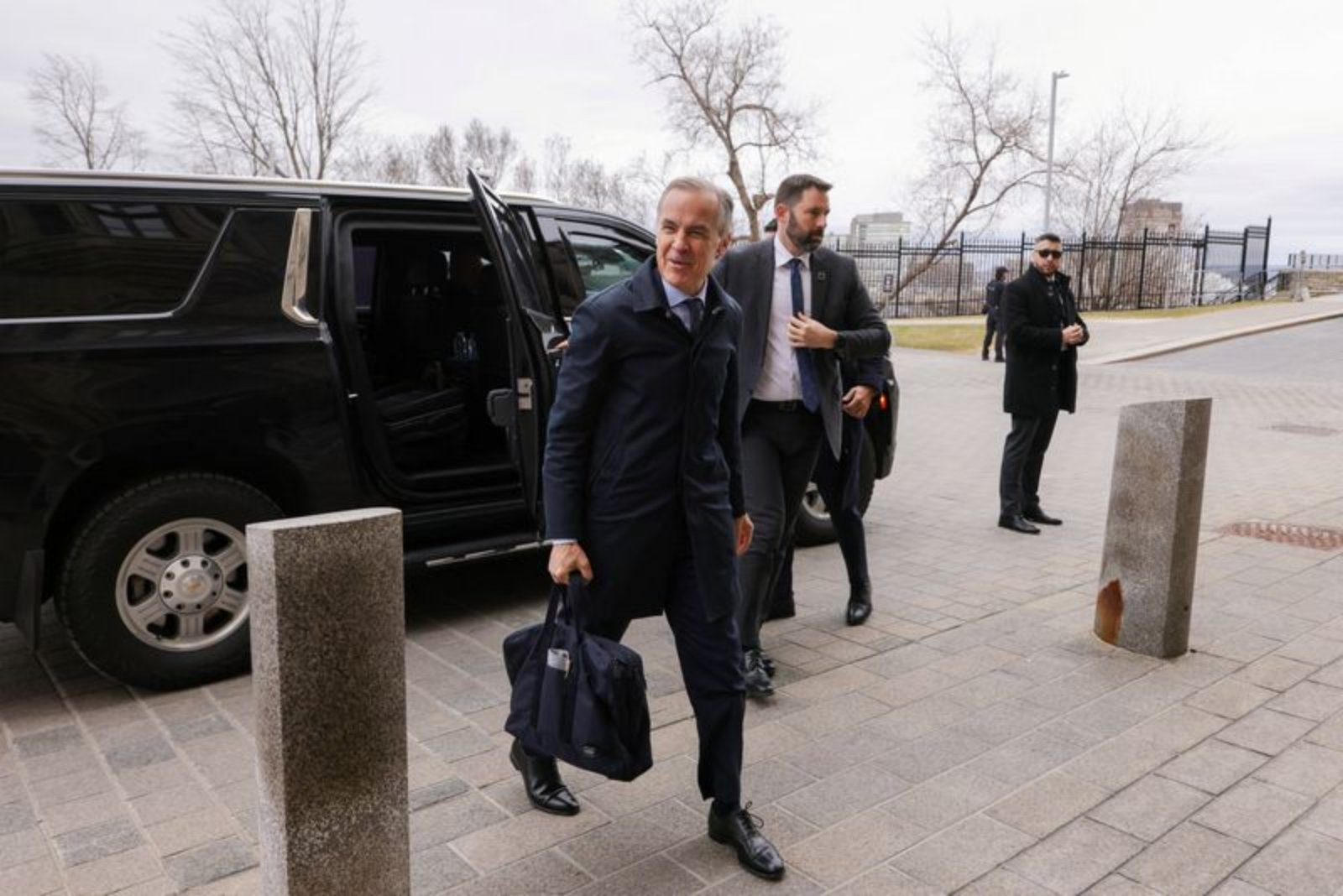
OTTAWA, April 14 - Prime Minister Mark Carney said his government will make reducing the cost of living, easing a housing shortage and fast-tracking large infrastructure projects central priorities now that the Liberal Party holds a parliamentary majority.
Carney made the comments after his party swept three special elections on Monday, results that helped produce the first Liberal majority government in Canada since 2019. He said he accepts Canadians' support "with humility, determination and a clear understanding of what this moment demands." The victories brought the Liberals to 174 seats in the 343-seat House of Commons.
At a Tuesday press briefing, the prime minister outlined steps aimed at immediate relief for households and longer-term structural changes to the economy. One near-term measure he announced was a temporary suspension of a federal fuel tax designed to reduce costs at the pump. Carney said the move will lower the price of regular gasoline by 10 cents per litre and cut diesel prices by 4 cents per litre.
"Canada’s new government has been relentlessly focused on making life more affordable for Canadians," he said when describing the government's priorities.
Beyond short-term affordability steps, Carney framed his agenda around making the Canadian economy less dependent on a single external partner and better prepared for global uncertainties. He cited the uncertainty created by U.S. President Donald Trump and the ongoing war in the Middle East as part of the environment motivating his approach. "We have to change fundamentally our economy to be stronger, more independent, more prosperous," he said.
Carney said the combination of a majority and the party’s recent wins should provide greater latitude to pursue legislation aimed at those goals, including housing and infrastructure initiatives he described as large-scale efforts to bolster economic independence.
Political responses and procedural decisions
Despite the new majority, Carney said he did not plan a cabinet shuffle before Parliament's summer recess and would not call an early election. His comments came after opponents criticized the way his majority was formed, pointing to five recent defections of elected legislators to the Liberals as undermining the credibility of the majority.
Conservative leader Pierre Poilievre took to X to express his displeasure with the process and outcome, posting: "The Carney Liberals did not win a majority government through a general election or today’s by-elections. Instead, it was won through backroom deals with politicians who betrayed the people who voted for them." Carney responded by emphasizing the mechanics of Canada's parliamentary democracy and noting that Canadians elect local representatives.
Expert comment and implications for opposition dynamics
Elizabeth McCallion, an assistant professor of political science at the University of Toronto, said the timing of the fuel tax suspension - announced only days after Conservatives had argued for a similar cut - illustrates increasing policy alignment between parties on some issues. She warned that such alignment "will make it more difficult for the opposition parties to actually be adversarial and challenge the government."
The policy steps Carney outlined touch directly on sectors that shape household budgets and investment decisions. The fuel tax suspension affects transportation and logistics costs, while a focus on housing and large infrastructure projects has implications for construction, real estate, and related materials and services industries.
Carney framed the agenda as a response to both domestic pressures - such as affordability and housing supply - and international uncertainty. He linked the policy push to creating a more autonomous and resilient economy, while signalling he will use the parliamentary majority to pursue the measures his government deems necessary.
Looking ahead, the government’s short-term relief measures and stated longer-term structural goals set expectations for action on affordability and investment in projects intended to broaden economic independence. Opposition criticism over how the majority was achieved and the growing alignment on select policies between parties suggest a political environment where scrutiny and partisan dynamics may evolve.