
Correction: A Zublin employee was injured, not killed.
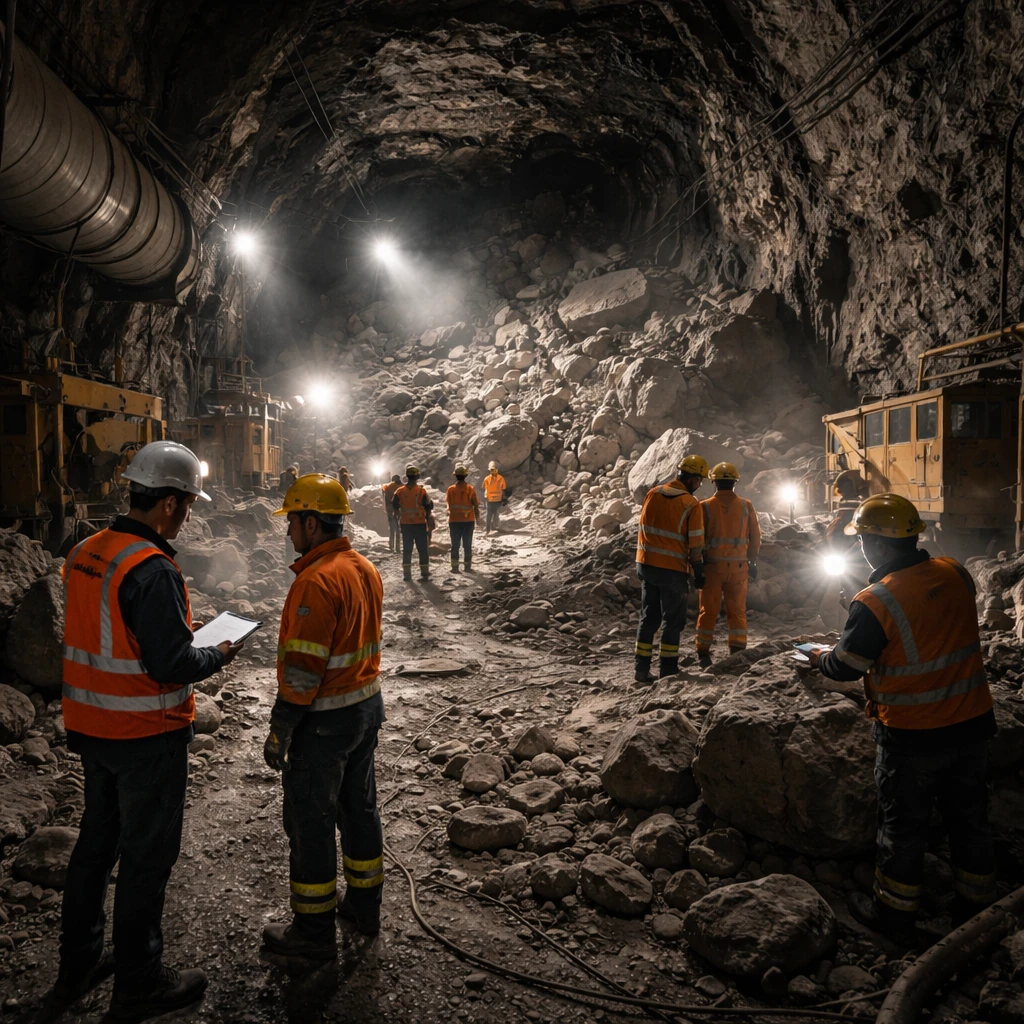
Labor authorities in Chile have issued sanctions to state-owned copper miner Codelco and to three contracting firms after a deadly rock burst at the El Teniente underground mine on July 31, according to inspection records obtained through public-records requests. The event, tied to an underground seismic episode, killed six contract workers and injured others, and prompted a halt to the mine's underground operations while rescue and safety inspections were conducted.
The records outline a notable disparity in penalties: the three contractors were fined a combined amount equivalent to about $87,000, while Codelco faced a lower sanction equivalent to roughly $20,000. That difference reflects Chile's split-liability approach to subcontracted work, under which the principal company can be penalized for overarching safety failures, but contractors are held directly accountable as employers for tasks such as accident reporting, risk assessment and assigning workers to jobs.
Inspectors flagged multiple violations in the records. In one finding, labor officials said Codelco did not have a complete, written procedure explaining how seismic warnings were to be used in decisions about suspending or restricting underground activity. Regulators also determined that Codelco breached labor rules when inspectors found workers entering or preparing to enter underground areas while a mine-wide suspension was still in place.
The seismic event, measured at about magnitude 4.3, led to the stoppage of all underground operations at the sprawling El Teniente complex during the initial response and inspections. Codelco has acknowledged the substantial production impact of the shutdown and a cautious restart, saying these measures cut copper output by tens of thousands of metric tons and disrupted shipments at a time of already tight global supply.
Under Chilean labor rules, certain serious or fatal-accident violations can be fined at up to 150 UTM per infraction, an inflation-linked tax unit that equates to roughly $11,000 at current values. The inspection records note prior precedent in which a regulator levied a 340 UTM penalty on a company after a fatal construction-site collapse in 2007, an example regulators and safety advocates have used in debates over whether current fines are adequate as a deterrent.
Company and contractor findings
The inspection files show that, beyond the administrative shortfall in written seismic-response procedures, authorities cited instances where worker movement underground occurred despite the formal suspension of operations. Separately, the three contractors received heavier sanctions tied to their roles as direct employers of the workers who were killed or injured.
One of the firms penalized is a local unit of Strabag, operating under the Zublin name. Inspectors determined that the firm failed to report a worker's injury within 24 hours, a lapse the records say undermines the ability to implement emergency safety measures that protect remaining workers. Correction to earlier reports clarifies that the Zublin employee was injured, not killed.
A unit of Chilean construction company SalfaCorp was sanctioned after one of its workers died in the Andesita sector. Regulators concluded the company did not immediately report the fatal accident and cited other offenses related to reporting and labor requirements. SalfaCorp told inspectors that internal protocols had been reviewed and reinforced to strengthen safety and compliance standards across its operations, and that the sanctions related to reporting processes rather than the proximate causes of the accident.
Constructora Gardilcic, the unlisted contractor whose workers were killed and injured in the Recursos Norte area, was also fined. Inspectors said Gardilcic reported the accident late, delayed filing injury reports and showed weak safety planning. Authorities additionally concluded Gardilcic did not adequately account for the risk posed by violent rock bursts occurring outside designated danger zones and that some workers were assigned to tasks for which they were not cleared.
Codelco response and internal changes
Codelco has outlined a series of operational changes since the collapse. The company says it tightened procedures for restarting work at El Teniente, instituted safety briefings at the start of shifts, improved communications underground, increased checks on workers' locations and reviewed protective equipment. Codelco also reported that an independent panel, led by a former Anglo American chief executive, was convened to examine the causes of the accident and whether broader management or workplace issues contributed.
In its response to labor authorities, Codelco said the seismic alert response system was active on the day of the event and that it has appealed the fine levied by the labor ministry. The company also noted an ongoing legal proceeding related to alleged oversight failures in allowing worker entry during the work stoppage, and that it is awaiting a decision from the relevant authorities.
Operational leadership at El Teniente has shifted in the months following the accident. The company announced that the mine manager, Andres Music, would leave his role in August, and in February Codelco announced the departure of three senior executives after an internal audit identified inconsistencies and concealment tied to a separate rock burst at the mine several years earlier.
Investigations and outlook
Authorities have indicated that the sectors of the mine most affected by the July 31 incident will remain under strict restrictions while criminal, regulatory and technical investigations proceed. Codelco has pledged a gradual, regulator-approved process to restart operations, but the records leave open when the entire mine might return to normal operating levels.
The combination of regulatory inquiries, internal reviews and restricted access to key zones creates a protracted path to full recovery of underground production. The inspection files and company statements together portray a situation in which safety, reporting protocols and the adequacy of contingency planning are under scrutiny across both the principal operator and its contracting partners.
Summary
Labor inspections following a July 31 seismic-triggered rock burst at El Teniente resulted in fines for Codelco and three contracting firms, with contractors shouldering larger penalties under Chile's subcontracting liability rules. The event caused six contract worker fatalities and multiple injuries, paused underground production at the world's largest underground copper mine and reduced copper output by tens of thousands of metric tons. Codelco has appealed its fine, said it has tightened safety practices and faces ongoing legal and technical reviews while affected areas remain restricted.
Key points
- Three contractors were fined about $87,000 combined; Codelco received a roughly $20,000 fine - a gap that reflects Chile's legal framework placing direct reporting and workplace duty responsibilities on employers.
- The July 31 seismic event produced a rock burst that killed six contract workers, injured others and led to a stoppage of all underground operations while rescue and inspection efforts occurred.
- Sectors affected include copper mining operations, contracting firms active in underground works and the broader copper supply chain, which faced disrupted shipments and reduced output in the aftermath.
Risks and uncertainties
- Ongoing criminal, regulatory and technical investigations create uncertainty about the timeline for full mine restart and the scope of any further enforcement or legal outcomes - a risk to underground operations and production recovery.
- Areas hardest hit by the incident remain under tight access restrictions, limiting when and how quickly disrupted production can be restored - a risk for shipping schedules and supply-side dynamics in copper markets.
- Questions over reporting procedures and safety planning at both the principal operator and contractors could prompt further administrative actions or operational constraints pending the outcome of reviews and appeals.