
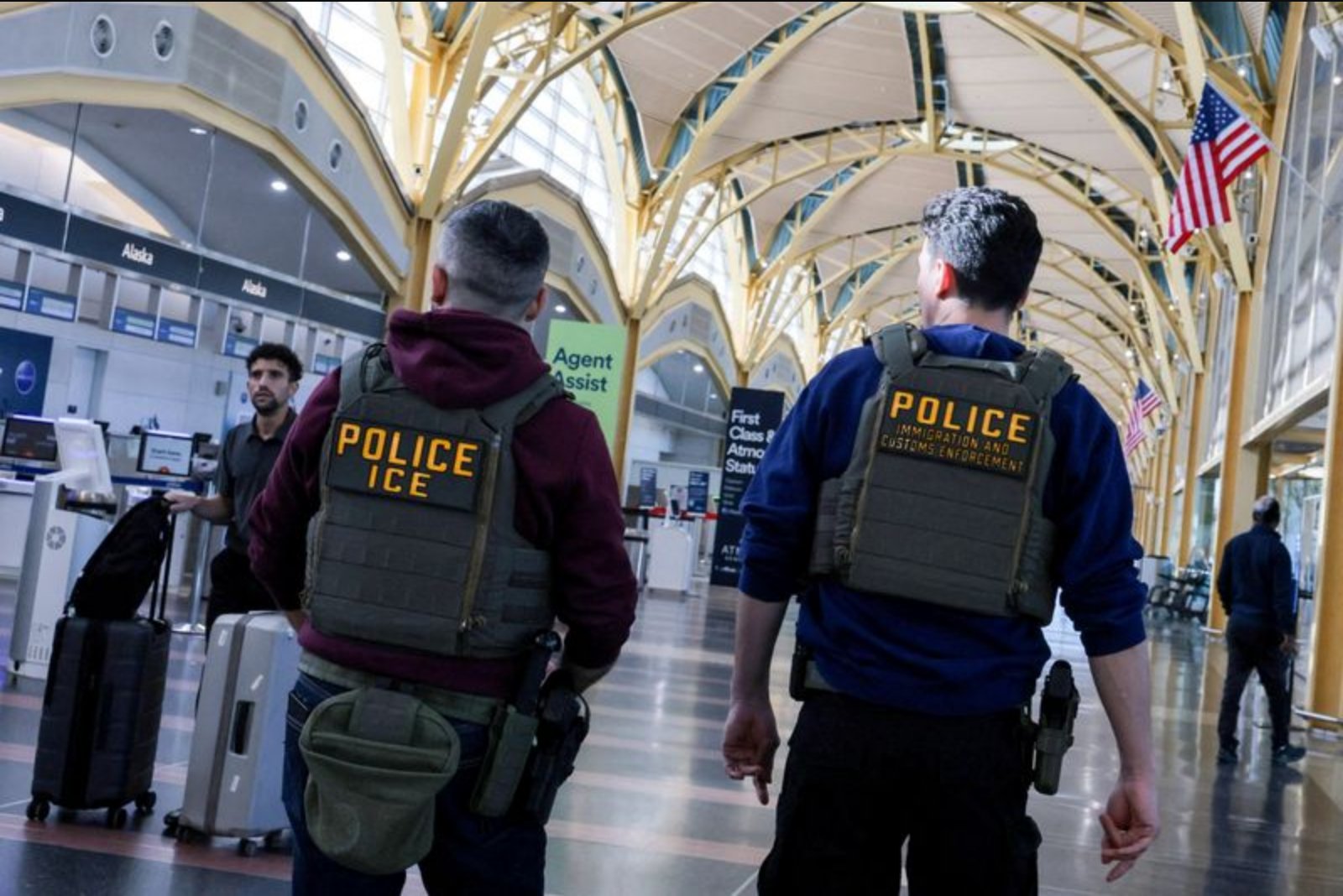
Republican lawmakers are preparing to move partisan legislation to provide funding for Immigration and Customs Enforcement and the U.S. Border Patrol - agencies within the Department of Homeland Security - with Senate Majority Leader John Thune indicating the full Senate could begin work "as early as next week." GOP senators and aides say the effort could start advancing through the Senate by the end of the month.
Thune is pressing for swift action on a narrowly tailored bill intended to secure funds for the two agencies through the remainder of President Donald Trump’s term, which runs through January 2029. He told reporters on Tuesday that the Senate could begin consideration soon, with the chamber scheduled to begin a week-long recess on May 1.
This year's routine appropriations for ICE and the Border Patrol have stalled amid a dispute between congressional Republicans and Democrats over whether to impose new operating procedures on the agencies. That impasse has left annual funding unclear and increased pressure on GOP leaders to pursue an alternative path.
To avoid needing 60 votes to overcome Senate filibuster rules for most legislation, Republicans plan to use a special procedure that would allow the bill to pass on a simple majority vote in the 100-member Senate. GOP senators and aides say that approach would permit funding to move forward without Democratic backing.
Using recent years' "base" funding as a reference point, Republicans estimate that spending for ICE and Border Patrol over three years could reach $50 billion or more. That prospective package would be added to more than $100 billion in multi-year funding Republicans secured last July, funds that were passed outside the standard appropriations process.
Thune has emphasized keeping the legislation narrow to prevent amendments that could introduce unrelated policy changes and jeopardize approval. Some Republican senators have signaled interest in attaching additional measures. Senator John Kennedy of Louisiana told reporters he wants to add the "SAVE America Act," a nationwide voting restrictions bill that President Trump has actively supported in the months before the November 3 congressional elections.
"If (other) senators start getting their stuff, I want my stuff, and I think you'll have most senators feel the way I feel," Kennedy said.
Supporters of adding the election-related bill say it is necessary to stop non-citizens from registering to vote. Democrats counter that allegations of widespread fraudulent voting in states are extremely rare and that the SAVE measure would likely prevent millions of eligible voters from registering and casting ballots.
Thune has warned that attaching the SAVE bill or other unrelated items could sink the entire funding push. At the same time, not all Republicans are aligned on the financing terms. Senator Rick Scott of Florida has said he would require any new ICE and Border Patrol allocations be offset by cuts elsewhere in the federal budget. Scott said he will review the legislation once the details are available before deciding whether to support or oppose it.
Advancing the proposal through Congress would follow a two-step process under the plan GOP leaders described. First, the Senate and House would pass a non-binding budget resolution to set a framework. That would be followed by a reconciliation bill that contains the specific spending measures that could then be sent to the president to be signed into law.
Length of the debate and next steps
The timetable for moving the legislation is constrained by the Senate calendar, including the upcoming recess. GOP leadership is seeking to limit amendments and secure a path that avoids Democratic cooperation, while at least some Republican senators insist on policy riders or budget offsets. Democrats' objections to proposed operating rules for ICE and the Border Patrol remain a central cause of the current funding stalemate.
How these intra-party disagreements among Republicans and the partisan divide with Democrats are resolved will determine whether the funding drive can be enacted before the recess or will be delayed further.