
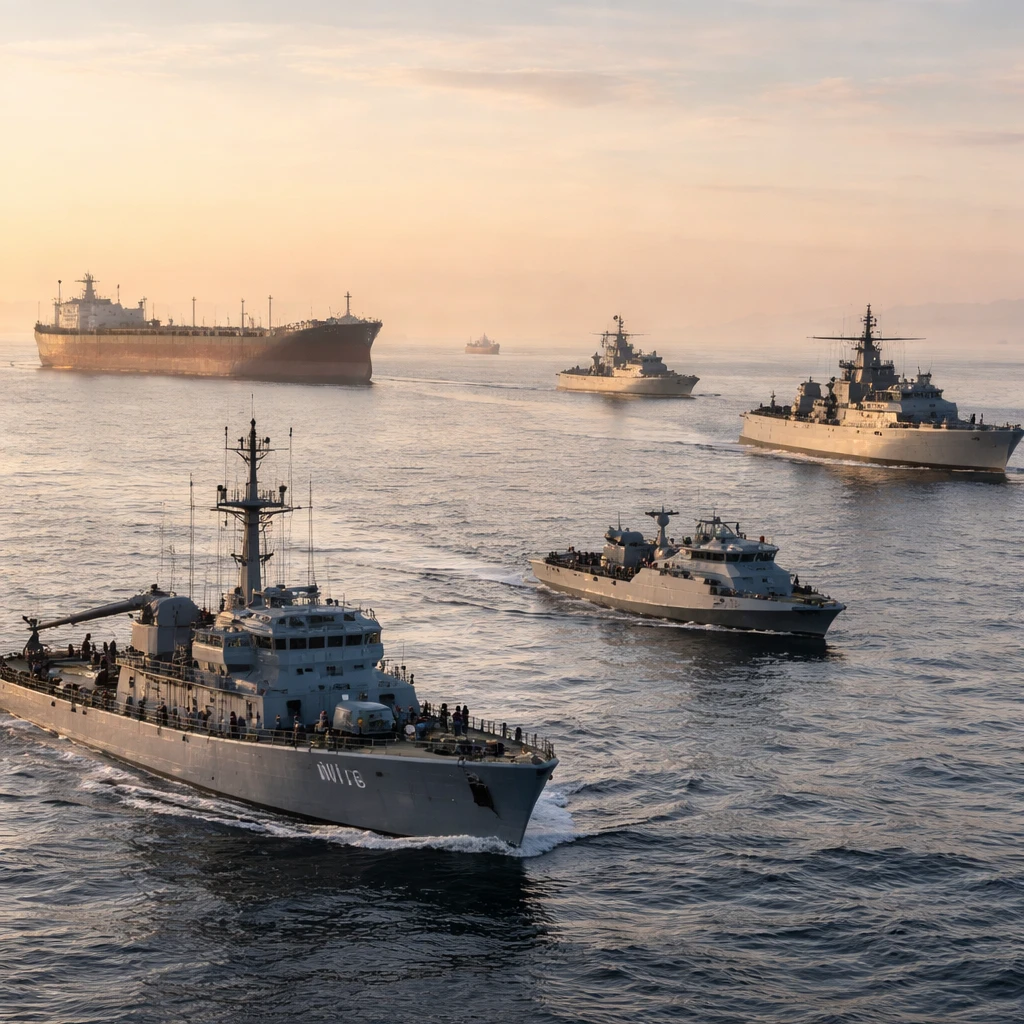
European governments are drawing up plans for an international coalition intended to reopen and secure shipping lanes through the Strait of Hormuz once fighting concludes, according to officials briefed on the initiative. The operation would focus on mine-clearing operations and the deployment of military vessels to restore confidence among shipping companies to resume transit.
French President Emmanuel Macron said the proposal envisions an international defensive mission that would not include what he described as "belligerent" parties. That formulation, officials say, excludes the United States, Israel and Iran from participation.
Diplomats familiar with the plan also indicated that participating European vessels would not function under American command. The objective, as framed by those officials, is to provide the private sector - particularly shipping firms - with the assurance needed to re-enter a waterway that has been disrupted by conflict. Officials cautioned that the end of hostilities could be some time away, underscoring the mission's role as a post-conflict stabilization effort rather than an immediate intervention.
Germany is reported to be likely to join the proposed effort, a potential shift for a country that has publicly been reluctant to consider military involvement in this context. A senior German official cited in reporting said Berlin could make a commitment public as early as Thursday. Officials suggested that German participation would increase the mission's heft - Berlin has greater fiscal resources than the U.K. and France and fields military capabilities viewed as relevant to mine-clearing and maritime security operations.
Observers of the plan note that Germany's involvement could make the coalition more substantial than earlier projections, both in terms of available funding and the specific military assets it could contribute. Beyond the immediate operational tasks of clearing mines and deploying vessels, the mission is being positioned as a confidence-building measure to encourage commercial traffic back through the strait after fighting ends.
The proposal, as described by European officials, remains a plan under development. Key elements include excluding parties identified as belligerents, maintaining European command and control of participating vessels, and focusing on technical tasks such as mine-clearing to remove impediments to shipping.
Clear summary
European countries are formulating a coordinated, defensive mission to clear mines and station naval vessels in the Strait of Hormuz after hostilities cease; the operation would exclude the U.S., Israel and Iran, and Germany is likely to join, potentially strengthening the effort.