
Overview
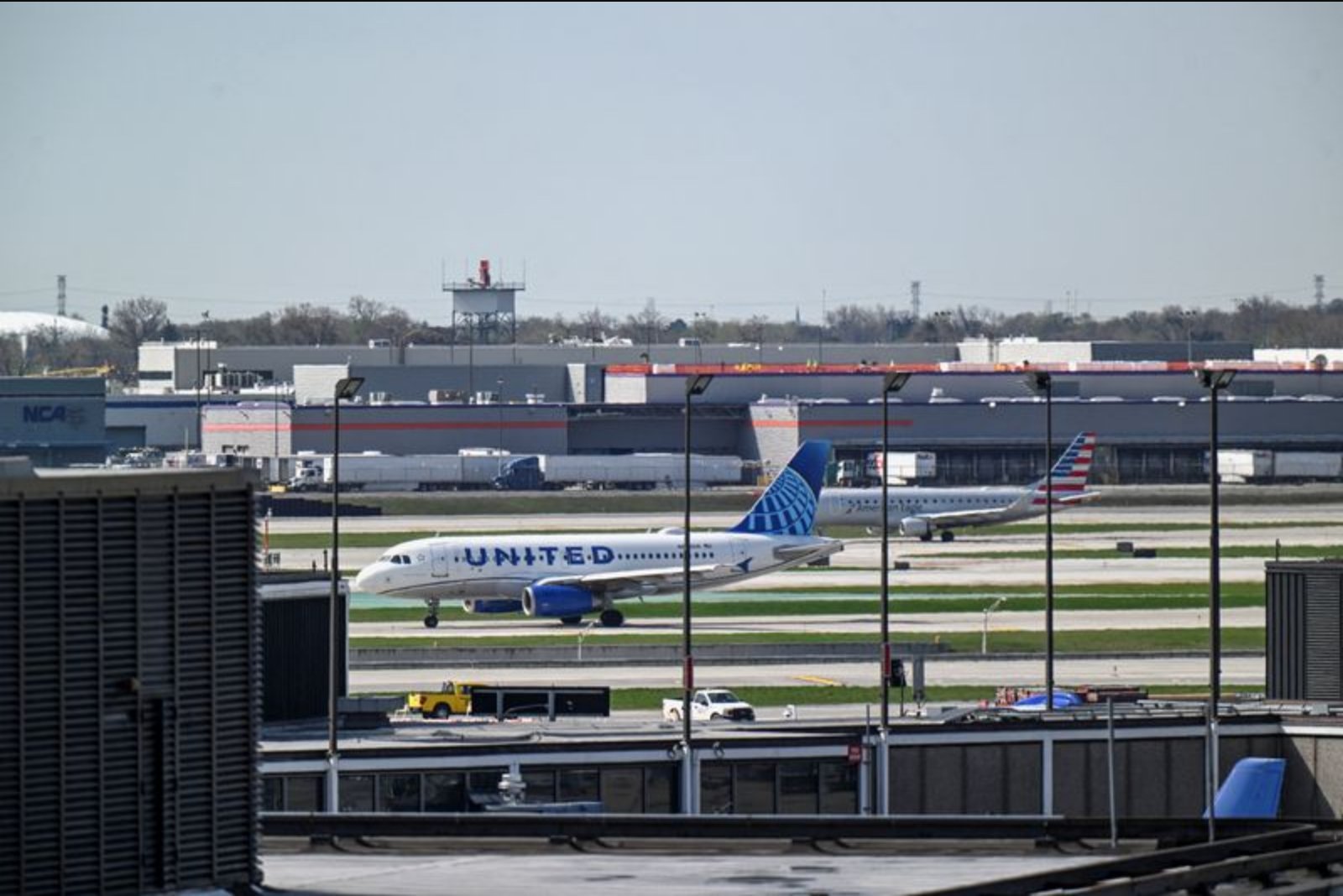
United Airlines Chief Executive Scott Kirby has carried a long-held strategic belief - that the U.S. market can sustain only two truly global premium carriers - to the highest levels of government. Sources disclosed that Kirby met with President Donald Trump on Feb. 25 and outlined a potential merger with American Airlines as part of a broader pitch to create U.S. corporate champions. The concept revives a view Kirby has articulated since the closing of the American-US Airways merger on Dec. 9, 2013, and places the rivalry between the two largest U.S. carriers at the center of a conversation that now touches the White House.
From 2013 to the present
The genesis of Kirby’s posture dates back to his time as a senior executive at American. He recalled at a March 2025 conference that on the day the American-US Airways transaction closed he told colleagues, "There’s only room in the country for two successful premium airlines," adding, "We’re going to push United … out of Chicago." Within three years of that merger he had left American after being passed over for the top job. He later joined United and, over the past decade, has pursued a strategy that in many respects has been aimed squarely at American’s strengths, notably a prolonged battle for dominance at Chicago O’Hare.
White House outreach and public reaction
The push for a combined United-American carrier emerged publicly late on a Monday when sources reported Kirby’s meeting with the president and his presentation of the merger idea. It remains unclear whether United has formally made an approach to American or whether the concept is still preliminary. Both United and American declined to comment.
Kirby’s engagement with the administration has not been limited to a private meeting. People familiar with the matter said he has been in contact with the administration for months and made media appearances meant to reach a broader audience. One such appearance was on the Katie Miller Podcast, a program hosted by the wife of Trump adviser Stephen Miller. That appearance drew a public rebuke from far-right activist Laura Loomer, who posted on X: "Scott Kirby is the same guy who fired people for refusing to take the COVID jab and spent years acting like a Biden climate cultist," and added, "Scott Kirby is a wolf in sheep’s clothing." United and Kirby did not comment on Loomer’s remarks.
Rivalry spilling into public forums
The competition between the two carriers has intensified and become increasingly personal. At a recent J.P. Morgan conference, American’s Chief Executive Robert Isom appeared in a morning session and Kirby in the afternoon. When Isom characterized United’s expansion in Chicago as "reckless," Kirby was later asked about the comment while onstage and replied, "Took that as a compliment."
Robert Mann, a former airline executive who now consults, described the dynamic as more than ordinary marketplace competition: "It’s a grudge match to some degree," he said. "Robert Isom versus Scott Kirby in the schoolyard after school - brass knuckles."
Kirby’s strategic argument
Kirby has framed consolidation as a logical reaction to industry stressors, arguing that shocks such as the current spike in jet fuel would "accelerate the gap between brand-loyal airlines and everyone else," thereby creating openings for deal-making. His merger rationale focuses primarily on international scale: a combined carrier, he argues, would have broader reach in markets where non-U.S. carriers dominate long-haul routes - a line of argument that appears designed to appeal to a White House concerned about trade balances.
Complicating factors in the proposal
Yet several domestic realities undercut the simplicity of that pitch. The two airlines have substantial overlap in key U.S. markets, including Chicago O’Hare and major hubs in Texas, and those overlaps are precisely the kinds of concentrations regulators typically scrutinize first. Such antitrust reviews would likely require divestitures of slots, gates or other assets in overlapping markets.
On balance sheets and shareholder interests, the arithmetic is also complex. American’s financial performance and share price have trailed peers, and unions have been sharply critical of management. Still, American’s own chief financial officer, Devon May, said last month the airline ended the first quarter with more than $10 billion in liquidity and debt at a 10-year low - even while remaining among the most leveraged of major U.S. carriers. In his public remarks last month, Isom said, "No matter how long this takes, American is built for times like this."
That relative middle ground - not strong enough to command a top-tier valuation, but not weak enough to be an obvious takeover target - complicates the acquisition thesis. Market reaction, however, was immediate: American’s stock rose more than 8% on Tuesday afternoon amid investor expectations of a takeover premium. At the time, American’s market value was roughly $7 billion, less than a third of United’s approximately $31 billion market capitalization.
Balance-sheet and operational challenges for United
For United shareholders, a deal would create substantial new obligations. United currently carries about $20 billion in long-term debt and has publicly signaled an ambition to reach an investment-grade credit rating; the airline's finance chief said last month that the company expects to hit that milestone by the end of this year or next. Adding American’s roughly $25 billion in debt would push combined liabilities toward $45 billion, a scale that would challenge United’s balance-sheet objectives and its messaging on financial discipline.
The proposed combination would also bring together more than 139,000 American employees and a fleet exceeding 1,000 aircraft - a vast integration task that industry officials say would be difficult under present market conditions. The current surge in fuel costs heightens the risk: J.P. Morgan analyst Jamie Baker recently lowered his United earnings-per-share forecast to an estimated loss of about $1 for the full year if fuel remains elevated.
Industry officials, speaking privately, emphasized how challenging such a transaction would be in the current environment. One described the prospect of United acquiring American as tantamount to "digesting a whale."
Investment chatter and market cues
The discussion of a potential deal has prompted market and investor commentary, with some analysts and trading desks parsing how a takeover would affect valuations and credit metrics. American’s sudden jump in share price reflects at least a near-term reassessment of possible outcomes for shareholders who have been awaiting a clearer path than a protracted turnaround.
United faces a trade-off as well: a merger would expand its global footprint and international connectivity but at the cost of materially higher leverage and an expansive integration burden while fuel remains a volatile expense.
What remains uncertain
Crucially, it is not publicly known whether United has made a formal approach to American or if the White House meeting was exploratory in nature. Both carriers declined to comment, and the matter sits at the intersection of corporate strategy, regulatory scrutiny and market conditions that are themselves shifting due to fuel prices and other variables. For now, the conversation elevates a long-standing strategy debate about consolidation and scale in the airline sector to a national political stage, while leaving many practical questions unresolved.
Additional material included in original reporting
The original coverage also included promotional content questioning whether to invest $2,000 in UAL and referenced an AI-driven stock idea product; that material was part of the reporting context made public alongside market commentary.