
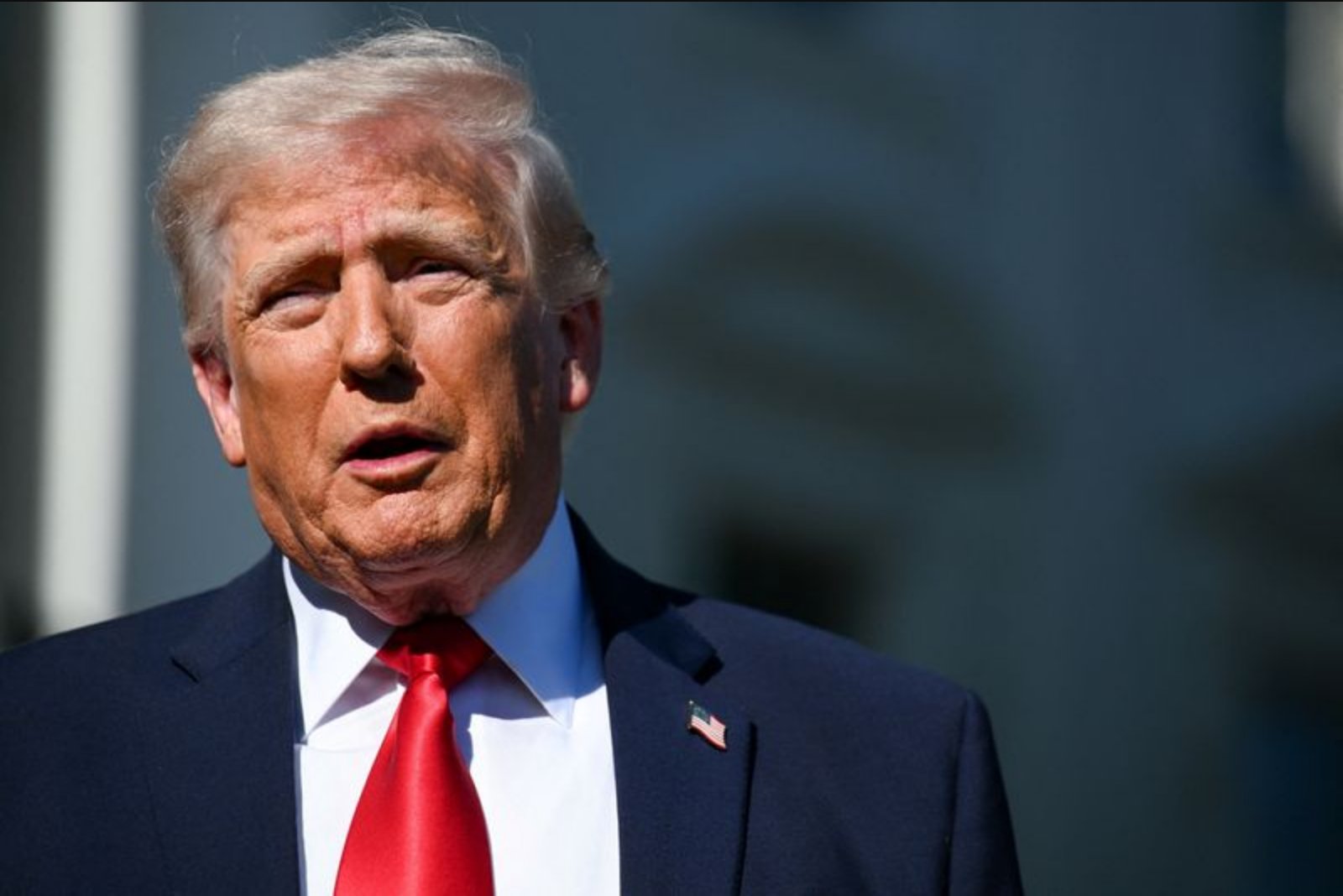
President Donald Trump on Tuesday appealed to Republican lawmakers to present a united front in order to extend a surveillance authorization that permits U.S. intelligence agencies to collect foreign targets' communications using data that passes through American digital systems. The legal authority in question is Section 702 of the Foreign Intelligence Surveillance Act, one provision among several enacted in the aftermath of the Sept. 11, 2001 attacks.
Section 702 is due to expire on April 20. Trump said he has been consulting with Speaker of the House Mike Johnson, House Judiciary Committee Chairman Jim Jordan and House Intelligence Committee Chairman Rick Crawford to secure a clean extension of the authorization in the House of Representatives this week.
"I am asking Republicans to UNIFY, and vote together on the test vote to bring a clean Bill to the floor," Trump wrote on Truth Social. "Our Military desperately needs FISA 702, and it is one of the reasons we have had such tremendous SUCCESS on the battlefield, both in Venezuela and Iran."
Trump framed the measure as operationally important to military efforts, repeating that Section 702 has been central to recent battlefield achievements in Venezuela and Iran. He urged a coordinated vote by Republicans on a procedural test to advance a straightforward bill that would extend the provision.
The president's appeal centers on a narrow legislative path - winning agreement among House Republicans to move a ‘‘clean’’ extension through a procedural vote and onto the floor for passage this week. He publicly named three House leaders with whom he said he is working to achieve that outcome.
As the authorization approaches its scheduled expiration, the timetable for action and the need for party cohesion are the main levers highlighted in the president's request. The administration's messaging links the legal authority directly to ongoing military operations while placing emphasis on rapid House action.
Summary
President Trump urged House Republicans to unite and pass a clean extension of FISA Section 702, which allows surveillance of foreign targets via U.S. digital infrastructure, before the authorization expires on April 20. He said he is coordinating with Speaker Mike Johnson, Rep. Jim Jordan and Rep. Rick Crawford to move the measure through the House this week and emphasized the statute's importance to military success.
Key points
- Section 702 of FISA permits U.S. intelligence agencies to surveil foreigners abroad using data routed through U.S. digital infrastructure; it is scheduled to lapse on April 20.
- The president urged Republicans to vote together on a procedural test to bring a clean extension bill to the House floor this week, and said he is working with Johnson, Jordan and Crawford to secure passage.
- Sectors most directly implicated include national defense and intelligence operations, and technology infrastructure that carries the communications data referenced in the authorization.
Risks and uncertainties
- Timing risk: The authorization is set to expire on April 20, creating a narrow window for legislative action - this affects defense and intelligence planning horizons.
- Political unity risk: The plan depends on Republicans voting together on a procedural test and a clean bill in the House, leaving outcomes contingent on intra-party cohesion - market participants in defense and cybersecurity sectors may watch closely.
- Legislative uncertainty: The need to move a clean extension through the House this week introduces uncertainty about whether the authorization will be extended without modifications.