
The U.S. military has put in place a blockade on ports in Iran, a measure that has drawn a sharp response from Tehran and intensified the precarious situation around the Strait of Hormuz. The action has injected further uncertainty into a waterway that previously carried nearly a fifth of global oil and gas flows, but hopes for renewed talks helped dampen immediate market jitters and saw benchmark oil prices fall below $100 on Tuesday.
Talks over the weekend in Islamabad between the two adversaries did not produce an agreement, but U.S. officials said the diplomatic engagement has not ceased. A U.S. official described continued engagement and "forward motion" toward an accord. Pakistani Prime Minister Shehbaz Sharif similarly said efforts remained under way to resolve the conflict.
President Donald Trump said Iran had been in touch on Monday and wanted to make a deal, but he warned he would not accept any arrangement that allowed Tehran to possess a nuclear weapon. Since the United States and Israel began the war on February 28, Iran has effectively closed the Strait of Hormuz to all vessels except its own, asserting that passage would be allowed only under Iranian control and would be subject to a fee.
The closure has had broad consequences because before the conflict nearly a fifth of the world's oil and gas supplies transited the narrow channel. The United States has said it will block Iranian vessels and any ships that pay such tolls and has threatened that any Iranian "fast-attack" ships that approach the blockade would be eliminated. Tehran, for its part, has warned it would strike naval ships transiting the strait and would retaliate against neighboring Gulf ports.
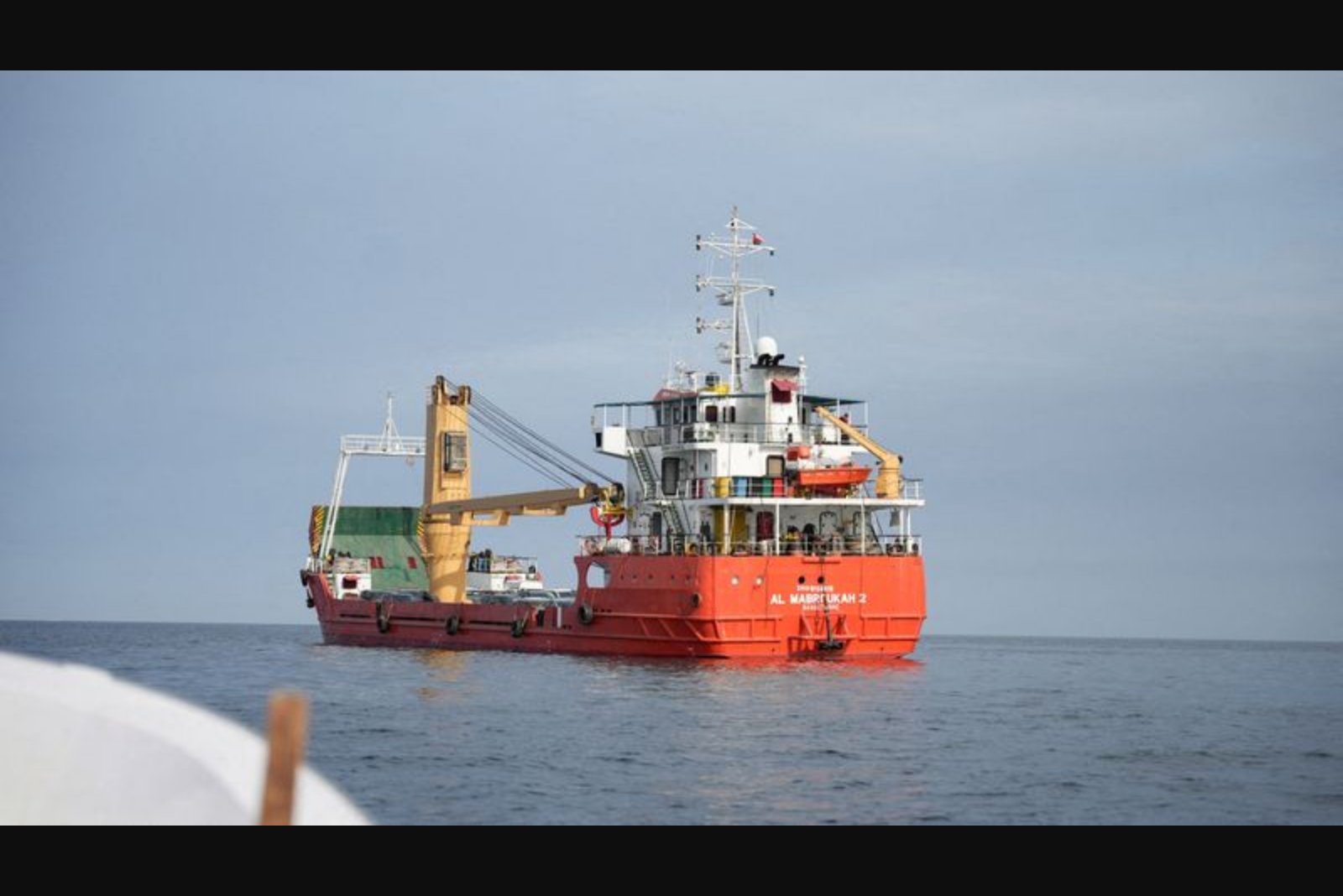
Shipping records compiled by LSEG showed that the Chinese-owned oil-and-chemicals tanker Rich Starry passed through the strait on Tuesday. That transit was the first recorded since the U.S. blockade began at 10 a.m. EDT (1400 GMT) on Monday. The vessel departed the Sharjah anchorage off the coast of Dubai on Monday bound for China; it had earlier turned back minutes after initially approaching the strait.
The blockade has clouded the outlook for global energy security and for the supply chains that depend on petroleum-based fuels and feedstocks. The U.S. action appears to lack broad international backing. NATO allies including Britain and France have said they will not be drawn into the conflict by participating in the blockade, instead emphasizing the priority of reopening the waterway to normal commerce.
Despite the apparent failure of talks between U.S. and Iranian representatives on Sunday, Vice President JD Vance, who led the U.S. delegation, told Fox News on Monday that the United States had "made a lot of progress" in communicating to Tehran where the U.S. "could make some accommodation" and where it would remain inflexible. Vance said President Trump was insistent that any enriched nuclear material must be removed from Iran and that a verification mechanism must be put in place to ensure Iran is not developing nuclear weapons. He added that Tehran "moved in our direction, which is why I think we would say that we had some good signs, but they didn’t move far enough," while declining to provide further specifics.
The ceasefire that had halted six weeks of U.S.-Israeli airstrikes and Iran's retaliatory fire across the Gulf appears fragile, with only a week remaining on the truce. U.S. Central Command issued a notice to mariners stating the blockade would be "enforced impartially against vessels of all nations" entering or leaving Iranian ports in the Gulf and the Gulf of Oman. The note made clear the measure would not obstruct neutral transit passage through the Strait of Hormuz to or from non-Iranian destinations.
Iranian officials criticized the U.S. restrictions. An Iranian military spokesperson labeled any U.S. curbs on international shipping "piracy," warning that if Iranian ports were threatened, no port in the Gulf or the Gulf of Oman would be secure. Iran's Revolutionary Guards said any military vessels that approach the strait would violate the ceasefire.
President Trump asserted that Iran's navy had been "completely obliterated" during the war, and said only a small number of "fast-attack ships" remained. He posted a stark admonition on social media: "Warning: If any of these ships come anywhere close to our BLOCKADE, they will be immediately ELIMINATED, using the same system of kill that we use against the drug dealers on boats at Sea. It is quick and brutal." That statement appeared to reference U.S. strikes against suspected drug boats in the Caribbean and Pacific, operations which began in September and which, according to the reporting, killed more than 160 people. The U.S. military has not presented evidence that the targeted vessels were carrying drugs.
The conflict's political ramifications continue to reverberate. With the war unpopular domestically and the spike in energy prices producing political pressure, President Trump paused the U.S.-Israeli bombing campaign last week after threatening to destroy Iran's "whole civilisation" unless it reopened the strait. Relations in the wider region remain strained.
In diplomatic moves at the United Nations, Iran's U.N. delegation on Monday asked for reparations from Saudi Arabia, the United Arab Emirates, Bahrain, Qatar and Jordan, alleging those countries had allowed their territory to be used in the U.S.-Israeli war against Iran.
The conflict has also fed violence in Lebanon. Israel has continued bombardments there, and on Monday Israeli forces launched an operation they described as intended to seize a key town in southern Lebanon from Iran-backed Hezbollah. Israeli military authorities reported on Tuesday that an Israeli soldier was killed and three reservists were wounded during combat in southern Lebanon. The U.S. and Israel have said the campaign against Hezbollah is not part of the ceasefire; Iran disputes that characterization.
Contextual note: The situation remains dynamic. Negotiations have shown limited progress but have not yet produced a binding settlement. Military measures such as the blockade apply immediate pressure while raising the risk of further escalation that could affect energy markets, maritime commerce, and regional security.