
Economy April 13, 2026 11:41 PM

Bessent Urges Patience on Rate Cuts as Middle East Conflict Drives Energy Prices

U.S. Treasury chief says Fed should 'wait and see' on monetary easing while oil-driven inflation pressures mount

By Jordan Park
Bessent Urges Patience on Rate Cuts as Middle East Conflict Drives Energy Prices

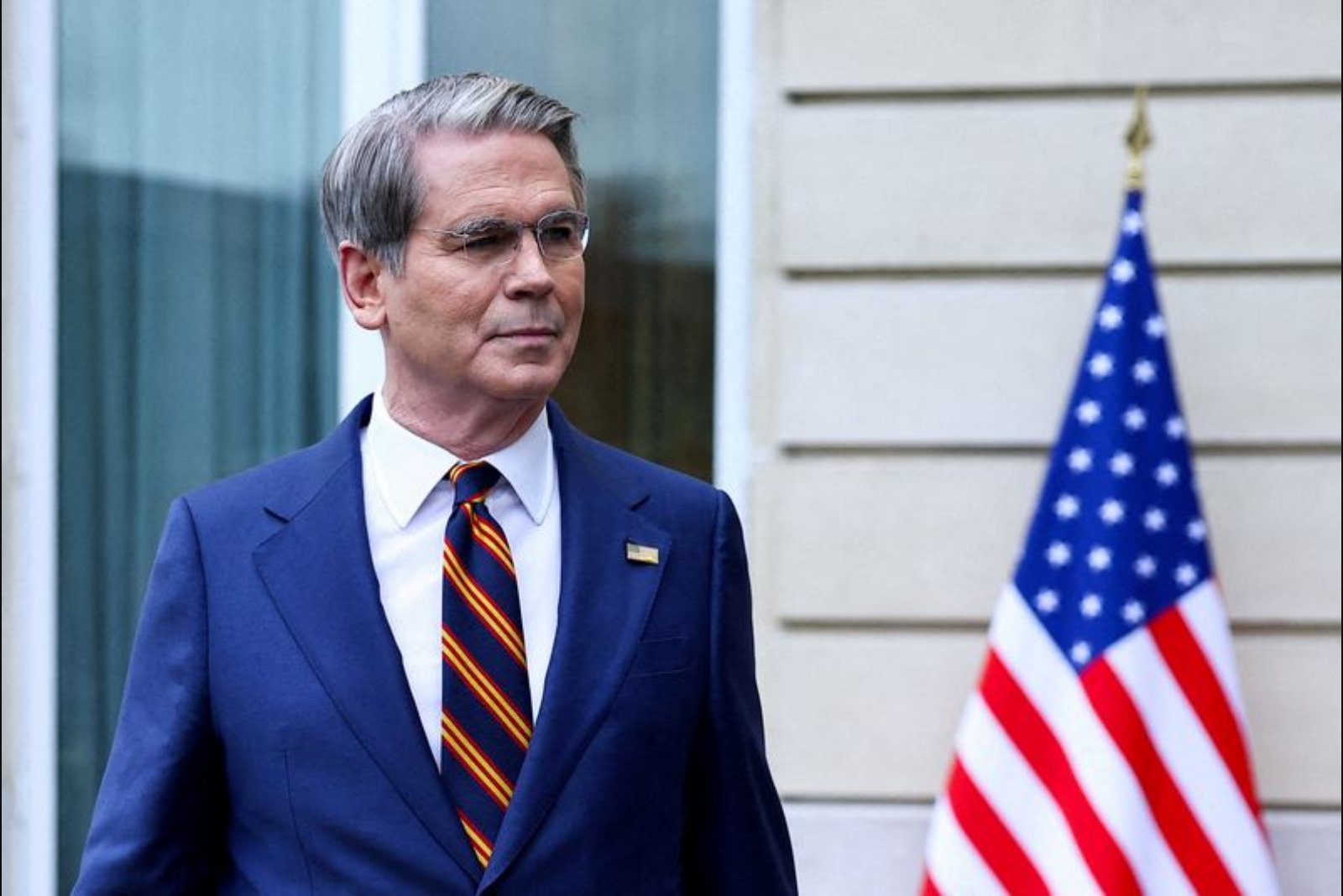
U.S. Treasury Secretary Scott Bessent told Semafor Editor-in-Chief Ben Smith that the Federal Reserve should hold off on lowering interest rates as the war in Iran unfolds. He described the U.S. economy as "very strong" in January and February, expressed confidence that recent price jumps will not become entrenched in inflation expectations, and highlighted differences in demand-subsidy policies abroad. The conflict has driven crude prices sharply higher and pushed retail gasoline above $4 a gallon, coinciding with a significant rise in U.S. consumer prices in March and growing political unease over economic management.

Key Points

  • Treasury Secretary Scott Bessent advised the Federal Reserve to "wait and see" before cutting interest rates while the war in Iran unfolds, citing uncertainty.
  • Bessent said the U.S. economy was "very strong" in January and February and praised the Fed for "sitting and watching" the conflict's impact.
  • The war has driven global crude oil prices up more than 30 percent, pushed the national average gasoline price above $4 a gallon, and coincided with the largest monthly rise in U.S. consumer prices in nearly four years in March nL1N40S16S - affecting energy and consumer sectors as well as monetary policy considerations.

April 13 - U.S. Treasury Secretary Scott Bessent told Semafor Editor-in-Chief Ben Smith on Monday that the Federal Reserve should "wait and see" before deciding whether to reduce interest rates, citing uncertainty created by the war in Iran.

Bessent described the U.S. economy as "very strong" in January and February and said the central bank is "doing the right thing by sitting and watching" how the conflict develops. He framed patience as a prudent approach to policy while geopolitical risks remain elevated.

On the prospect of other central banks shifting policy, Bessent said he would be surprised if the European Central Bank moved to hike rates. He also contrasted U.S. policy with measures in some foreign markets, noting that "many European countries, (such as) the UK, and Asian countries, are subsidizing demand, which we haven’t done in the U.S."

Addressing recent price dynamics, Bessent said he is confident that the spike in prices will not become "embedded into inflation expectations." The comments came as U.S. consumer prices experienced their largest monthly increase in nearly four years in March nL1N40S16S, a jump linked in part to record rises in gasoline and diesel costs amid the conflict with Iran.

The war has pushed global crude oil prices up by more than 30 percent, and the national average retail price for gasoline has climbed above $4 a gallon for the first time in over three years. Those energy price moves coincided with a reported decline in President Donald Trump’s approval ratings as public dissatisfaction grew over his handling of the economy.

When asked whether the war in Iran would ultimately be beneficial or harmful for the U.S. economy, Bessent offered a cautious, noncommittal view: "I think we will look back and say - I don’t know the number of days - whether it’s 50 or 100 or more (days) for 50 years of stability." His response emphasized the difficulty of placing a timeline on geopolitical shocks and their long-term economic implications.


Context and implications

Bessent's remarks underscore a preference for central-bank vigilance amid an external supply shock that has materially affected energy prices and headline inflation. His comments also highlight policy divergence between the U.S. and some foreign governments that have chosen to subsidize demand amid rising fuel costs.

Risks

  • Ongoing conflict in Iran has sent crude oil prices sharply higher, increasing inflationary pressure that could affect consumer spending and the energy sector.
  • Rising fuel costs and the March jump in consumer prices may erode political support for economic management, as reflected in declining presidential approval ratings, creating policy uncertainty.
  • Divergent fiscal approaches abroad - where some European and Asian governments are subsidizing demand - could complicate international policy coordination and influence central bank decisions, including those by the ECB.

More from Economy

Evergrande Founder Admits Guilt in Shenzhen Trial Over Fraud and Misuse of Funds Apr 14, 2026 Markets Pin Hopes on Diplomacy as Middle East Blockade Escalates Apr 14, 2026 China's March export momentum falters as Middle East conflict dents demand Apr 13, 2026 Bank of Korea governor nominee backs won-denominated stablecoins, flags household debt and reserve diversification Apr 13, 2026 Business Confidence Collapses in March as Iran Conflict Sparks Global Oil Shock Apr 13, 2026