
Senior representatives from the United States and Iran concluded an extended and at times tense round of negotiations in Islamabad without reaching a final deal, though participants and intermediaries said the door to future talks remains open.
The meeting - held at a luxury hotel in Pakistan's capital and convened four days after a ceasefire declaration - marked the first direct contact between U.S. and Iranian officials in more than a decade and the most senior bilateral engagement since Iran's 1979 Islamic Revolution. Delegations from both sides, along with Pakistani intermediaries, spent long hours attempting to bridge sharp differences on several high-stakes issues before suspending talks without a breakthrough.
Inside the Serena Hotel, the conference was arranged into three operating spaces: separate wings for the U.S. and Iranian delegations and a shared area for trilateral discussions involving Pakistani mediators and operational staff, according to people familiar with the logistics. Phones were banned from the main meeting room, forcing senior officials - including the U.S. vice president and Iran's parliamentary speaker - to step outside during breaks to relay key messages home.
Officials named among the principal participants included the U.S. delegation led in part by Vice President JD Vance, and Iran's side featuring Parliamentary Speaker Mohammad Baqer Qalibaf and Foreign Minister Abbas Araqchi. Pakistani intermediaries who moved between the sides included Army Chief Asim Munir, Foreign Minister Ishaq Dar and Prime Minister Shehbaz Sharif, all of whom were reported to be actively trying to keep negotiations on track.
Sources involved in the talks described a room where hopes of a breakthrough alternated with moments of deep frustration. A Pakistani government official said there had been a period during the talks when participants believed an agreement might be within reach, but that the mood shifted quickly. Another attendee asserted the parties were "very close" and "80% there" before encountering sticking points that could not be settled on the spot.
Officials and participants identified a set of issues at the center of the impasse. The Strait of Hormuz - a critical global energy transit corridor that Iranian actions have effectively choked and which the United States has said it would reopen - featured prominently. Iran's nuclear activities and the international sanctions regime affecting Tehran were also central to the discussions, alongside demands over frozen assets and the broader scope of any potential arrangement.
U.S. officials, as described by those with direct knowledge of the talks, emphasized a core objective: ensuring Iran would not acquire a nuclear weapon. One U.S. source said American negotiators sought a deal that would prevent Iran from ever obtaining such a capability. Tehran's delegation, for its part, expressed deep distrust of U.S. intentions and sought broader guarantees, according to Iranian participants.
Two senior Iranian sources characterized the atmosphere at times as heavy and unfriendly, saying Pakistan made efforts to soften tensions but that neither side initially showed willingness to ease its position. By early Sunday morning, however, the two Iranian sources said the mood had brightened somewhat and the idea of extending the meeting by an additional day began to circulate. Even then, significant differences remained unresolved.
At several moments, exchanges between the main negotiators intensified. Iranian sources said the tone of Foreign Minister Araqchi grew sharper when the talks turned to guarantees - both non-aggression assurances and sanctions relief. He was quoted asking: "How can we trust you when, in the last Geneva meeting, you said the U.S. would not attack while diplomacy was under way?" That earlier Geneva meeting was followed two days later by a U.S.-Israeli strike on Iran, a fact raised in the Islamabad discussions.
As the talks progressed, the range of demands from both sides highlighted their divergent priorities. U.S. negotiators outlined a package that included halting all uranium enrichment, dismantling major enrichment facilities, transferring highly enriched uranium out of Iran's control, accepting a broader peace and a security framework that included regional allies, ending support for regional proxies and fully reopening the Strait of Hormuz without tolls. Iranian demands, as described by Iranian sources, called for a guaranteed permanent ceasefire, written assurances of no future strikes on Iran and its allies, lifting primary and secondary sanctions, unfreezing assets, recognition of Iran's right to enrichment and continued Iranian control over Hormuz.
Those contrasting lists of objectives meant that as the teams tried to assemble a shared framework some apparent progress unraveled. Four of the individuals familiar with the negotiations said talks at times seemed close to at least a framework understanding, but ultimately broke down over Iran's nuclear programme, the status of the Hormuz Strait and the size of frozen asset transfers Tehran sought.
One security official involved in the process described the negotiating rhythm as one of "ups and downs," punctuated by tense moments in which participants left the room and later returned to resume discussions. In one episode, raised voices were audible outside the negotiating chamber before Pakistani mediators called a tea break and separated the delegations into different rooms to defuse tensions.
The meeting stretched into Sunday morning and lasted in excess of 20 hours, according to those on site. Hotel personnel on duty went without typical rotations, remaining on site after expedited background checks to serve the delegations. Pakistani officials and staff were described as working through the night to maintain momentum, shuttling between negotiators and relaying proposals.
Throughout the process, Pakistan continued to act as a conduit for communication after the principal negotiators departed Islamabad. A diplomat based in the region said mediators and U.S. interlocutors kept talking following the vice president's departure, and sources directly involved reported Pakistan remained active in passing messages between Tehran and Washington.
Public comments after the meeting indicated continuing engagement. U.S. President Donald Trump told reporters on Monday that Iran had "called this morning" and said "they'd like to work a deal." Reuters could not immediately verify that assertion, according to people familiar with the reporting timeline. A U.S. official, referencing the president's statement, said there was ongoing contact between the two countries and "forward motion" toward an agreement. White House spokeswoman Olivia Wales reiterated that the U.S. stance had not shifted in Islamabad, saying: "Iran can never have a nuclear weapon, and President Trump's negotiating team stuck to this red line and many others. Engagement continues toward an agreement."
Pakistan's prime minister, Shehbaz Sharif, sought to frame efforts as continuing. "I want to tell you that a full effort is still on to resolve the issues," he said on Monday, according to people familiar with the account. The Pakistani government thus positioned itself as an active facilitator seeking to build on the brief ceasefire that paused six weeks of conflict which, participants said, had cost thousands of lives and disrupted global energy flows.
Analysts and participants highlighted the incentives both Washington and Tehran have to pursue de-escalation, even amid high mistrust. In the account given by those involved, U.S. strikes were politically unpopular domestically and appeared unlikely to overturn Iran's governing system, while Iran's effective restriction of energy exports was injecting upward pressure into global inflation figures at a time of political sensitivity for U.S. domestic politics. Separately, war-related damage risked further weakening Iran's fragile economy not long after authorities suppressed significant protests with deadly force, the sources said.
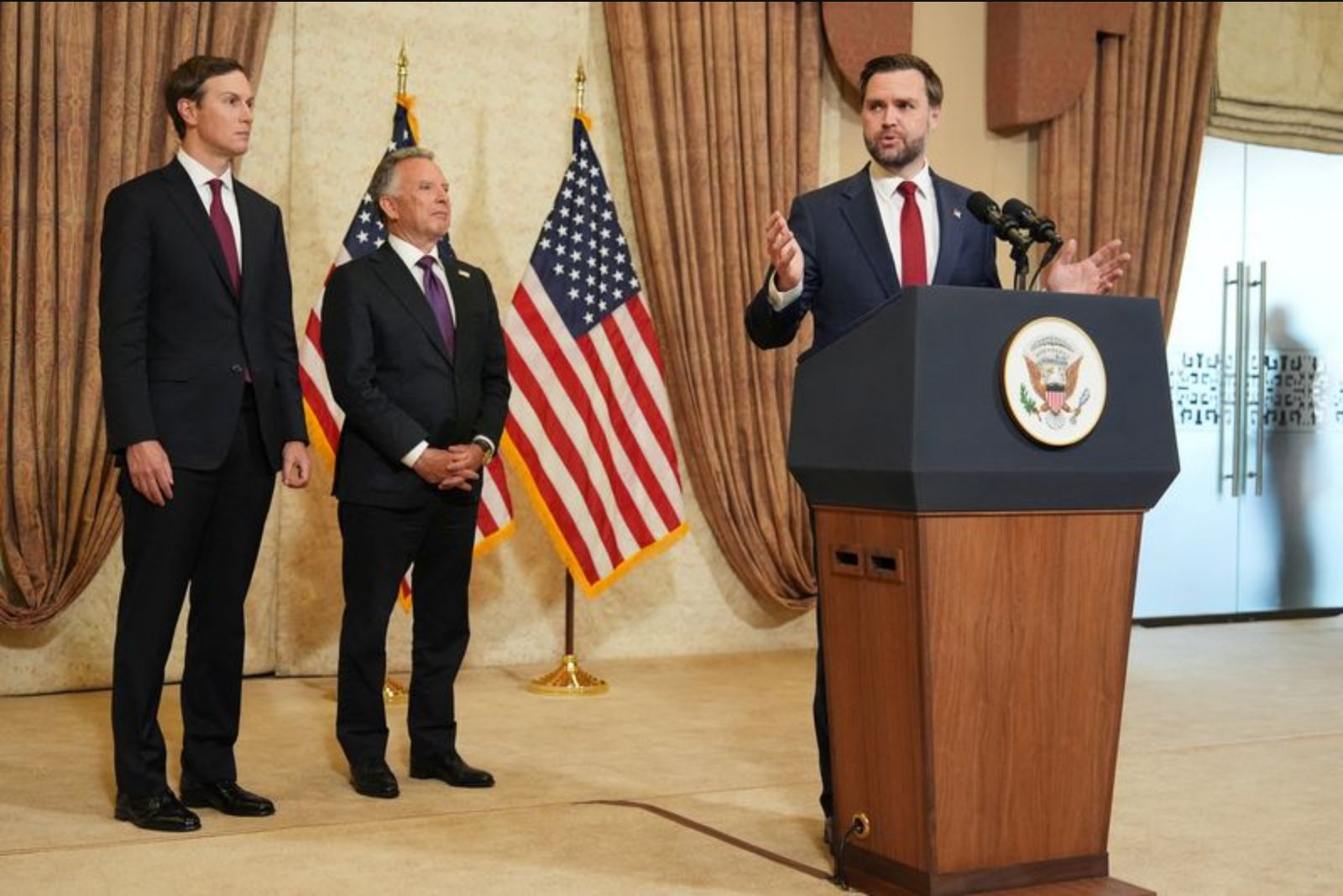
As the formal meeting concluded, Vice President Vance addressed reporters and signaled the United States had left a concise proposal on the table. He described it as "a very simple proposal, a method of understanding that is our final and best offer," adding: "We'll see if the Iranians accept it." The phrasing suggested U.S. officials intended to leave room for additional exchanges, even as they framed their offer as definitive.
Despite the lack of a signed agreement, multiple participants and intermediaries said lines of communication remained active. Conversations between mediators and American officials continued following the delegation's departure, and Pakistan continued to relay messages between the two capitals. Those ongoing contacts leave open the possibility of further negotiations, even as core policy differences remain unresolved.
What happened
- The highest-level U.S.-Iran meeting in decades took place in Islamabad, ending without a formal agreement after prolonged and difficult discussions.
- Key disagreements centered on Iran's nuclear activities, the status of the Strait of Hormuz and sanctions relief, as well as the scale of frozen assets Tehran sought access to.
- Pakistan acted as the mediator, with senior Pakistani officials shuttling between delegations and continuing to pass messages after the talks concluded.
Who was involved
- U.S. delegation included Vice President JD Vance and other senior negotiators.
- Iran's delegation featured Parliamentary Speaker Mohammad Baqer Qalibaf and Foreign Minister Abbas Araqchi.
- Pakistani intermediaries involved Army Chief Asim Munir, Foreign Minister Ishaq Dar and Prime Minister Shehbaz Sharif.
State of play
- Talks ran into deep disputes on core security and economic guarantees, yet multiple sources reported that dialogue remains possible and back-channel communications continued.
- The U.S. presented what it characterized as a final offer intended to prevent Iran from obtaining a nuclear weapon, while Iran demanded broader concessions including recognition of its enrichment rights and sanctions relief.