
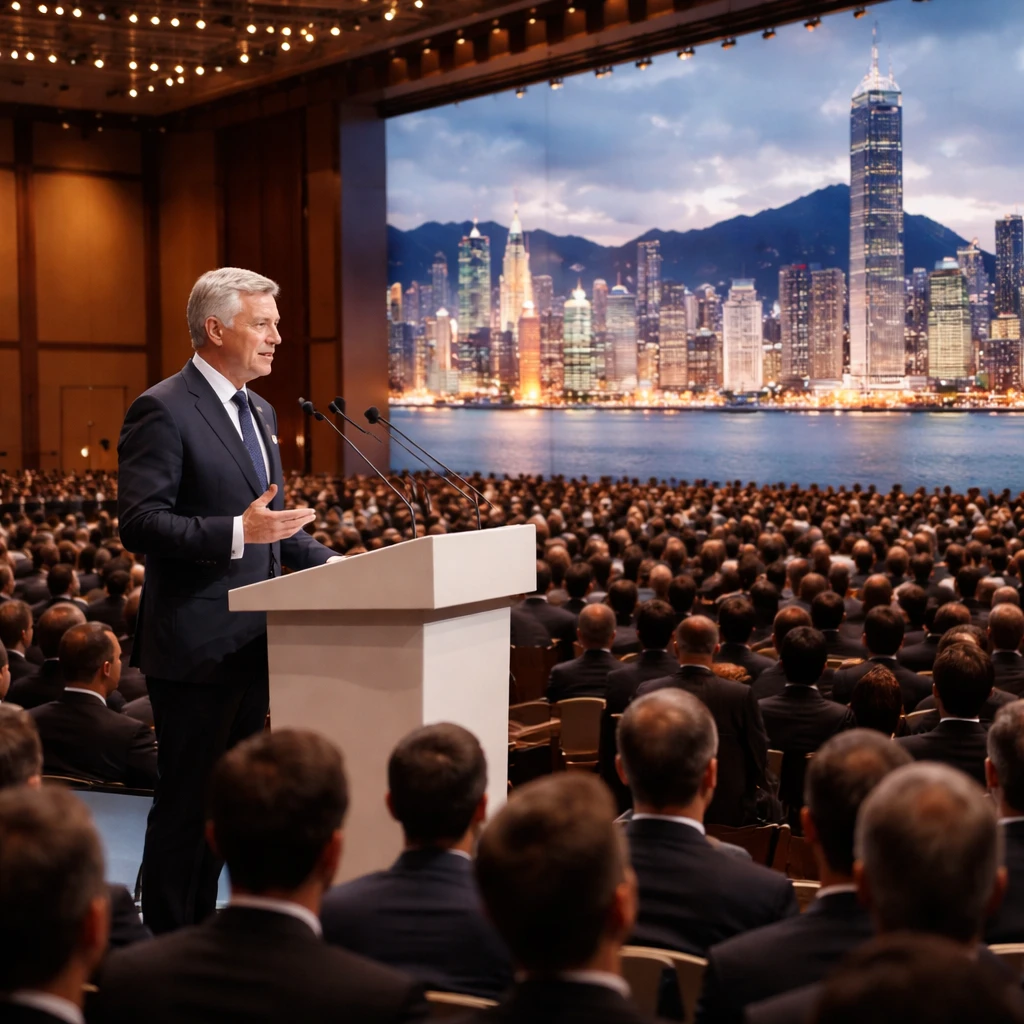
HSBC Holdings' chairman Brendan Nelson said on Tuesday that advances in artificial intelligence, the growth of Asia's middle class and expanding trade flows are likely to support global economic growth despite the ongoing US-Israel conflict with Iran.
Nelson made the comments while speaking at HSBC's Global Investment Summit in Hong Kong. The event drew an audience of more than 5,000 people, and the speech marked Nelson's first public address since he took on the role of chairman in December.
Reflecting on the start of the year, Nelson said: "Four and a half months into 2026, there have already been a number of unexpected developments." He added a cautionary note on the conflict's economic transmission, observing that "the longer the disruption continues, the more the indirect effects from higher energy costs will lift inflation and depress growth."
Nelson also described the reaction of central banks to the geopolitical shock as careful and measured. According to the bank's outlook delivered at the summit, HSBC expects major central banks - the US Federal Reserve, the European Central Bank and the Bank of England - to keep policy rates at their current levels through the year.
On the role of Hong Kong, Nelson emphasized the city's position as a focal point for international finance. He said Hong Kong will play a central role in global growth by serving as a wealth management hub, a trading center and a connector between mainland China and overseas markets.
Nelson's remarks tied these structural and technological growth drivers to the wider question of how persistent geopolitical tension could ripple through the economy. While pointing to the upside from AI, rising regional consumption and trade, he warned that prolonged energy market disruption could feed into inflation and slow activity.
Event: HSBC Global Investment Summit in Hong Kong
Speaker: Brendan Nelson, chairman of HSBC Holdings
Audience: More than 5,000 participants