
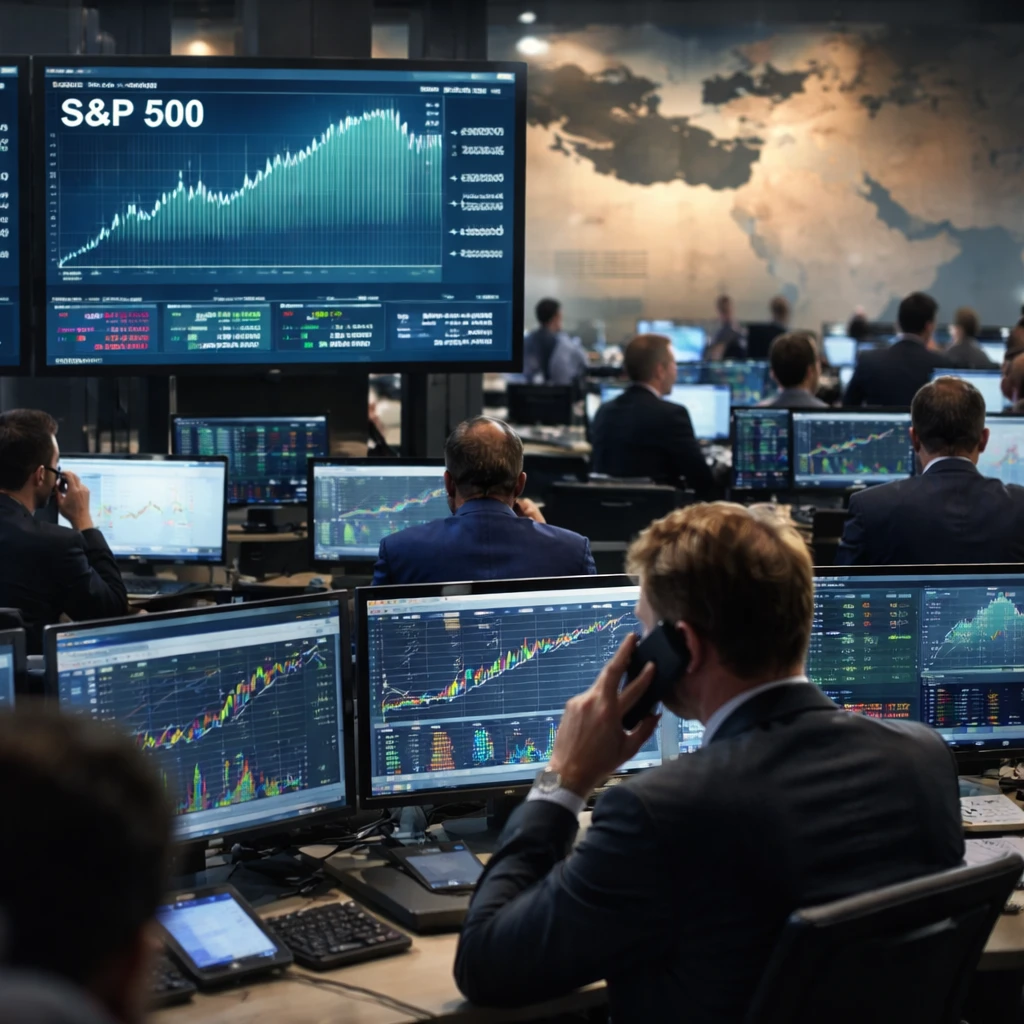
U.S. stock index futures showed little movement late Tuesday as markets digested a session in which major benchmarks rallied and the S&P 500 ended close to its historic closing high. At 20:43 ET (00:43 GMT), S&P 500 Futures were largely unchanged at 7,007.75 points. Nasdaq 100 Futures had inched up 0.1% to 26,012.75 points, while Dow Jones Futures were subdued at 48,752.0 points.
In regular trading, the S&P 500 climbed 1.2%, finishing just shy of its all-time closing peak. The NASDAQ Composite jumped nearly 2%, and the Dow Jones Industrial Average advanced roughly 0.7%. The late-day advance was concentrated in technology names and accompanied by falling oil prices, as market participants reacted to growing hopes of de-escalation in the Middle East.
Political developments over the region spurred part of the optimism. U.S. President Donald Trump said on Monday that "we've been called by the other side," and added that "they'd like to make a deal very badly," comments interpreted by some investors as signaling progress in talks with Iran. Those remarks came even as the article noted that tensions remained elevated - the U.S. has initiated a naval blockade of ships leaving Iranian ports, and Tehran had threatened retaliation against ports in neighboring Gulf states after weekend negotiations broke down.
Economic data released during the day provided additional support for markets. The U.S. producer price index (PPI) showed an annual increase of about 4.0%, below forecasts of 4.6%, while month-over-month gains were also muted. The softer PPI print was seen as reflecting easing pipeline inflation pressures, which traders factored into their positioning.
Corporate earnings painted a mixed picture. JPMorgan Chase (NYSE:JPM) reported profit that exceeded expectations, driven in part by trading results. Wells Fargo (NYSE:WFC) posted a rise in profit but missed revenue expectations. Healthcare bellwether Johnson & Johnson (NYSE:JNJ) topped estimates and raised its outlook, a performance the company attributed to strong drug sales.
Attention now turns to a slate of reports scheduled for Wednesday. Bank of America (NYSE:BAC) and Morgan Stanley (NYSE:MS) are set to release results, and chip equipment maker ASML will also report. These upcoming releases could offer further clarity on demand in financial services and global technology supply chains.
For investors weighing specific stock decisions, the article referenced tools that assess opportunities using quantitative frameworks. One such evaluation posed the question of whether to invest $2,000 in BAC, noting that ProPicks AI reviews BAC alongside thousands of other companies each month using more than 100 financial metrics. The description said the AI aims to identify stocks with attractive risk-reward profiles based on current data and cited prior notable winners identified by the tool, including Super Micro Computer (+185%) and AppLovin (+157%).
Summary
Equity futures were mostly flat late Tuesday after the S&P 500 closed near its record, with gains in the regular session driven by technology stocks and lower oil prices amid hopes for diplomatic progress in the Middle East. Softer-than-expected PPI data supported the market backdrop while corporate earnings were mixed, leaving focus on several major reports due the following day.
Key points
- The S&P 500 ended the regular session up 1.2%, closing near its all-time high; Nasdaq rose nearly 2% and the Dow advanced around 0.7% - sectors affected: technology, energy, financials.
- Late-session futures were largely unchanged: S&P 500 Futures at 7,007.75, Nasdaq 100 Futures at 26,012.75 (up 0.1%), Dow Jones Futures at 48,752.0 - indicating calm overnight positioning.
- Corporate earnings were mixed: JPMorgan Chase beat expectations on profit driven by trading; Wells Fargo missed revenue expectations despite higher profit; Johnson & Johnson beat estimates and raised guidance - impacts for banking and healthcare sectors.
Risks and uncertainties
- Geopolitical risk - Elevated tensions and naval actions in the Gulf region create the potential for renewed market volatility, particularly in energy and related sectors, as noted by ongoing blockade and threats of retaliation.
- Earnings risk - Mixed results from major banks and the forthcoming reports from Bank of America, Morgan Stanley, and ASML could shift investor sentiment and affect financials and technology supply-chain stocks.
- Economic-data sensitivity - While the PPI print came in softer than forecasts, signs of changing inflationary pressures could influence rate expectations and market positioning across equities and fixed income.