
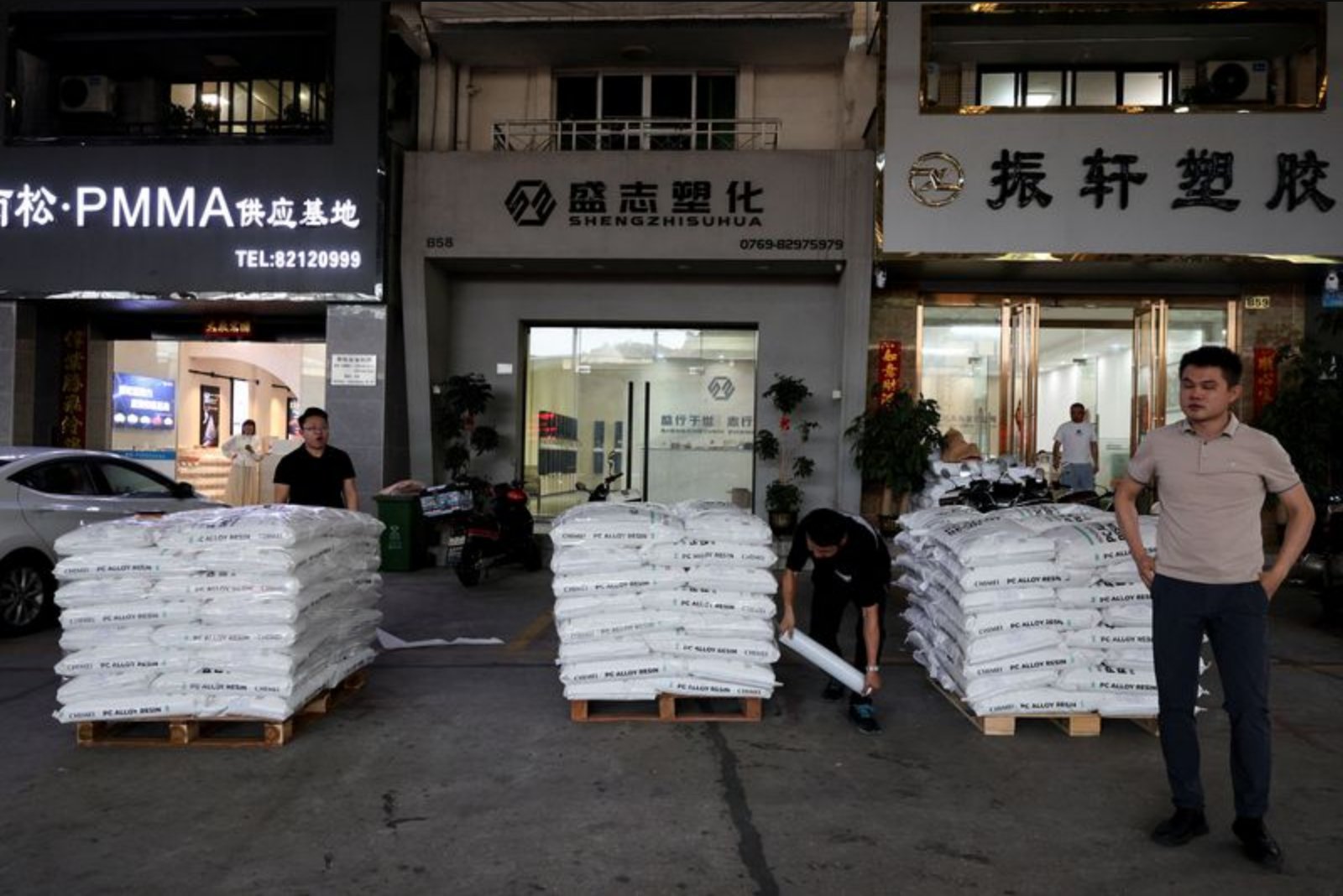
SEOUL/TOKYO, April 15 - A sudden tightening of plastic supplies tied to the Iran war has created an opening for paper-based packaging in Asia, where reliance on Middle Eastern feedstock and large per-capita plastic use have amplified the disruption.
Yonwoo, a South Korean maker of packaging for cosmetics, reports a three-fold jump in inquiries for its eco-oriented paper tubes and pouches after the conflict pushed plastic prices to roughly four-year highs by choking off flows of required oil and petrochemical raw materials. The products are marketed as lower-plastic alternatives for single-use wrapping.
Kim Min-sang, a senior manager at parent Kolmar Korea, said the interest began with sustainability-focused companies but is widening as the plastics squeeze persists. "Interest initially came from companies focused on sustainability ... but if the plastics issue gets prolonged we expect demand to further increase," Kim told Reuters.
Yonwoo supplies packaging to large clients, including France’s L’Oreal, and has seen particular demand for paper tubes used for items such as sunscreen and lotions. Those tubes use about 20% of the plastic required by conventional packaging, Kim said.
Regional reliance and consumption patterns
Asia is both heavily dependent on feedstock imported from the Middle East and a major consumer of plastic. According to OECD data cited in reporting, China, Japan, South Korea and Southeast Asia together consumed nearly one-third of global plastic by 2022, a figure that represents a 900% increase since 1990. The region also accounts for more than a third of plastic waste that leaks into the environment, a problem linked to weak waste collection systems in lower-income parts of Southeast Asia.
A 2025 study by researchers at Beijing’s Tsinghua University, published in the journal Nature, found Japan ranks behind only the United States in plastic production and consumption per head.
Supply chain stress and domestic reaction
On the distribution side, wholesalers in Japan are already flagging potential shortages in common items such as plastic trays and bags. Kensuke Takahashi, product manager for Marutake supermarket in Saitama, near Tokyo, said staff are confronting difficult choices about merchandising if trays stop being supplied. "We now have to discuss how to sell our products if trays are no longer supplied at all," he said. "I’m very worried. We really don’t know what will happen."
Manufacturers are also adjusting prices - Japanese makers of plastic bags and cling wrap, Mitsubishi Chemical and Sanipak, announced plans to raise prices by about 30% in the coming weeks for some products, citing higher raw material costs driven by the conflict.
Forced pivots and uneven recovery timelines
Efforts to curb plastic production through international policy ran into resistance last year: talks for a global treaty to tackle plastic pollution stalled after the United States and plastic-producing countries pushed back against an EU-led proposal to cap production. The reporting notes these environmental initiatives have also lost momentum under U.S. President Donald Trump, who has publicly dismissed climate change as a hoax.
Taiwanese firm Lastic, which manufactures bamboo-based biodegradable material, saw demand from American airlines evaporate after U.S. import tariffs were imposed last year, according to senior development manager Luke Anderson. Those tariffs reduced U.S. buyer interest at the time; as plastic prices climb, some of Anderson’s U.S. clients have returned seeking fresh quotes. Anderson commented: "It’s not that I like to look at the upside of war, but ... if you can’t control it, you’ve got to find the silver lining."
In Malaysia, dairy producer Farm Fresh has temporarily moved to paper-based milk cartons in response to the disruption in plastic supply.
But switching is not an immediate option for all firms. Gaone International, a South Korean packaging maker for face masks, faces long lead times to test and qualify alternative materials. The company has cut daily output to between 10% and 20% of its normal run rate of 1 million units while it seeks new suppliers, and has warned clients of wait times of up to eight weeks for orders. Sales team manager Han Kyung-hun said the firm expects revenue to fall and expressed hope for a return to normal, while cautioning that recovery could take a couple of months even if the war ended immediately. "I hope things return to normal as soon as possible," Han said.
Implications for sectors
The immediate effects are most visible in packaging suppliers, food and dairy processing, and manufacturers of consumer goods that depend on single-use plastic wrap and trays. Rising raw material costs and supply shortages are forcing some businesses to accelerate shifts to paper and other alternatives, while others are scaling back production or accepting longer lead times as they reconfigure supply chains.
How long these adjustments will last depends on the duration of the feedstock disruption and the pace at which companies can test, approve and scale alternatives - processes that, in some cases, may take months.