
Overview
U.S. diplomats who held talks with leaders of France’s far-right National Rally (RN) left those meetings underwhelmed by the party’s economic proposals, two diplomatic sources said. The conversations, involving senior U.S. officials and RN figures, raised questions about the depth and clarity of the RN’s plans to revive growth, reduce a large deficit and attract foreign capital to Europe’s second-largest economy.
Who met whom
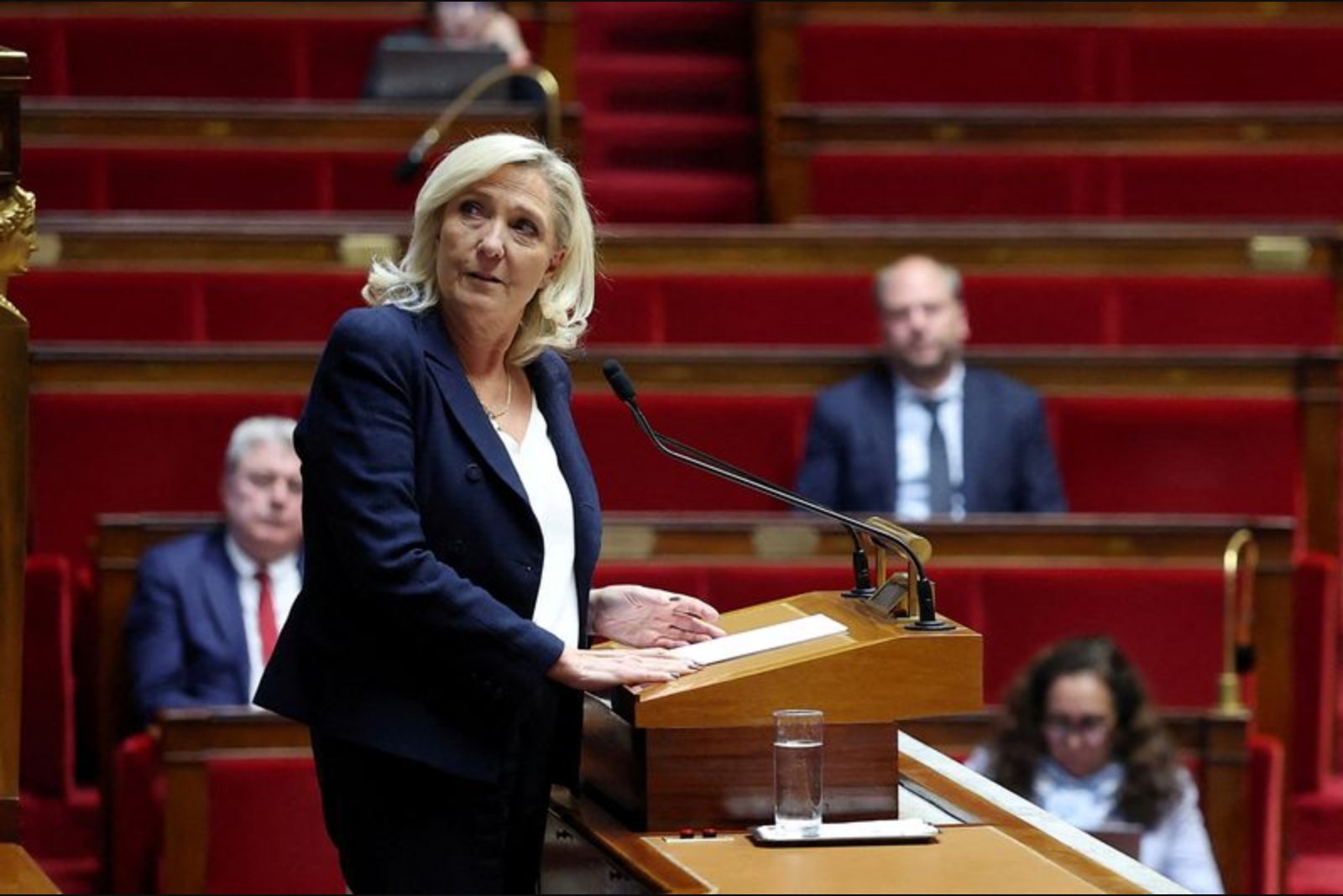
U.S. Ambassador Charles Kushner and members of his team have met with most of the likely presidential contenders across France’s political spectrum, including RN figures such as Marine Le Pen and her 30-year-old protégé Jordan Bardella. According to the diplomatic sources, none of the candidates met left the U.S. delegation particularly convinced; the RN’s economic positions were singled out as a particular worry.
Diplomats’ concerns
The officials raised doubts about how the RN would address a combination of weak growth, high borrowing costs and a heavy debt load. France’s economy, valued at roughly $3.5 trillion, carries one of Europe’s larger debt burdens at 115.6% of GDP, the sources noted as context for their unease.
Specific concerns included the RN’s mixed messaging on fiscal direction and a lack of detailed plans for narrowing the deficit. Diplomats flagged the party’s stated desire to reverse elements of a 2023 pension reform that raised the retirement age - a move that could prove costly - as well as ambiguous proposals on reducing public spending, cutting France’s contribution to the European Union budget and restructuring welfare benefits to prioritize French citizens.
U.S. officials were also perturbed by the RN’s support for a budget amendment that would have doubled a digital services tax to 6% - a measure that Washington opposes on the grounds it targets U.S. tech companies. The amendment, according to the diplomatic sources, did not survive the final passage of the 2026 budget.
Business and investor reaction
The diplomats’ judgment resonated with concerns voiced privately by many in France’s business community. Executives question whether the RN has the experience and coherent policy framework required to steer a highly indebted, slow-growing economy back to robust growth and to stabilize public finances.
That skepticism has been compounded by divergent economic currents within the RN leadership. Some business leaders describe Le Pen as leaning toward big-spending populism, while Bardella has been seen as attempting a more business-friendly approach. This internal ambiguity initially helped widen the party’s appeal but now risks undermining its credibility as it seeks to position itself as a government-in-waiting.
Attempts to court industry
In an effort to make the RN’s economic stance clearer to France Inc, Marine Le Pen met with several corporate chiefs on April 7, including leaders from luxury group LVMH, oil major TotalEnergies, insurer AXA and automaker Renault. Those meetings were arranged in part by fund manager François Durvye, who has been brought on by Bardella as an economic adviser.
Officials characterized the encounter as a heated question-and-answer session. A senior RN figure described the meeting as an attempt to dispel stereotypes and to argue that the party’s programme is the most pro-growth and pro-business across the political spectrum - a claim that executives and diplomats are still weighing.
Political and diplomatic implications
Questions about the RN’s economic competence carry electoral implications for the party’s prospects in the 2027 presidential race. The diplomatic sources suggested doubts over the RN’s plan could influence whether Washington would openly back or engage with the party should it prove victorious at the ballot box.
U.S. policymakers’ caution is informed in part by recent experiences in Europe. The sources cited past U.S. efforts to support ideologically aligned leaders in Europe that produced mixed outcomes. One noted that a U.S. effort to support an allied leader in another European country did not secure re-election for that leader after a long tenure in office - a development that has prompted caution about visible endorsements of far-right figures.
One diplomatic source also said there were no signs RN leaders were actively seeking U.S. support. Meanwhile, some European far-right and populist parties that previously welcomed close ties with Washington have grown wary of appearing too aligned.
Responses from the RN and U.S. officials
The RN did not provide a formal response to the U.S. officials’ assessment conveyed by the diplomatic sources. A senior aide to Bardella stated that the party is working on developing its economic programme, including tackling politically sensitive structural reforms to France’s costly pension system.
A State Department spokesperson declined to comment on private diplomatic exchanges.
Why it matters
France’s economic trajectory - governed by public finances, investor confidence and structural reforms - is central to both domestic politics and wider market sentiment. The RN’s mix of protectionist and interventionist rhetoric raises questions for French blue-chips and foreign investors about regulatory stability and the future tax environment, particularly for multinational technology companies and large domestic firms.
Reporting was based on accounts provided by diplomatic sources who spoke on the condition of anonymity to discuss private discussions.