
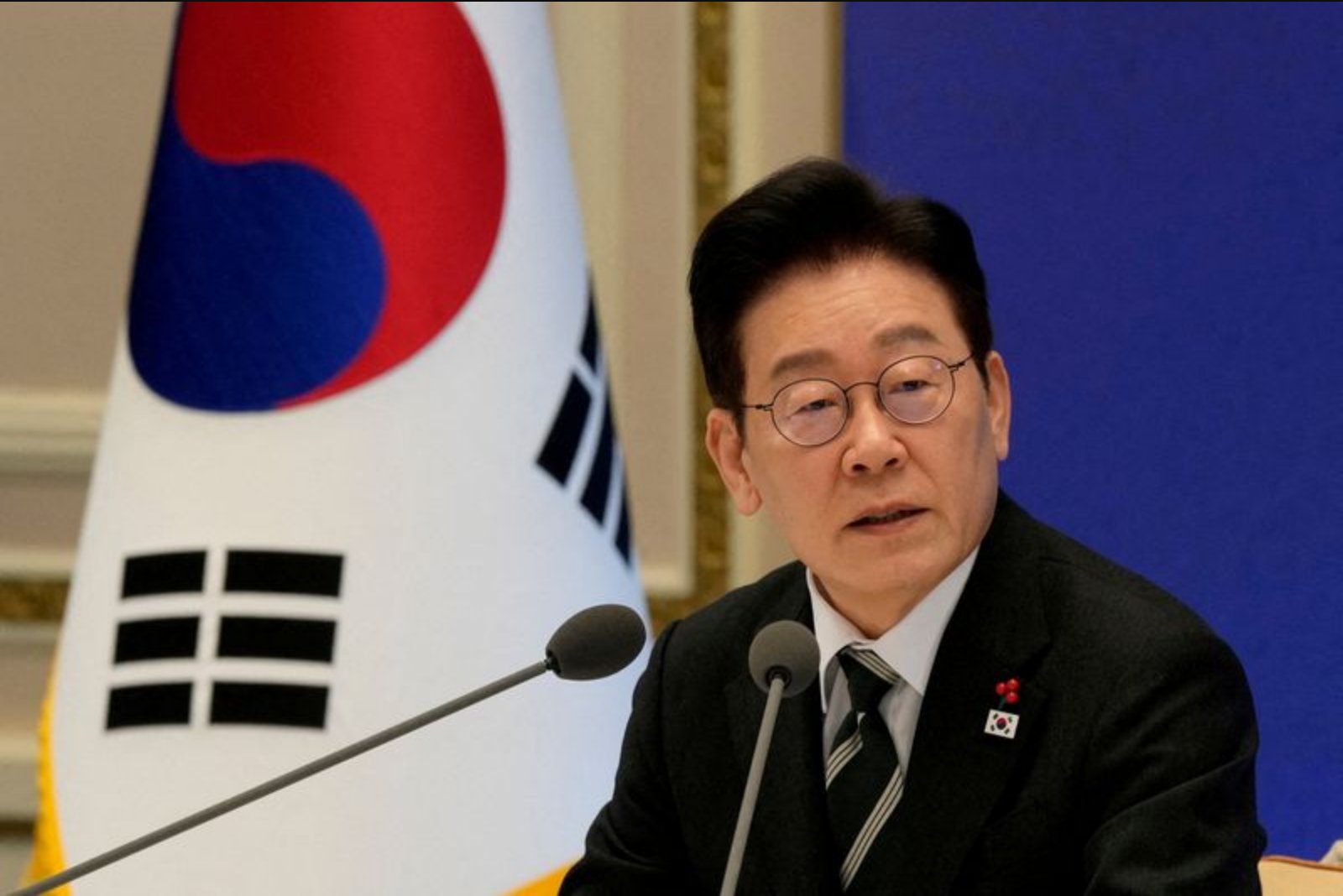
South Korea's president has publicly disputed assertions that a senior minister disclosed classified intelligence supplied by the United States relating to Pyongyang's nuclear activities.
President Lee Jae Myung described such assertions as "absurd" after South Korean news outlets reported that Washington had limited the sharing of certain intelligence on North Korea. The reporting linked that curtailment to public remarks made by Unification Minister Chung Dong-young about a previously unconfirmed uranium enrichment facility in an area known as Kusong.
In a post on X late on Monday, Lee said the existence of the Kusong facility "was widely known globally even before Chung's public comments through various research reports and news media." He added: "Any claim or action based on the idea that Minister Chung 'leaked classified information provided by the U.S.' is wrong. I'll be looking closely into why something as absurd as this is happening."
Chung and his ministry have maintained that his March statements about Kusong were grounded in publicly available material, including research papers and reporting, rather than in classified U.S. sources.
Seoul's defence ministry declined on Tuesday to provide details about any changes in intelligence sharing with the United States. The ministry said, however, that the intelligence agencies of the two countries remain in close cooperation, including collaboration on monitoring North Korean missile launches.
The developments come as North Korea conducted its latest ballistic missile tests on Sunday, which were tracked by South Korea and Japan.
Yonhap news agency reported on Tuesday that the United States had limited sharing of some intelligence obtained from spy satellites. The report has prompted concern among some opposition politicians in South Korea, who have demanded Chung's dismissal on the grounds that his comments harmed the bilateral alliance with Washington.
South Korea and the United States are bound by a defence treaty, and the U.S. maintains a significant military presence on the peninsula, including 28,500 troops. Chung told a parliamentary committee last month that North Korea had been enriching weapons-grade uranium at Kusong as well as at previously confirmed or suspected sites in Yongbyon and Kangson.
The facts at the center of this dispute are limited to the publicly reported exchanges: allegations in South Korean media about reduced intelligence sharing, the minister's insistence that his information was public, the president's public defense of the minister, the defence ministry's refusal to comment on intelligence-sharing specifics, the Yonhap report on satellite-derived intelligence limits, recent North Korean missile tests, and calls from opposition politicians for the minister's removal.
Context and immediate developments
The situation remains fluid in terms of political fallout within South Korea and in any potential effects on intelligence cooperation with the United States. Official statements so far have been limited and the underlying reporting cites a mix of public research and news media as the basis for the minister's remarks.