
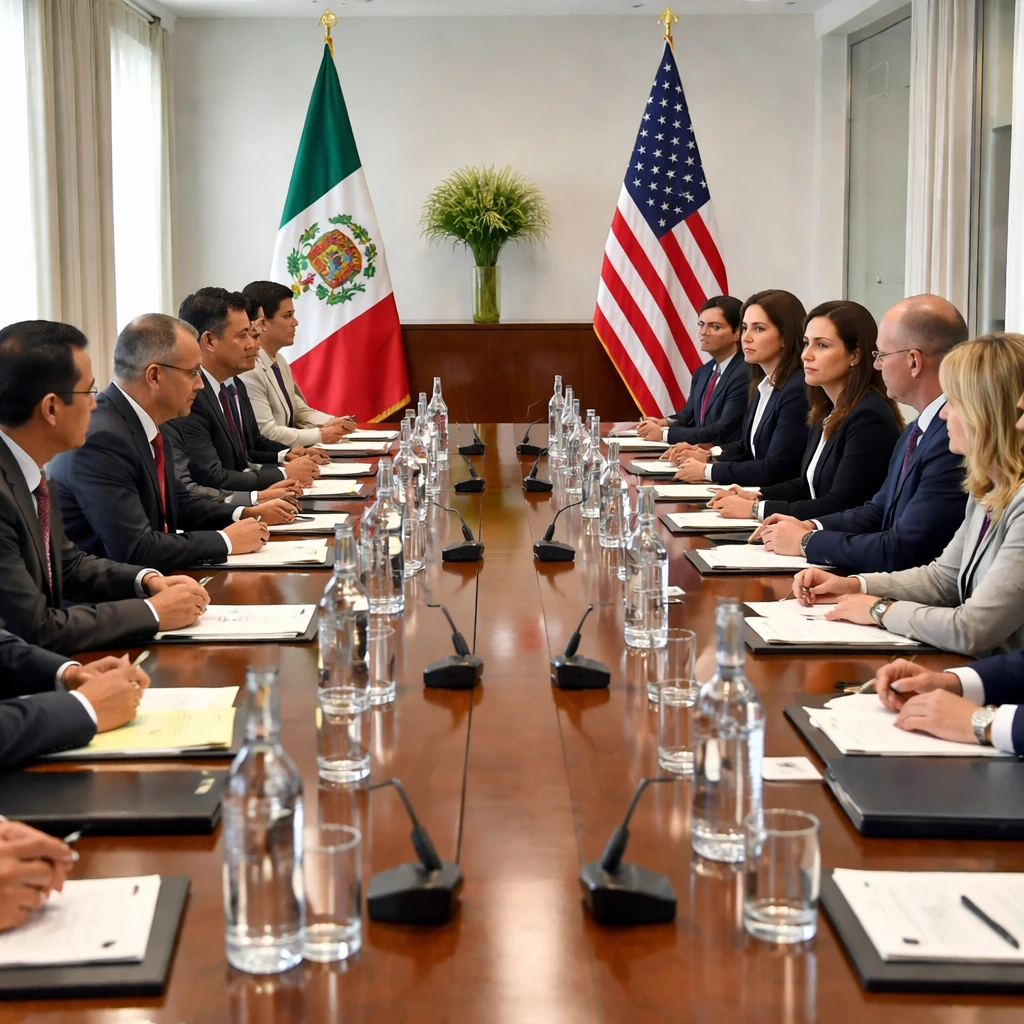
Mexico’s economy minister, Marcelo Ebrard, said on Monday that formal negotiations to review the United States-Mexico-Canada Agreement - commonly known as USMCA - are expected to commence during the week of May 25.
Ebrard made the announcement after a meeting with U.S. Trade Representative Jamieson Greer. According to the minister, Mexican officials will hear the U.S. side’s views on the matter on Monday afternoon and again on Tuesday, after which Mexico will move to the next phase of the review process.
This forthcoming negotiation session represents the second round of formal talks. The first round took place last month in Washington. Beyond confirming the week in which the next round is expected to begin, officials have outlined only that the immediate next step is to receive and consider the U.S. delegation’s views during the specified Monday and Tuesday slots.
What the USMCA is
The USMCA is the trilateral trade agreement that sets rules and procedures for commerce among the United States, Mexico, and Canada. The review process announced by Mexico is framed as a formal negotiation to examine and potentially revise aspects of that agreement among the three parties.
Process and timeline
According to the economy ministry’s statement, the immediate procedural sequence begins with Mexico listening to the U.S. delegation’s views on a Monday afternoon and the following Tuesday, after which Mexico will proceed to the subsequent phase of negotiations. The formal negotiation period is slated to begin in the week of May 25, marking the transition from initial consultations to a structured review session.
Context of the talks
This round follows the initial negotiation session held in Washington last month. Beyond confirming that sequence - initial round in Washington last month, followed by this expected start week - officials have not provided further detail on agenda items or outcomes.
The announcement centers on the timing and immediate procedural steps for the formal review of the USMCA, reiterating that Mexico will first receive the U.S. presentation of views before advancing the talks.