
Overview
The United States has voiced confidence that a new round of negotiations with Iran will take place in Pakistan, even as Tehran has not yet formally decided to attend. A senior Iranian official told Reuters the Islamic Republic was "positively reviewing" participation in the talks, reversing an earlier public stance that excluded engagement, while emphasizing that no conclusive decision had been made.
A Pakistani source directly involved in the planning told Reuters on condition of anonymity that there was momentum for discussions to resume on Wednesday. That source added that U.S. President Donald Trump could be present for the ceremony either in person or virtually if an agreement were finalized.
Market reaction and immediate dynamics
Financial markets showed a swift response to the prospect of diplomatic progress. In Asian trading on Tuesday, oil prices eased and stock indices recovered some losses after an earlier slump tied to doubts about the talks. Brent crude futures fell by 54 cents, or 0.6 percent, settling at $94.94 a barrel, while U.S. West Texas Intermediate for May delivery declined $1.11, or 1.2 percent, to $88.50.
These moves followed a sharp jump in oil prices the previous day, when markets rose roughly 6 percent amid uncertainty about whether the negotiations could proceed. The recent swings illustrate how sensitive energy markets remain to the course of diplomatic engagement and to security developments in the Gulf region.
Points of contention and security incidents
Tensions remain elevated despite the prospect of talks. Iran’s foreign ministry condemned what it described as a U.S. attack over the weekend on the Iranian commercial vessel Touska, calling for the immediate release of the ship, its crew and their families. According to Iranian state media, the ministry warned that Iran would use all available capabilities to defend national interests and that the United States would bear full responsibility for any further escalation.
Maritime security sources indicated that the Touska may have been carrying items that Washington would consider dual-use, potentially applicable for military purposes. The U.S. Central Command said the vessel’s crew had failed to comply with repeated warnings during a six-hour period and that the ship violated what the U.S. described as its blockade. China, the primary buyer of Iranian crude, expressed concern about what it termed a "forced interception." These competing accounts underscore the difficulty of disentangling operational incidents from the broader diplomatic process.
Diplomatic rhetoric and negotiating positions
Iranian officials have framed what they see as violations of the truce by Washington as a key obstacle to diplomacy. Foreign Minister Abbas Araqchi told interlocutors that such actions were a major impediment, while senior negotiator Mohammad Baqer Qalibaf accused President Trump on the social platform X of applying pressure through a blockade of Iranian ports. Qalibaf said the U.S. approach reflected an effort to force submission at the negotiating table and insisted Iran would not negotiate under threat.
President Trump has reiterated his broader negotiating objectives in public remarks, saying negotiations would proceed but that any agreement must ensure Iran does not acquire a nuclear weapon. On the John Fredericks Media Network, he stated: "They’re going to negotiate, and hopefully they’ll make a fair deal, and they’ll build their country back up, but they will not have - when they do it - they will not have a nuclear weapon."
Human and economic consequences of the conflict
The conflict has resulted in heavy human tolls and disrupted global supply chains. Thousands of people have been killed by U.S.-Israeli strikes on Iran and in an Israeli invasion of Lebanon conducted in parallel since the war began on February 28. The fighting triggered a historic shock to global energy supplies and raised fears that a protracted confrontation could push the global economy close to recession.
On the military and commercial fronts, the United States has sustained a blockade of Iranian ports. Iran, meanwhile, lifted and then quickly reimposed its own blockade of the Strait of Hormuz, a waterway that ordinarily handles about one-fifth of the world’s oil and liquefied natural gas flows. Mediator Pakistan has publicly urged Washington to lift its blockade as a condition conducive to talks.
Ceasefire timing and logistics
Officials involved in the process have given differing accounts of key timings, but a Pakistani source with direct knowledge of the discussions said the existing two-week ceasefire was scheduled to expire at 8 p.m. Eastern time on Wednesday, equivalent to midnight Greenwich Mean Time and 3:30 a.m. on Thursday in Iran. The precise duration of the truce remains an important variable for both negotiating leverage and market expectations.
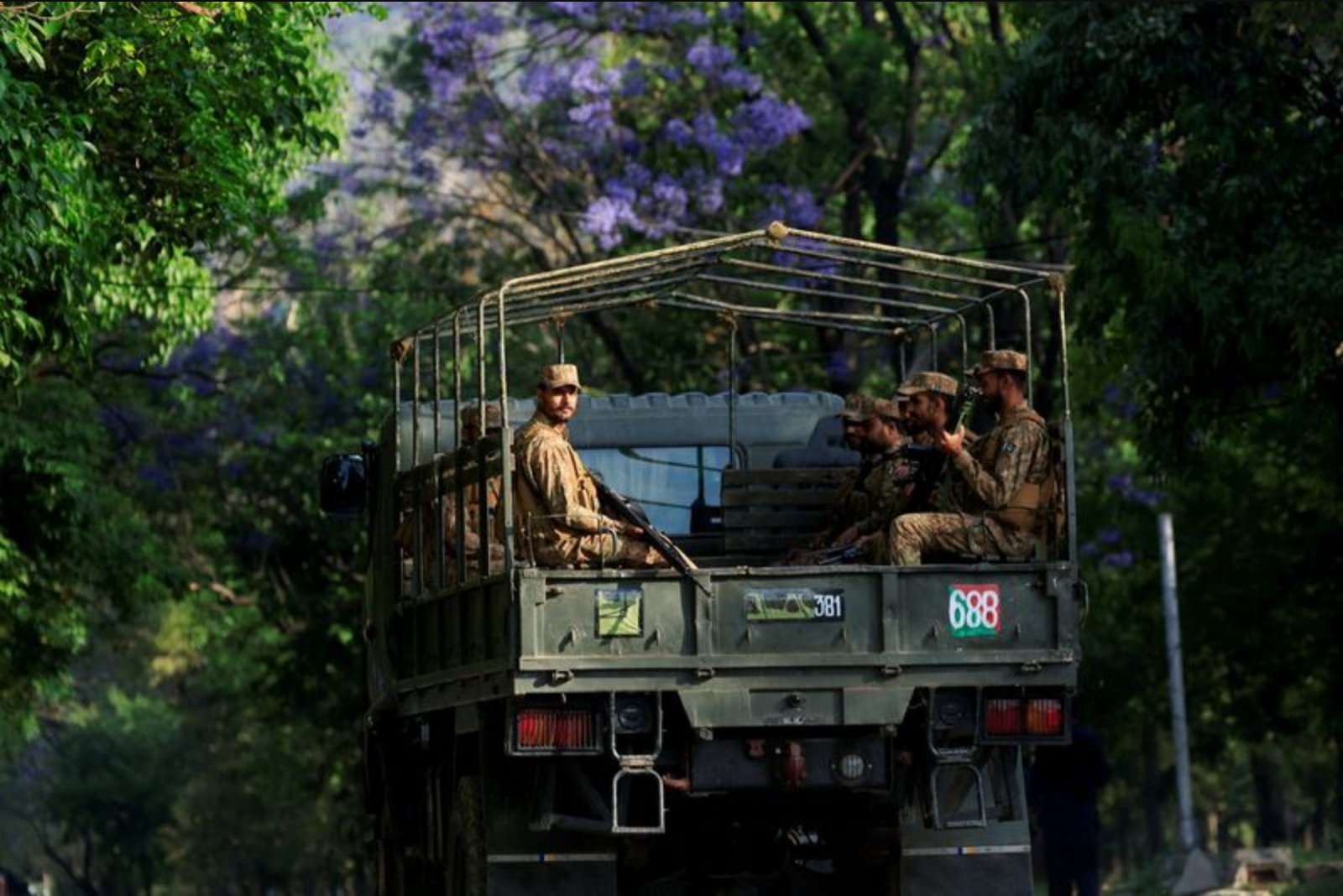
Pakistan has mobilized significant security preparations ahead of the potential talks. Almost 20,000 security personnel were deployed across Islamabad, according to officials, reflecting the sensitivity and high stakes of hosting international delegations under threat of renewed hostilities.
U.S. delegation movements and public statements
Media reports on Monday said U.S. Vice President JD Vance would travel to Pakistan for the talks, citing U.S. sources. A separate source told Reuters earlier that Vance was in the United States on Monday and denied earlier reports that he was already en route to Pakistan.
The White House’s public positioning has stressed the prospect of a deal while reiterating hardline options. White House Press Secretary Karoline Leavitt told Fox News’ "Hannity" program that the administration was close to reaching an agreement, attributing the progress to recent military operations and the president’s negotiating approach. She added that if a deal were not reached, the president retained other options as commander in chief that he was willing to employ.
Implications for markets and policymakers
For market participants, the dual signals of potential diplomacy and ongoing security incidents create a volatile backdrop. Energy markets, which have already reacted to previous developments with double-digit intraday swings, are particularly sensitive to changes in the likelihood of renewed hostilities or of a diplomatic breakthrough. Policymakers will need to weigh the immediate imperatives of de-escalation against longer-term non-proliferation demands that underlie Washington’s negotiating stance.
As talks remain uncertain but possible, the near-term path for oil prices, regional stability and investor sentiment hinges on whether Tehran formalizes participation and whether operational incidents at sea and port blockades can be resolved without further escalation.