
The contest to succeed the current United Nations chief moves into public view this week as four declared contenders submit to live, wide-ranging questioning in New York. The hearings, scheduled over two days, will showcase the candidates' priorities and expose the political headwinds they may confront in the months ahead.
When and who
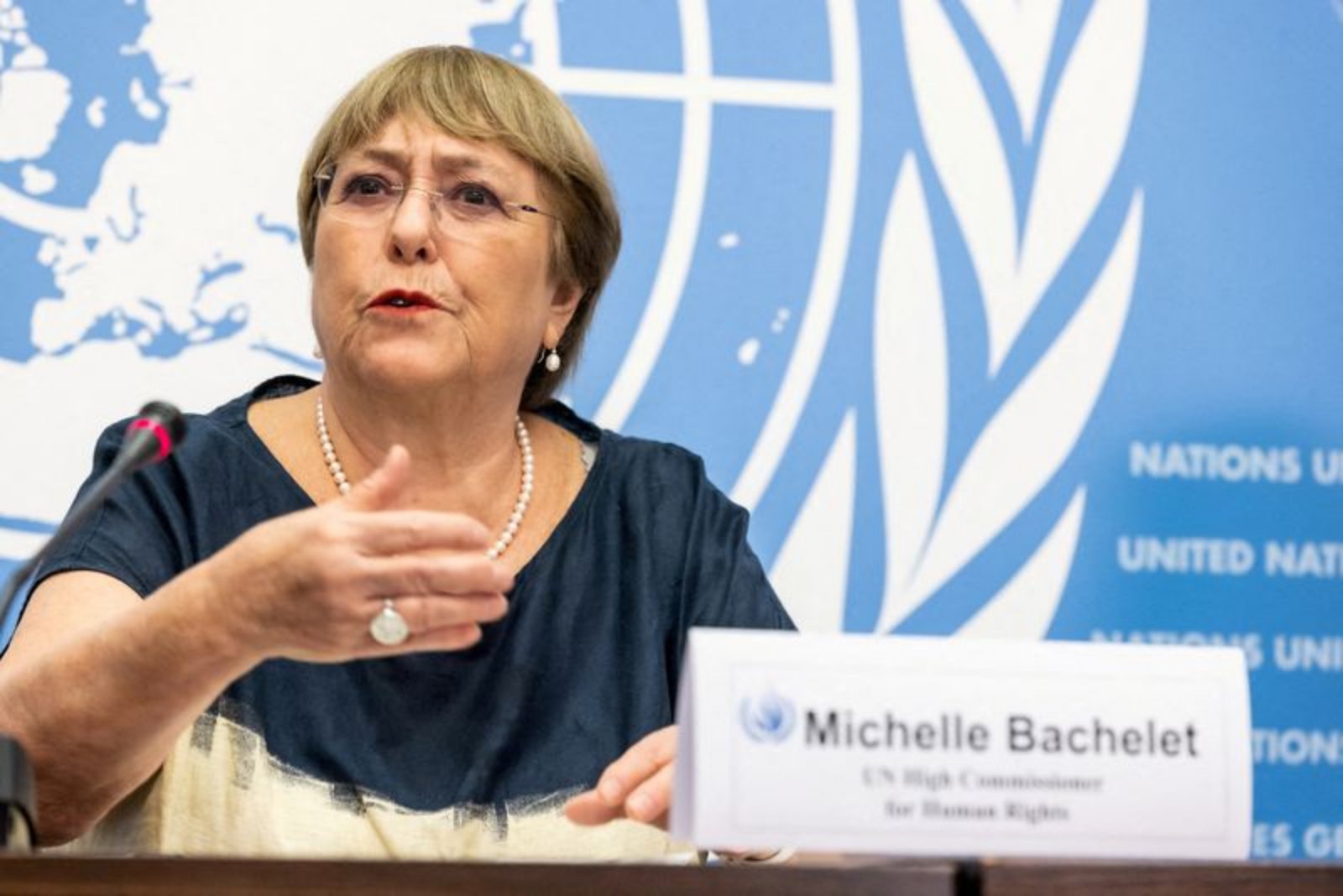
Member states and civil society representatives will question the candidates in hearings at U.N. headquarters in New York. Chile's Michelle Bachelet and Argentina's Rafael Grossi are first on the roster for Tuesday, followed by Costa Rica's Rebeca Grynspan and Senegal's Macky Sall on Wednesday. Each session is allotted roughly three hours for scrutiny.
The office at stake
The successful candidate will lead the 193-member organization for a five-year term that can be renewed for another five years. The next secretary-general inherits an institution that many officials and observers say requires urgent revitalization after a period in which its international stature has waned.
Context and challenges
Officials from powerful member states have increasingly called on the U.N. to reform, reduce costs and demonstrate clear relevance as multilateral norms come under strain. The organization's diminished standing, combined with calls for cost-cutting and greater efficiency, frames the mandate any incoming leader would face.
"The need for a Secretary-General prepared to defend a clear, proactive vision for the U.N. on peacemaking and crisis management could not be more urgent," wrote Daniel Forti of the International Crisis Group. "If candidates and member states miss this opportunity, there may be little left of the U.N. to defend."
Profiles of the declared contenders
- Michelle Bachelet - Age 74. A two-time president of Chile and a former U.N. High Commissioner for Human Rights. In March, Chile withdrew its official backing for her candidacy following a right-wing change in national leadership, though she continues to have support from Brazil and Mexico. Bachelet has been a target of criticism from U.S. conservative circles over her pro-choice positions, and this month the U.S. permanent representative to the United Nations signalled concerns about her suitability, a move that observers said appeared to damage her prospects.
- Rafael Grossi - Age 65. A career diplomat who has led the U.N. nuclear watchdog for six years. Grossi, a father of eight, speaks English, Spanish, French and Italian. In his public statement of priorities he said that "even in times of division, multilateral institutions can deliver real, positive impact."
- Rebeca Grynspan - Age 70. A former vice president of Costa Rica and the current head of the U.N. Conference on Trade and Development (UNCTAD). She presents herself as a reform-minded multilateralist, committed to the U.N.'s mandates on peace, development and human rights, and has highlighted her efforts to overcome gender barriers. As she has put it, "I am not waiting for special treatment. I want equal treatment."
- Macky Sall - Age 64. President of Senegal for 12 years until 2024, by training a geologist and the son of a peanut seller. Known as soft-spoken and more comfortable in French than in English, Sall has advocated for African development and for support to countries grappling with heavy debt burdens. On social media he wrote that "More than ever, a reinvented multilateralism remains the best way to respond to the challenges of a world in full transformation."
Selection dynamics and traditions
The current field of four is considerably smaller than in 2016, when 13 candidates were considered and seven were women. No woman has ever been selected to serve as U.N. secretary-general in the institution's roughly 80-year history, despite advocacy to change that pattern. There is also an established, if informal, convention that the post rotate among geographic regions - with Latin America considered next in line - and that the secretary-general is not drawn from the five permanent members of the U.N. Security Council: Britain, China, France, Russia and the United States. While the latter convention aims to avoid an over-concentration of power, the backing of those permanent members remains essential in the drawn-out, complex selection process.
What the hearings are likely to reveal
The live sessions are expected to test each candidate's capacity to articulate reforms, to address questions on peacemaking and crisis management, and to demonstrate how they would restore or enhance the U.N.'s effectiveness. Given recent public expressions of concern about candidates' suitability and shifts in national endorsements, the hearings will also give a clearer picture of where momentum lies and which constituencies may be undecided.
Beyond the political dimension, the sessions will reflect the wider debate about the U.N.'s role in a world facing changing geopolitical alignments and pressure from major powers to demonstrate fiscal discipline and operational relevance.
Next steps
Although these four are the only declared candidates presently, the field could expand in the months ahead, and their performances in New York will feed into consultations among member states as they narrow the choice and seek consensus behind a nominee.