
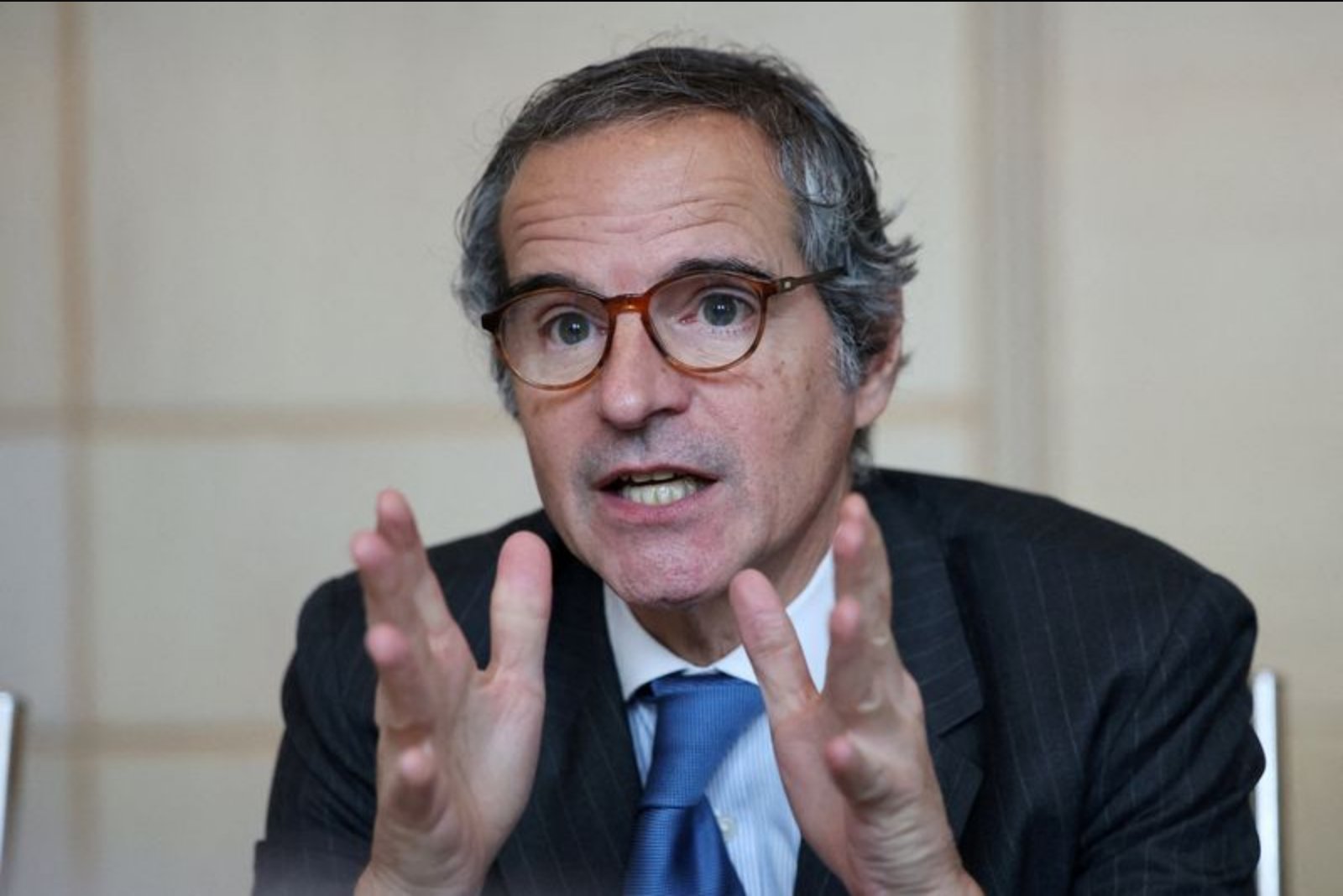
The United Nations will select its 10th secretary-general for a five-year term starting on January 1, 2027. The position, currently held by Antonio Guterres, has attracted candidates from a range of backgrounds. Below is a detailed account of those who have declared their candidacies so far and the credentials, messages and questions that accompany them.
Rafael Grossi - IAEA director with crisis-driven diplomacy
Rafael Grossi, 65, is a career diplomat from Argentina who for the last six years has served as director general of the International Atomic Energy Agency, the U.N. body that oversees nuclear matters. His tenure has been marked by energetic diplomacy and frequent travel to conflict zones and capitals alike, actions that proponents say have elevated both his profile and that of the agency.
Grossi played a central role in efforts to preserve elements of a landmark agreement on Iran’s nuclear programme after the United States withdrew from the deal in 2018. His approach has not been without controversy; critics contend he has at times pushed too hard to strike accommodations with Iran. Supporters point to tangible outcomes such as his work to secure a small IAEA team at the Zaporizhzhia nuclear power plant in territory occupied by Russian forces, achieved after repeated trips across the front line during the Russia-Ukraine conflict.
Known as a polyglot who speaks English, Spanish, French and Italian, Grossi has presented himself in this contest as a man of action who can navigate complex relationships among the U.N.’s most powerful members. Diplomats regard his long record of interaction with the five permanent members of the U.N. Security Council - the United States, Russia, China, Britain and France - as a potential advantage in securing the endorsements needed for the top job. In his vision statement for the post he wrote:
"These experiences have confirmed a conviction I hold deeply: even in times of division, multilateral institutions can deliver real, positive impact."
Rebecca Grynspan - Multilateral reformer with a development focus
Rebecca Grynspan, 70, casts herself as a reform-minded multilateralist. A former vice president of Costa Rica and the current head of the United Nations Conference on Trade and Development (UNCTAD), she has emphasized her long-standing belief in the U.N.’s mission in peace, development and human rights. Grynspan has stepped back from her UNCTAD duties until September to avoid conflicts of interest while campaigning; in contrast, Grossi has remained active at the IAEA during his campaign.
Born to parents who fled Europe after the Second World War, she links her worldview to the post-war origins of the U.N. and the organisation’s aim of preventing conflict through international cooperation. If elected, Grynspan would become the first woman to serve as U.N. secretary-general. She describes herself as having navigated trade-offs between family life and public service while at UNCTAD, an experience she says shaped her leadership. On gender and leadership she told Reuters:
"I am not waiting for special treatment. I want equal treatment."
An economist by training, Grynspan has termed herself a "mature leader" who would push for a more agile U.N. by collaborating with external partners while defending the United Nations’ core values.
Michelle Bachelet - Former president and human rights official with mixed endorsements
Michelle Bachelet, 74, is a two-time president of Chile and a former U.N. High Commissioner for Human Rights. She also served from 2010 to 2013 as executive director of U.N. Women, the agency that promotes women’s rights. Her candidacy has encountered shifting national and international backing. In March, Chile withdrew its official support following a right-wing shift in the country’s leadership, though Bachelet said she would continue her campaign with backing from Brazil and Mexico. Chile’s president, Jose Antonio Kast’s government, stated the campaign lacked broad political consensus at home and faced poor odds internationally.
Bachelet has been criticised by U.S. conservatives for her pro-choice stance on abortion. In April, the United States’ U.N. ambassador, Mike Waltz, appeared to damage her prospects by saying he shared the concerns expressed by a U.S. senator about her suitability. Republican Senator Pete Ricketts charged that Bachelet had not been forthright enough while serving as U.N. human rights chief, pointing to a 2022 report in which she did not label China’s actions against Uyghur Muslims a genocide; Ricketts has also criticised her promotion of abortion as a fundamental human right. The Chinese government has not publicly declared a position on her candidacy.
Macky Sall - Former head of state advocating for African development and Security Council reform
Macky Sall, 64, served as president of Senegal for 12 years until 2024 and has emphasised his experience as a head of state as a qualification for the secretary-general role. A geologist by training and the son of a peanut seller from a poor region of Senegal, Sall presided over major infrastructure projects during his tenure and has positioned himself as a champion of African development.
Sall has underscored the need to support developing countries that are burdened by debt and has called for an overhaul of the Security Council, reflecting demands from developing nations for greater representation, including permanent seats on the body. In a statement on X he said:
"More than ever, a reinvented multilateralism remains the best way to respond to the challenges of a world in full transformation."
Nominated by Burundi, Sall is generally more comfortable in French than in English and is described as softly spoken. His candidacy has produced mixed reactions in Africa; diplomatic notes cited in reporting indicate that his homeland and Nigeria have withheld support. If selected, he would be the third African to hold the post, following Egypt’s Boutros Boutros-Ghali and Ghana’s Kofi Annan.
Selection dynamics and the road ahead
The candidates bring varied portfolios - nuclear oversight, economic development, human rights and head-of-state experience - and each faces distinct political dynamics. Some campaign while remaining in their current U.N. roles, while others have paused official duties to avoid conflicts. The process will hinge on securing endorsements and navigating scrutiny from member states, including the permanent members of the Security Council, whose backing has been identified as crucial for success.
At this stage, each contender projects a mix of strengths and vulnerabilities derived from their records and the political reactions they have provoked. The campaign continues to evolve as governments and regional groups weigh their preferences in the lead-up to the vote for the next U.N. secretary-general.