
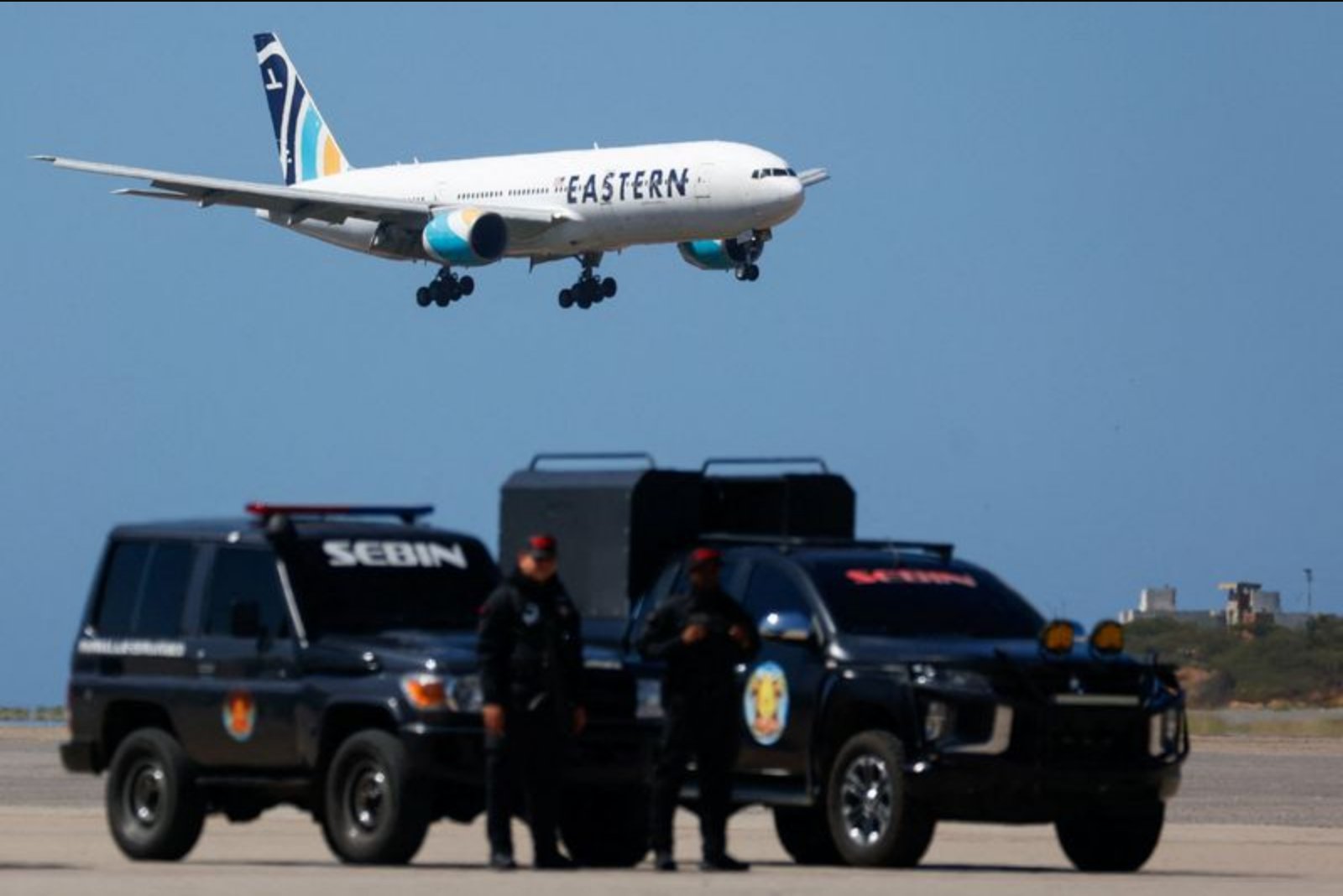
A U.S. appeals court on Tuesday blocked a lower-court investigation into whether officials in President Donald Trump's administration willfully violated a judicial directive to stop deportation flights of Venezuelan migrants to El Salvador.
A three-judge panel of the U.S. Court of Appeals for the District of Columbia Circuit, in a 2-1 decision, concluded that U.S. District Judge James Boasberg had intruded on "the autonomy of the executive branch" by ordering sworn testimony from administration officials to determine whether they knowingly disobeyed his March 2025 order to turn back aircraft removing the Venezuelan men from the United States.
Circuit Judge Neomi Rao, writing for the majority, said the district court had proposed "to probe high-level Executive Branch deliberations about matters of national security and diplomacy." Rao characterized Boasberg's contempt inquiry as a "clear abuse of discretion." The court noted that criminal contempt proceedings can carry penalties such as fines or other forms of censure.
Rao was joined in Tuesday's ruling by Circuit Judge Justin Walker. Circuit Judge J. Michelle Childs dissented. Rao and Walker are both Trump judicial appointees; Childs was appointed by President Joe Biden.
The dispute arose from a lawsuit brought by the American Civil Liberties Union on behalf of a group of Venezuelan men who were deported under the Alien Enemies Act. The plaintiffs contend the administration's use of that 1798 statute was unlawful in the circumstances of these flights.
The Alien Enemies Act, a law passed in 1798 and invoked only rarely, grants presidents broad authority to detain and remove citizens of nations that are at war with the United States or that have invaded U.S. territory. The same D.C. Circuit panel in December temporarily paused Boasberg's contempt proceedings while it considered the underlying jurisdictional and separation-of-powers questions.
Boasberg has issued rulings adverse to the Trump administration in multiple matters. The president has publicly criticized him, calling the judge a "Radical Left Lunatic" and labeling him a "troublemaker and agitator."
The Venezuelan men at the center of the litigation were released from a Salvadoran prison last summer and returned to Venezuela as part of a U.S.-brokered prisoner swap. The United States has accused the men of gang membership; lawyers and family members have disputed those allegations.
In his contempt proceedings, Boasberg concluded the administration appeared to have acted "in bad faith" when it rapidly organized three deportation flights during the same period that he was holding emergency court sessions to determine the legality of the removals. As part of that inquiry the judge had sought sworn testimony from a high-ranking Justice Department lawyer and from a former department attorney who had emerged as a whistleblower.
In her dissent, Judge Childs argued Boasberg was "just trying to understand the events of a single weekend in March (2025), including the actions which may have led to the willful violation" of one of his orders. Childs warned that the appeals court's decision "stymied" Boasberg "in a way that will affect not only these contempt proceedings but will also echo in future proceedings against all litigants."
Commenting on the ruling, ACLU attorney Lee Gelernt said in a statement that the U.S. legal system "cannot tolerate the executive branch deliberately violating any court order, much less one that resulted in the horrific abuse and torture of dozens of men at a notorious Salvadoran gulag."
The appeals court's action ends, at least for now, the district court's effort to obtain sworn testimony on whether senior officials intentionally disregarded a judicial command in connection with the deportation flights. The case remains part of ongoing litigation over the scope of executive power and the application of the Alien Enemies Act in this set of facts.