
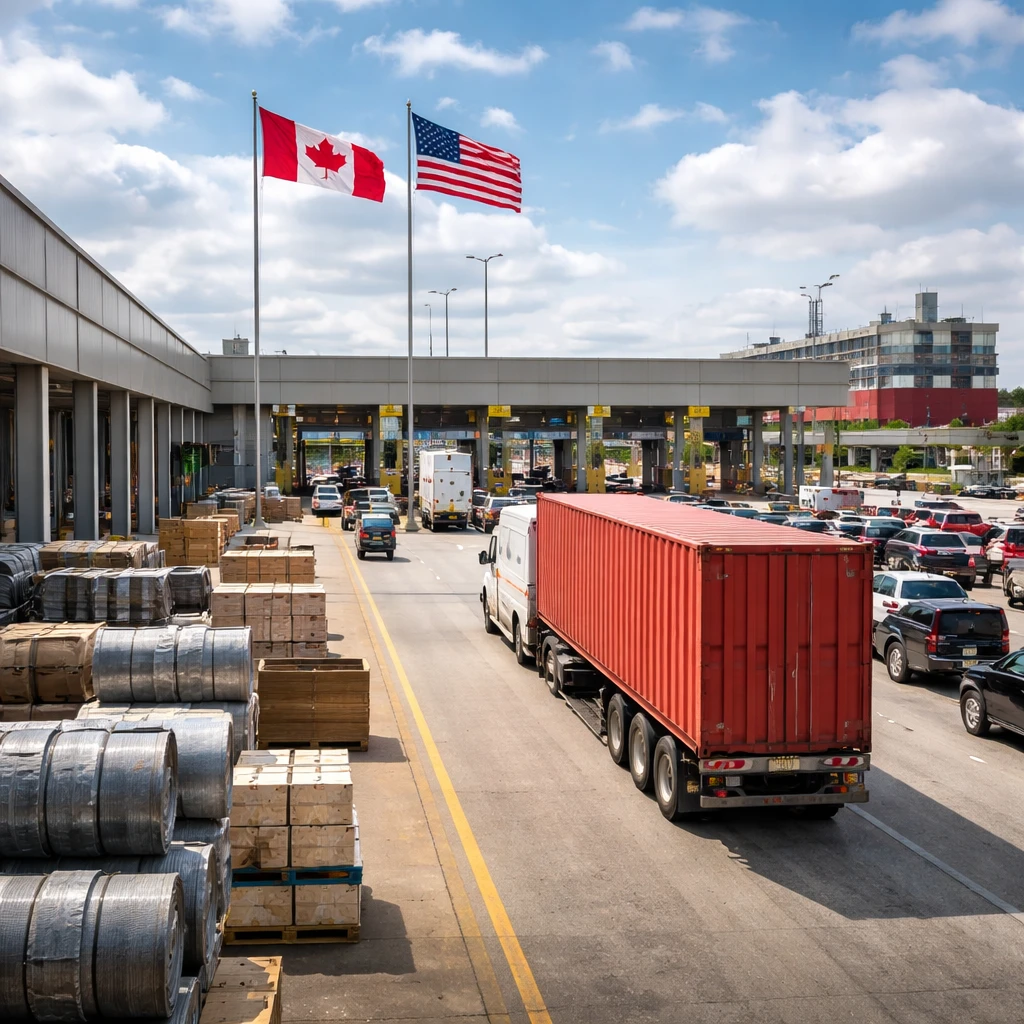
Canada's program of retaliatory tariffs on U.S. imports came into force on Sept. 8, 2026, imposing duties of 15%, 25% and 50% on more than 700 items shipped from its largest trading partner. The measure is the latest development in a bilateral tariff confrontation that began in early 2025, shortly after U.S. President Donald Trump resumed office in January of that year. What follows is a detailed, date-by-date account of the actions, exemptions and diplomatic engagements that have shaped the dispute.
Background and opening moves
On Feb. 1, 2025, President Trump announced tariffs on Canadian goods to take effect on Feb. 4. Canada immediately signaled its intention to respond with a large retaliatory package, announcing a C$155 billion (US$112.40 billion) suite of countermeasures that included duties on an initial C$30 billion of U.S. imports.
Two days later, on Feb. 3, 2025, the United States agreed to pause the announced tariffs for 30 days; Canada in turn suspended its planned retaliation for that period.
By Feb. 10, 2025, the U.S. had moved to target metals, with President Trump signing orders that imposed 25% tariffs on steel and aluminum imports from all countries, including Canada, and setting March 12 as the start date for those levies.
March 2025 - First round of levies and exemptions
On March 4, 2025, U.S. tariffs of 25% on Canadian steel and aluminum and 10% on Canadian energy products took effect. Canada responded that day with 25% duties on C$30 billion of U.S. goods, hitting an array of consumer items such as orange juice, peanut butter, wine, spirits, beer and coffee, along with appliances, apparel and motorcycles.
Two days afterward, on March 6, 2025, Washington exempted imports that met the rules of the U.S.-Mexico-Canada Agreement (USMCA) from the tariffs. As a result, Canada, then led by Prime Minister Justin Trudeau, suspended a planned second wave of retaliatory measures.
When the U.S. metals tariffs formally took effect on March 12-13, 2025, Canada again augmented its countermeasures. On March 13, Canada applied 25% tariffs on C$29.8 billion of U.S. goods that included steel and aluminum products but also computers, servers, display monitors and sporting equipment.
Automotive tariffs and diplomatic outreach
On March 26, 2025, President Trump announced a 25% tariff on automobiles imported into the United States effective April 3, 2025. The order specified that for vehicles imported under the USMCA, the tariff would apply only to the share of value not produced in the United States.
Canada moved to counter that step on April 9, 2025, announcing 25% retaliatory tariffs on vehicles imported from the United States that did not meet USMCA rules and on the non-Canadian and non-Mexican content of those that did qualify.
Prime Minister Mark Carney made his first White House visit on May 6, 2025, seeking to reset relations between Ottawa and Washington following the initial rounds of tariffs.
Escalation and intermittent diplomacy in mid-2025
On June 3, 2025, the United States raised the steel and aluminum levy to 50% from the prior 25% level. Two weeks later, on June 16, Carney and Trump set a 30-day target for reaching a deal during talks on the sidelines of the Group of Seven summit in Kananaskis, Alberta.
However, talks faltered in late June when U.S. officials abruptly halted negotiations over Canada’s proposed digital services tax, which was set to start collecting payments from large technology companies. Canada rescinded the tax two days later in an attempt to revive talks with Washington.
Tariff increases tied to fentanyl claim and partial rollbacks
On July 31, 2025, the U.S. raised tariffs on Canadian products that did not qualify for USMCA preferential treatment to 35% from 25%. The White House linked those measures to what it described as Canada’s failure to stem the flow of fentanyl into the United States; that claim was not supported by official data as reported during the dispute.
On Aug. 22, 2025, Canada announced it would lift many of its retaliatory duties on a broad array of U.S. goods while retaining counter-tariffs on steel, aluminum and automobiles.
Late 2025 - Additional U.S. levies and further meetings
On Sept. 29, 2025, Washington added a further 10% tariff on Canadian softwood lumber, taking total U.S. levies on that product to more than 45%. Prime Minister Carney returned to the White House for a second meeting with President Trump on Oct. 7, 2025.
But negotiations remained fragile. On Oct. 24, 2025, President Trump suspended trade talks with Canada over an advertisement aired by the Ontario government that used remarks by former U.S. President Ronald Reagan criticizing tariffs.
USTR forced labour tariffs and USMCA status
On June 2, 2026, the Office of the U.S. Trade Representative proposed tariffs of 10% or 12.5% on products from 60 economies deemed to have failed in efforts to curb trade in goods made with forced labour. Canada was included at the 10% rate. Those tariffs took effect on July 24, 2026.
On July 1, 2026, President Trump opted not to renew the USMCA, instead subjecting the continental free trade pact to annual reviews.
Section 338 proclamations and the move to 50% duties
On July 20, 2026, Trump signed three proclamations invoking the Depression-era Section 338 Tariff Act, imposing additional 50% tariffs on roughly $20 billion of Canadian goods. The list included products such as Canadian wine, furniture, dairy, cement, clothing, fishing rods and hockey equipment. That announcement spurred intensive engagement between the two sides as Canada sought to avert the new levies.
When talks failed to produce an agreement, the United States imposed the 50% tariffs on Aug. 22, 2026. Ottawa then suspended negotiations, recalled its negotiators from Washington and pledged dollar-for-dollar retaliation.
Automotive tariffs and final retaliation
Two days later, on Aug. 24, 2026, President Trump announced that the United States would impose 50% tariffs on Canadian cars, trucks and automotive parts beginning Jan. 1, 2027.
On Sept. 8, 2026, Canada put into effect retaliatory duties of 15%, 25% and 50% across more than 700 products imported from the United States. The list of affected items spanned steel, furniture, clothing and electronics, among many other categories.
Currency note
The exchange rate used in reporting earlier figures was $1 = 1.3790 Canadian dollars.
What this timeline shows
The sequence of actions reflects a protracted tit-for-tat pattern in which tariff announcements, exemptions for USMCA-compliant goods, and episodic diplomatic engagement alternated with sharp escalations. The measures affected broad industrial inputs such as steel and aluminum as well as finished consumer goods and sector-specific products including autos, lumber and agricultural and beverage items.
As of Sept. 8, 2026, both sides had applied substantial levies, with the most recent Canadian retaliatory duties directly responding to U.S. measures imposed under Section 338 and prior administrations of metals and auto tariffs.